







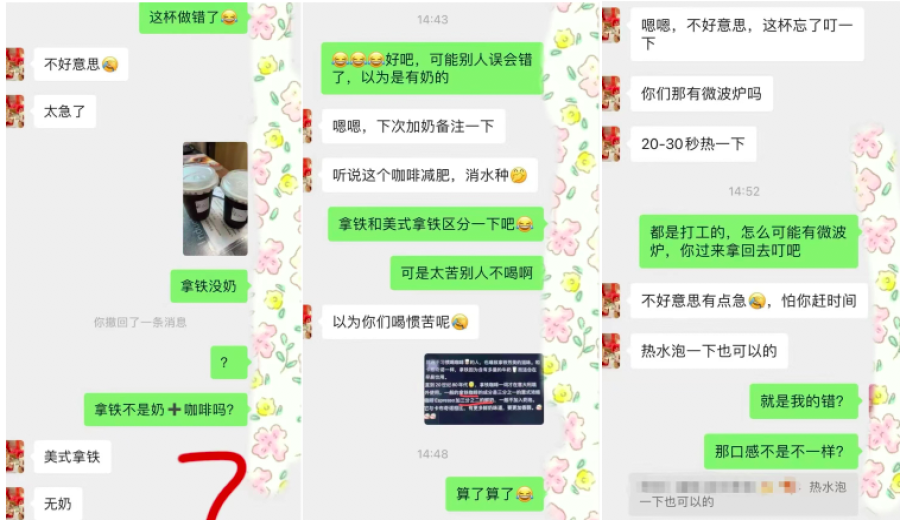
Introduction:Recently, a coffee order mix-up incident has sparked heated discussion within the community. A customer ordered two iced lattes but received two iced americanos instead, and when they contacted the shop, the response was, “Americano latte has no milk,” with the added suggestion to heat up the iced matcha latte themselves. This incident not only exposed service flaws but also raised questions about the professional competence of coffee industry staff. This article details the sequence of events and analyzes the basic knowledge and professional standards that baristas should possess.
Recently, a controversy arising from a coffee order error has stirred online discussion. A customer placed an order via a delivery platform for two iced lattes and one hot matcha latte, but instead received two iced americanos and one iced matcha latte—completely different from what was ordered. The customer immediately contacted the shop to address the issue, only to be met with a series of perplexing responses.
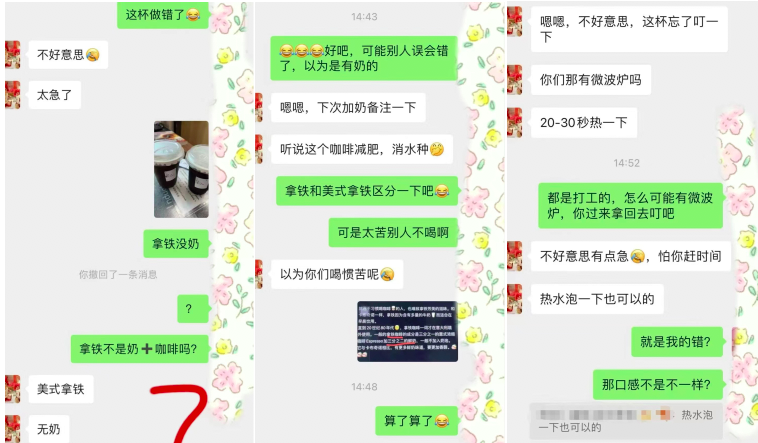
According to the customer, the shop initially apologized for the mistake, attributing it to being “in too much of a hurry.” However, when the customer questioned, “Doesn’t a latte supposed to have milk?”, the shop astonishingly replied: “American latte has no milk.” This response left the customer stunned, even making them joke about encountering some previously unheard-of new type of coffee.
Moreover, the shop’s handling suggestion for the other incorrectly delivered iced matcha latte was even more careless. The shop advised the customer to heat it up using a microwave or brew it with hot water, attempting to turn a cold drink into a hot one. The customer was left both amused and exasperated, describing the entire communication process as opening a door to a whole new world, and could only jest, “I really don’t know much.”
After this incident went public, it quickly triggered widespread discussion on social platforms. Many netizens questioned the professional capability of the shop, arguing that if they can’t even get the basic classification of drinks right, how can they run a coffee shop well? Especially the claim of “American latte has no milk” was particularly baffling. After all, although “latte” means “milk” in Italian, in the vast majority of coffee shops around the world, a latte refers to a coffee drink with milk added—this is a basic industry consensus.
As for the shop’s approach of advising the customer to heat up the iced drink themselves, it was also seen as highly unprofessional and perfunctory. Industry insiders pointed out that when order mistakes occur, businesses should take responsibility proactively, offering reasonable compensation or remaking the drink, rather than responding to customer concerns with unrealistic suggestions. Such handling not only fails to resolve the issue but may even exacerbate customer dissatisfaction.
This incident has also prompted reflection on the professional threshold for those working in the coffee industry. In today’s increasingly competitive coffee market, consumers generally expect baristas to possess basic beverage knowledge and professional competence, including an accurate understanding of common coffee items and familiarity with preparation processes. Yet in reality, many practitioners with only a basic grasp of coffee enter the market, often unable to answer customer inquiries and sometimes even attempting to mislead consumers with incorrect information.
Industry experts point out that besides mastering basic brewing techniques and equipment operation, baristas should also be familiar with the standard recipes and flavor profiles of various coffee drinks. For example, the standard ratio for a latte typically consists of one shot of espresso with about three parts steamed milk and a small amount of foam; whereas an americano is made by diluting espresso with hot water and contains no milk. These fundamental knowledge points should be basic skills for any practitioner—not something that needs to be reminded by customers.
In addition, the attitude taken when dealing with order errors is also an important indicator of a shop’s professionalism. When problems arise, offering a sincere apology, making prompt corrections, and providing reasonable compensation are the correct ways to earn customer trust. On the contrary, responding with unprofessional language or perfunctory advice not only fails to solve the problem but may also cause long-term damage to the brand’s image.
In summary, this mix-up incident is not just a simple service error but highlights the urgent need for professional training and service standards within the coffee industry as it rapidly expands. When choosing a coffee shop, consumers should not only pay attention to product flavor and price but also consider the shop’s level of professionalism and service attitude, to ensure the best possible consumer experience.
The above content is compiled by CoffeeHunters, a coffee news website.


