







Introduction:This unique wire spring dripper relies on a single structure to support the filter paper without interfering with water flow. It’s portable and affordable, but users may encounter issues such as overly slow flow rate or unbalanced flavors. Through practical pour over experiments, this article analyzes its characteristics, identifies causes of uneven extraction, and offers suggestions for adjusting parameters and techniques—helping you brew balanced coffee the right way.
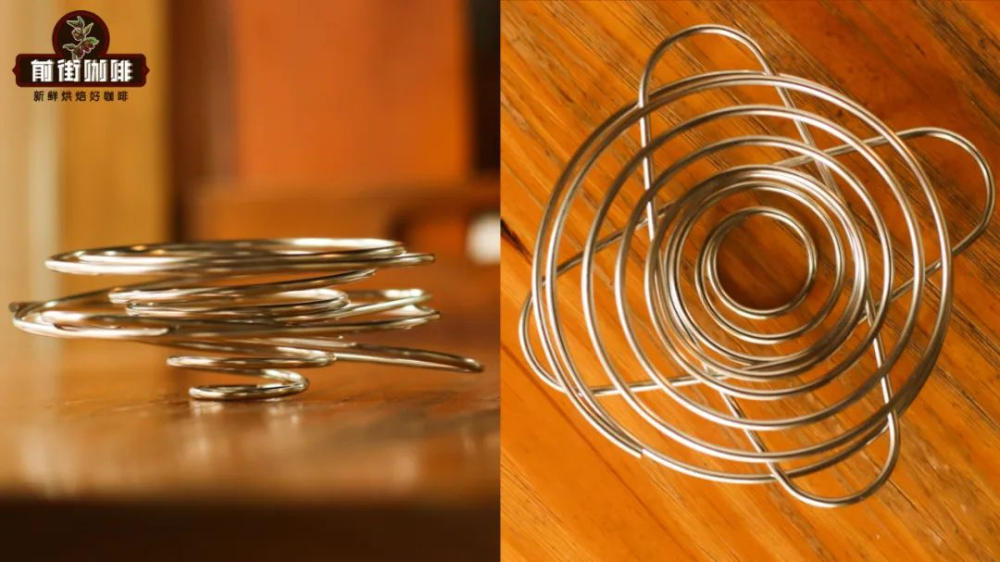
There is a drip filter on the market with a minimalist design, consisting entirely of a single coiled wire whose primary function is to securely hold the filter paper while barely affecting water direction. Its standout feature is that it can be freely stretched and compressed, making it compact and lightweight when stored—ideal for coffee lovers who prefer traveling light. Plus, it’s very budget-friendly. However, when placed on a server, one might notice it tends to tilt to one side. So, does using this uniquely designed dripper result in different flavor profiles compared to more common ones like the V60?
To answer this question, we conducted an actual pour over test. We used Colombian · Boundary Line Geisha beans, following typical V60 parameters: 15 grams of coffee, a 1:15 coffee-to-water ratio, water temperature at 92°C, using an Ek43 grinder set to 10 (approximately 75% extraction through a #20 sieve), and a classic three-pour technique. The entire extraction process took 2 minutes and 50 seconds, yet the resulting coffee exhibited noticeable bitterness and off-flavors, with a thin mouthfeel—far from the expected bright, floral-fruity notes.
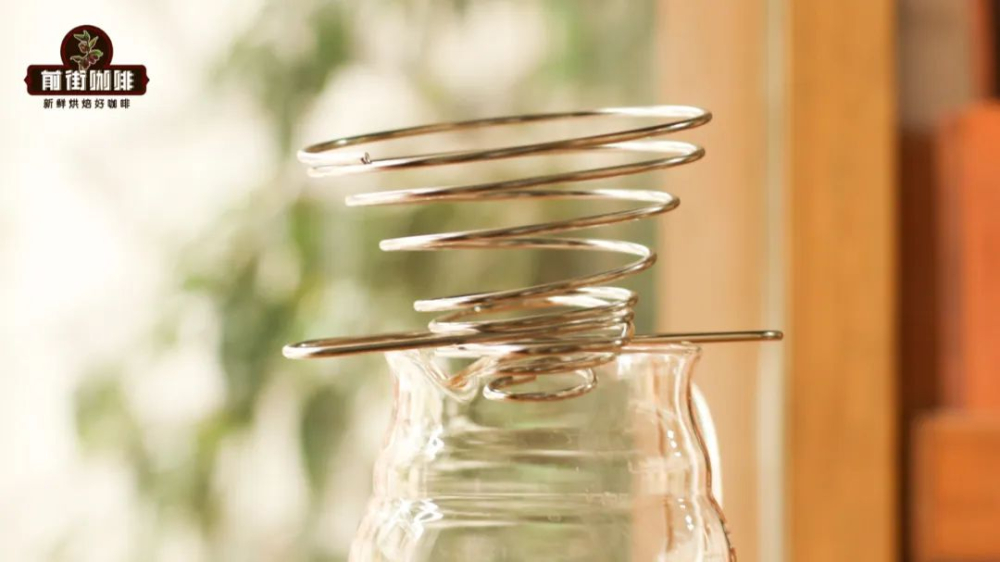
What caused such results? Actually, the issue doesn’t stem from the dripper itself, but from applying extraction parameters and techniques designed for more complex drippers without adjusting for this particular model’s unique features. This dripper has an extremely simplified design, consisting solely of a single elastic wire with clearly visible ends, forming a typical conical structure. Therefore, the filter paper used is also the corresponding conical type.
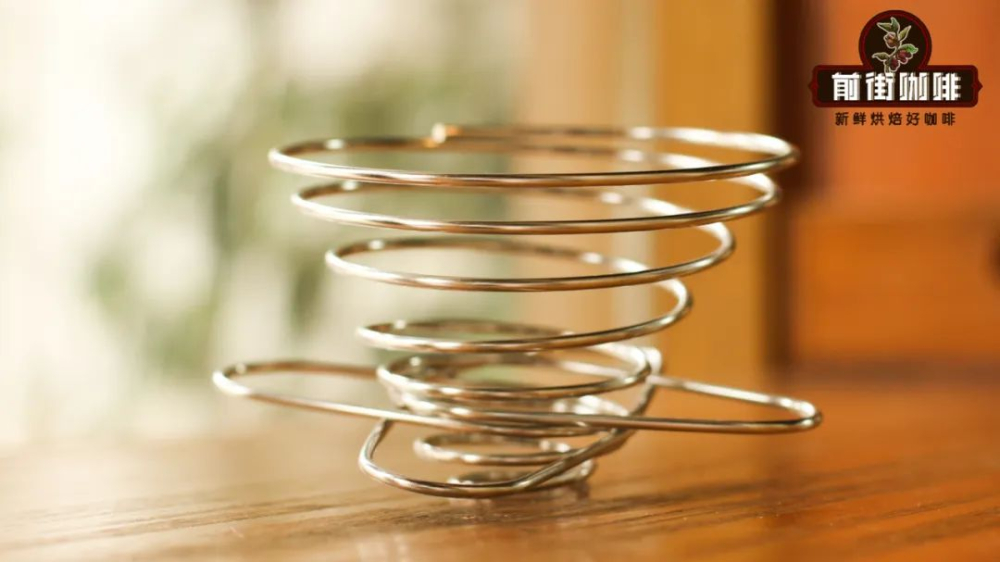
Beyond its simple structure, this dripper features a spring-loaded design that allows it to stretch and compress freely. When no external force is applied, it returns to its original shape thanks to its elasticity, making it highly convenient for storage and transport. The designer specifically integrated the spring function so that when not in use, the dripper can be compressed—simply press the top wire down flat against the base to significantly reduce its size into a compact, easy-to-carry tool.
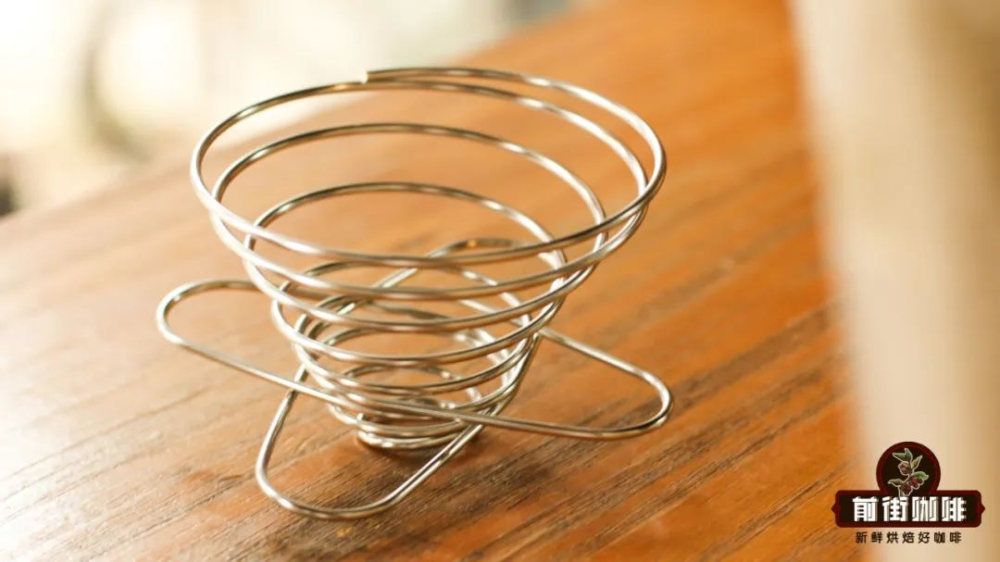
Although this dripper boasts many advantages such as portability, ease of carrying, and affordability, it also has some practical limitations. Since the entire dripper, including the base, is made from a single wire, placing it on certain servers may cause it to tilt, affecting overall stability. Moreover, its most prominent trait is the near absence of additional internal flow-guiding structures such as ribs or channels. Its main function is simply to support the filter paper, maintaining its shape while minimizing impact on water flow.
During the actual pour over process, we followed the standard procedure: first pre-wetting the filter paper with a small amount of hot water while also warming the server. At this stage, it can be observed that the filter paper, once soaked, adheres almost entirely to the surface of the wire. Then, following the three-pour method, we first poured 30 milliliters of hot water for a 30-second bloom, followed by a larger circular pour of 120 milliliters, and finally, as the water level neared the bottom, switched to a smaller circular pour of 75 milliliters. While the process seemed standard, the lack of flow-guiding structures meant water could only descend naturally along gravity, resulting in a noticeably slower flow rate and an overall extraction time extending to nearly 3 minutes.
The resulting coffee not only had a pronounced bitterness but also various off-flavors, with a thin and one-dimensional mouthfeel. Tracing the root cause, the issue lay in uneven extraction. With no inner wall ribs or raised structures to guide water distribution, hot water could only infiltrate vertically via gravity, leading to over-extraction in some coffee grounds and under-extraction in others. Additionally, improper control of pour speed and distribution meant much of the water failed to effectively penetrate the coffee bed, instead flowing along the edges of the filter paper—creating so-called “bypass water” that further compromised extraction balance and flavor clarity.
Based on the experimental results, it’s clear that this wire dripper isn’t inherently flawed. The issue lies in using pour over parameters and techniques unsuited to its unique design. To improve extraction, it’s recommended to use a slightly coarser grind, lower the water temperature slightly, and adjust pouring methods—for instance, shifting from fast, large streams to slow, fine streams, while also paying attention to even distribution and controlled pour speed. These adjustments can not only help avoid over-extraction and unwanted flavors but also enhance overall balance and flavor layering.
In summary, this wire dripper, with its lightweight, portable design and affordable price, is highly suitable for travel or everyday carry. Although it requires some adjustments in pour over technique and parameters, mastering the right method will still allow you to brew delicious hand-brewed coffee. It’s not designed to compete with multifunctional drippers but rather focuses on minimalistic design and practical convenience—making it ideal for coffee enthusiasts who value simplicity and efficiency.
The above content is compiled by CoffeeHunters, a coffee news website.


