








Introduction:The rise in delivery platform commission fees has left many coffee shops facing the dilemma of soaring costs and declining orders. This article delves into the challenges currently confronting businesses, offering practical advice on fee structures, actual earnings, and operational strategy adjustments to help you find a balance and improve the efficiency of your delivery operations.
Recently, the increase in delivery platform fees has sparked widespread concern and discussion among coffee shop owners. Many shop proprietors report that since the platforms adjusted their pricing policies, delivery costs have risen noticeably, leading to higher overall prices for delivery items and, in turn, a drop in order volume. This has created a vicious cycle where “raising prices drives away customers, but not raising them leads to losses.”
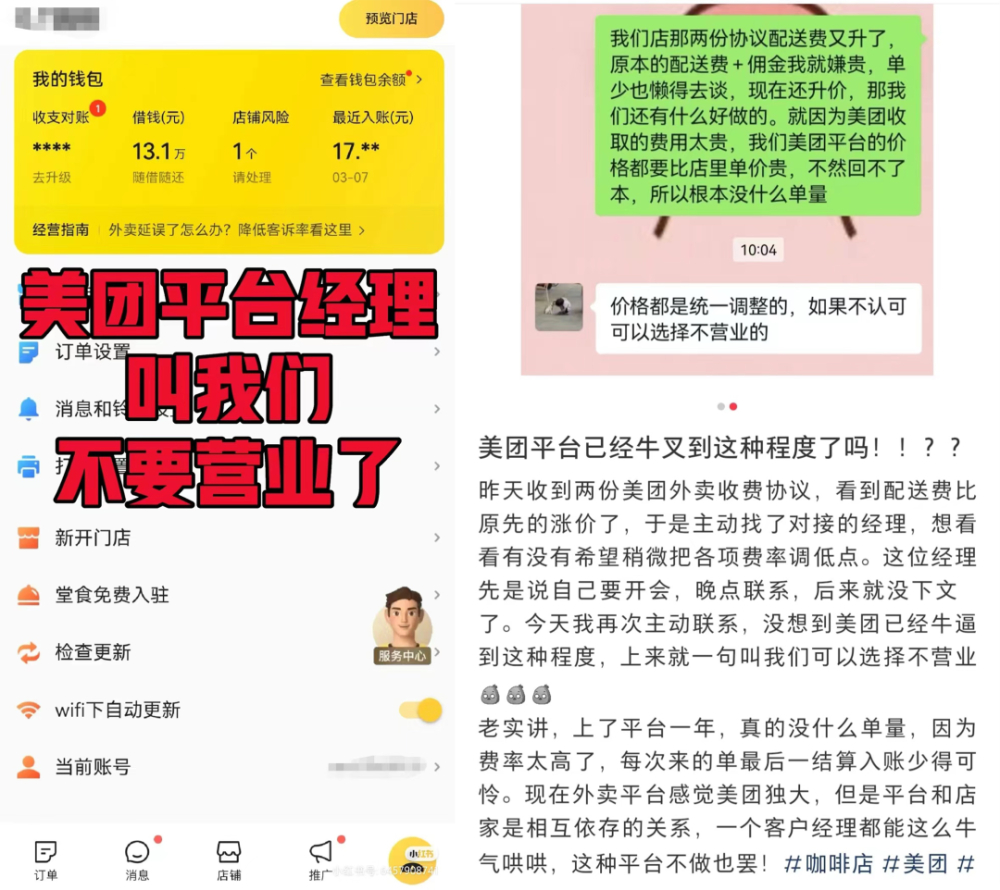
Some coffee shop owners have tried negotiating with platform account managers in hopes of reducing other fees to ease the pressure, but without success. It has been reported that some were told that if they did not accept the current fee adjustments, they could choose to cease operations. This has left many business owners feeling helpless, especially those with already low delivery order volumes, for whom the situation is even more challenging.
In fact, many merchants have complained about the excessively high commission rates taken by platforms. One case highlighted that for a meal priced at 25 yuan, the shop ultimately received only 1.24 yuan; others have noted that in some instances, delivery orders have resulted in negative income—not only earning no profit, but also having to cover delivery and packaging costs out of pocket, effectively operating at a loss.
Faced with such difficulties, some experienced shop owners suggest shifting the business mindset and leveraging the delivery platforms’ advantages of “high traffic and broad customer reach.” By designing loyalty cards, offering giveaways, and similar initiatives, they aim to gradually redirect online traffic to physical stores, thereby building a more stable customer base.
Additionally, shops that primarily rely on delivery as their main sales channel have shared that taking the time to study the various promotional rules introduced by platforms—such as discount coupons and threshold-based deals—and selectively participating based on their own operational conditions can help boost order volume, rather than blindly following suggestions or trends.
It’s worth noting that some industry players believe that while platform fee adjustments do put pressure on business operations, complaining won’t solve the problem. They advise shop owners to rationally assess whether the platform’s strategies align with their own business models and to adjust product pricing, promotional packages, and the proportion of delivery sales based on actual data in order to strike a balance between profitability and customer satisfaction.
There is also an observation that while shops may hope for individualized negotiation with account managers in the event of across-the-board fee adjustments, this may be difficult in practice, as platform staff typically have limited authority and are mostly required to follow unified policies. Shops should maintain reasonable expectations and adapt their own business strategies accordingly.
The above content is compiled by CoffeeHunters, a coffee news website.


