







Introduction:Honey processing is a crucial technique that influences the flavor profile of coffee, with its variations including yellow honey, red honey, black honey, and the unique raisin honey process. This article delves into the classification logic of honey processing, compares the differences between conventional and raisin honey methods, and explores how the raisin honey process from Costa Rica yields intense fermented aromas and rich body, helping readers understand how different processing methods impact coffee flavors.
The processing method of green coffee beans is key to determining the final flavor direction of a cup of coffee. The three common processing methods—natural (sun-dried), washed, and honey—each create distinctly different flavor profiles. Among them, honey processing, which retains varying degrees of mucilage, gives rise to variations such as yellow honey, red honey, black honey, and white honey, while raisin honey processing stands out in recent years due to its distinctive technique.
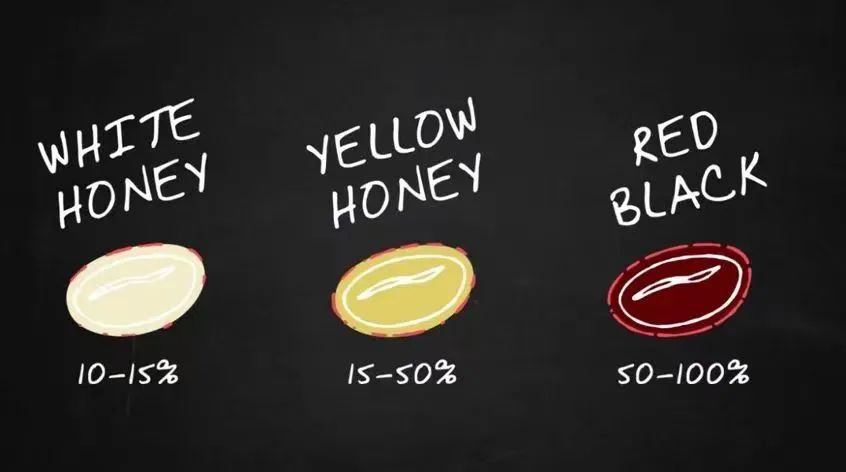
The core of honey processing lies in retaining the mucilage layer, which is rich in sugars and thus affects the sweetness and fermentation characteristics of the coffee beans during drying. Based on the proportion of mucilage retained, honey processing can be broadly divided into four categories:Yellow honey retains about 20–30%, red honey 40–50%, and black honey up to 80–100%.White honey, on the other hand, leans toward lower mucilage retention, close to washed processing but still with a small amount of mucilage. These classifications not only represent differences in sweetness and body but are also directly linked to aroma expression during cupping.

Raisin honey processing is an exceptionally distinctive variation. Its most notable feature is that after harvesting, the coffee cherries are dried in the sun—with their skins still on—for at least three days until they shrink to a raisin-like state, after which the skins are removed and the subsequent honey processing steps are carried out. This method uses almost no water at all and canretain nearly 100% of the mucilage,allowing the coffee beans to accumulate a higher concentration of sugars during drying, thereby producing an exceptionally rich body and intense fermented aromas.
Many people misunderstand the names of honey processes, assuming that honey is actually added. In reality, the term “honey” comes from the sticky texture produced by the mucilage during oxidation, which resembles the feel of honey. Similarly, the name “raisin honey process” can also lead to mistaken associations, but it actually originates from the unique visual resemblance of the dried cherries to raisins.

Compared to conventional honey processing, raisin honey processing differs significantly in its initial steps. Standard honey processing typically begins with floatation to remove defective beans, followed by mechanical removal of the pulp, retaining the mucilage before sun drying. The drying time depends on the mucilage content; black honey, which retains the most mucilage, requires the longest sun exposure, whereas white honey requires the least. However, raisin honey processing first sun dries the whole coffee cherry with its husk until it reaches a dehydrated state. This not only saves water but also preserves the maximum amount of mucilage through full sun exposure, presenting a significant processing challenge—and opportunity—for baristas and roasters.
Conventional black honey processing, while also retaining a large amount of mucilage, may cause some damage to the mucilage during the mechanical depulping process. In terms of flavor, it is known for its tropical fruit aromas and high sweetness, though it also carries a higher risk of spoilage, necessitating stricter post-processing management and relatively higher costs. Commonly seen Costa Rican blackberry-flavored beans are representative of black honey processing, showcasing distinct layers of floral notes, berries, winey chocolate, and sweet orange—making it a top choice for those who prefer bold flavors.
As for the flavor profile of raisin honey processing, it is even deeper and more layered. Take a certain bean from Costa Rica’s Finca Canet as an example: after undergoing raisin honey processing, this bean releases an intense, fermentation-like aroma reminiscent of grape fermentation, easily evoking the sweet taste of raisins. Beyond the common berry and caramel notes, unique aromas such as blueberry and lavender can also be detected, with the finish offering a strong dark chocolate aftertaste. The overall flavor is three-dimensional with a long-lasting aftertaste, making it an excellent example for exploring the extremes of honey processing.
In summary, the diversity of honey processing brings endless possibilities to coffee flavors—from the bright and clean notes of yellow honey to the intense richness of black honey, and further to the nearly full mucilage retention of raisin honey processing. Each technique reflects the precise control that coffee farmers have over nature and time. If you are a pour over enthusiast or have a deep interest in extraction parameters and flavor descriptions, understanding the differences among these processing methods will help you more accurately select and appreciate your ideal coffee beans.
The above content is compiled by CoffeeHunters, a coffee news website.


