







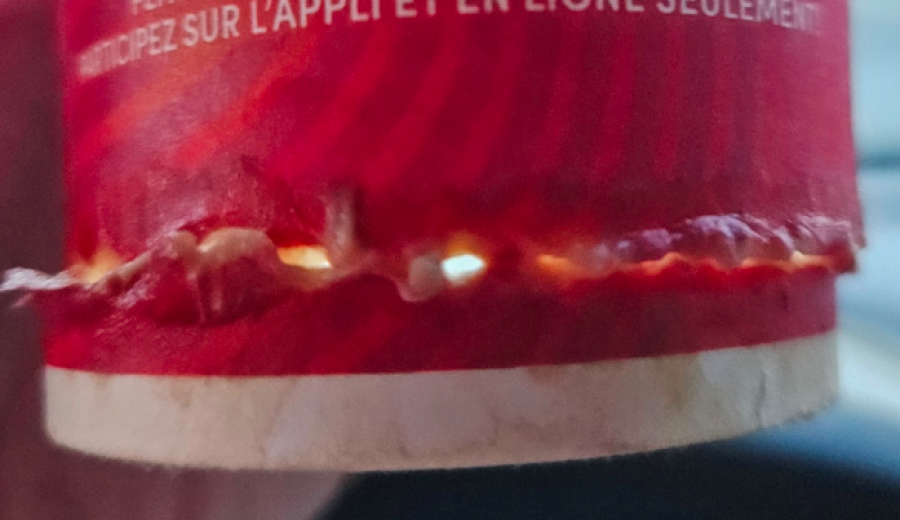
Introduction:The well-known Canadian coffee chain Tims has recently been reported by multiple customers that the takeaway hot drink paper cups they provided developed structural issues after holding high-temperature liquids — including cup body collapse, cracked sealed seams, or even sudden detachment of the bottom, resulting in spilled hot coffee and a risk of burns. This article compiles details from 20 real cases, analyzes common failure scenarios, tracks the brand’s investigation progress and improvement commitments, and offers practical advice to takeaway coffee drinkers on how to avoid dangerous packaging.
Founded in Toronto, Canada, Tims has become a daily beverage choice relied upon by locals thanks to its freshly brewed coffee and warm service. However, recently many regular customers have discovered that the takeaway paper cups they once took for granted actually harbor hidden risks — when filled with freshly brewed hot coffee, the cup structure may exhibit abnormalities due to insufficient heat resistance.
Catherine Nasiopoulos, a long-time customer living in Ontario, revealed that within the past two months she had encountered more than 15 instances where the cup body inexplicably collapsed while using Tims takeout cups. This user, who drinks one to two cups of coffee daily, stated that she used to simply pick up her cup at the store and go, but now, to avoid spills, she has to carry her own personal mug as a backup.
According to multiple consumer accounts, the problems mainly occur around 10 to 15 minutes after pouring in high-temperature liquids:Some paper cup seams suddenly burst open,causing dark roast coffee to splash onto car interiors or clothing; more severe cases involvethe entire bottom detaching,as shown in the image (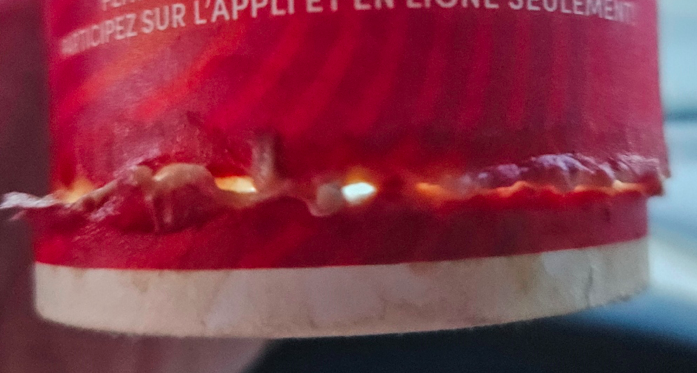 ), leading to hot beverages spilling directly onto tables or floors. One female driver recalled hearing a strange noise during her commute and noticing liquid dripping by her leg, only to realize that the bottom of a recently purchased paper cup had unexpectedly come off.
Notably, such incidents are not recent isolated events. As early as November 2023, Beverley Lawrence and her husband in Sarnia, Ontario, experienced a similar accident — at that time, her husband was holding a Grande Size coffee, which began leaking scalding liquid onto his lower legs just about five minutes after purchase due to a seam splitting. Beverley emphasized that she was lucky to be wearing thick jeans that cushioned the impact, otherwise it could have caused second-degree burns. Although she promptly submitted a written complaint through Tims’ customer service channels, she received no follow-up response.
Based on currently available public information, at least 20 consumers have submitted photos capturing the moment their cups broke via social media platforms or direct complaint channels as evidence. Technical analysis points out that these single-wall corrugated paper takeaway cups, when in prolonged contact with liquids above 80 degrees Celsius,experience a significant reduction in structural strength as the paper fibers become saturated with water,and combined with the limited heat resistance of some seam adhesives, are prone to permanent deformation under the dual effects of internal pressure and thermal expansion and contraction.
In response to the ongoing quality controversy, a Tims brand spokesperson stated to the media that the company has taken note of the related feedback and is actively working with paper container supply chain partners to conduct root cause investigations. The official promised to comprehensively review current packaging specifications, particularly focusing on improving compatibility with high-temperature beverages, with the goal of introducing improved designs in the next production batches to ensure they meet both food safety and user convenience standards.
Industry experts recommend that consumers check the heat resistance temperature range indicated on the cup (usually printed on the bottom or side) when purchasing hot drinks, and prioritize packaging styles that feature a double-layer insulation structure or a leak-proof ring design. If obvious softening, unusual noises, or signs of liquid seepage are observed in the cup body, usage should be stopped immediately and the establishment should be contacted for a container replacement.
The above content is compiled by CoffeeHunters, a coffee news website.


