







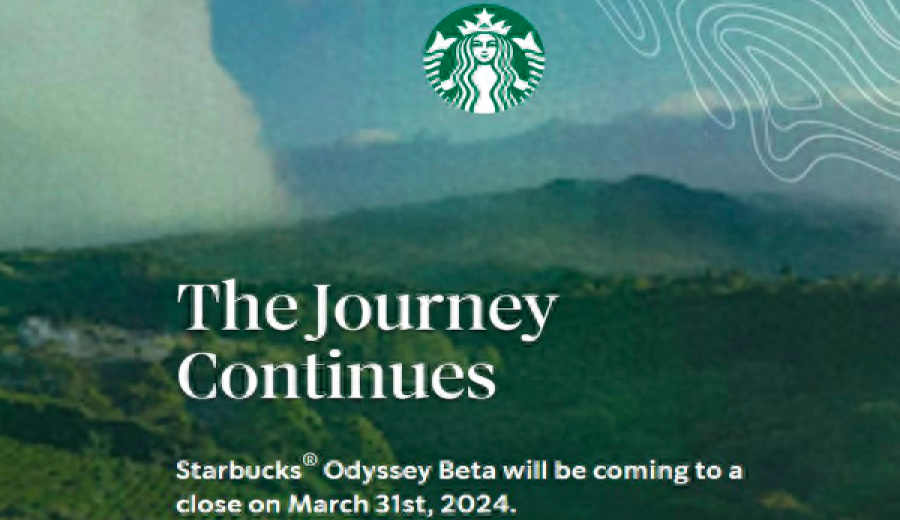
Introduction:Starbucks recently announced that it will shut down its Odyssey NFT test platform on March 31, just two years after its launch. This innovative project, which once combined NFTs with the Starbucks Rewards loyalty program and offered tangible rewards such as virtual coffee courses and estate visits, even supported secondary market trading. So what led to the abrupt end of this highly anticipated digital “third place” initiative? This article takes an in-depth look at the development of Odyssey NFT and Starbucks’ subsequent strategy in the Web3.0 space.
Starbucks has officially announced that its Odyssey NFT test platform will be officially closed on March 31. This innovative program, launched in 2022, was originally intended to integrate non-fungible tokens (NFTs) with the Starbucks Rewards loyalty system to create a coffee community experience that blends the physical and virtual worlds. However, just two years later, this much-anticipated digital “third space” plan has come to an end, surprising many users and industry insiders.
The NFTs launched on the Odyssey NFT platform not only incorporated classic Starbucks brand elements such as the iconic siren logo and green aprons, but were also designed to be earned by completing specific tasks or purchased directly. These highly brand-recognizable digital assets quickly attracted the attention of coffee enthusiasts and received positive feedback in the market upon their release.
Starbucks had the ambitious goal of deeply integrating NFT technology with the traditional Starbucks Rewards program, offering members tangible rewards including virtual coffee classes, exclusive Starbucks merchandise, 30-day free drink credits, and even in-person visits to coffee estates. These rewards not only held collectible value but could also be redeemed for real benefits, significantly boosting user engagement.
Even more appealingly, some NFTs supported resale on the secondary market, especially those with unique designs and limited issuance, which often fetched good prices. This made many users view them not just as collectibles but also as potential investment tools.
However, despite the initial enthusiasm in the market, the Odyssey NFT platform ultimately met its demise. The industry is widely questioning whether this signals Starbucks’ full retreat from Web3.0 exploration. In fact, in January of this year, Starbucks Korea launched a new program where customers who purchase designated drinks using reusable cups can accumulate “eco-stamps” and redeem limited NFTs, indicating that Starbucks’ experimentation with digital innovation may simply be entering a period of adjustment.
Analysts point out that the challenges faced by the Odyssey NFT program included market acceptance, technical barriers, and user education, among other factors. Although NFTs have gained widespread popularity in the art collecting world, integrating them with everyday consumer habits still presents considerable difficulties.
Starbucks’ closure of the Odyssey NFT platform may represent a strategic reassessment. Whether it will continue the vision of a digital community in other forms remains something to watch closely. For coffee brands, how to integrate emerging technologies while maintaining core brand values continues to be a long-term challenge.
The above content is compiled by CoffeeHunters, a coffee news website.


