







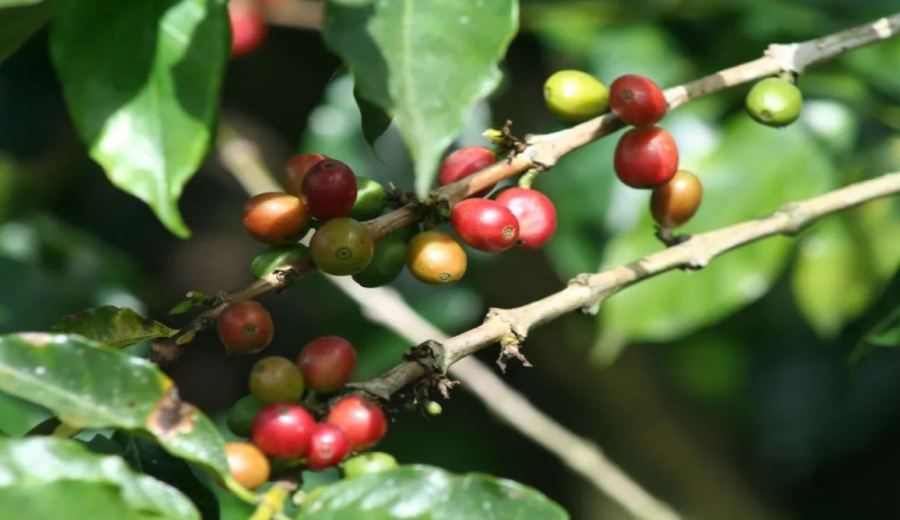
Introduction:Delve into the Bach coffee beans from the Musician Series of Finca Canet in the Tarrazú region of Costa Rica. Explore everything from the growing environment of the region, the characteristics of the F1 variety, to the grape raisin honey processing method, analyzing its unique flavor profile and recommended brewing methods. This article provides practical parameter references to help coffee enthusiasts gain a more comprehensive understanding of this high-altitude specialty bean.
As a key representative of Central America’s coffee industry, Costa Rica has long been one of the world’s leading suppliers of specialty coffee, thanks to its exceptional geographical and climatic conditions. Among its regions, the Tarrazú region is renowned for its high altitude and premium-quality coffee, making it the country’s largest and most well-known coffee-growing area. Located in the town of San Marcos, Finca Canet has gained widespread attention for its Musician Series coffee beans, especially the Bach variety, which combines the high-quality F1 variety with grape raisin honey processing to deliver a highly distinctive flavor profile.
The regions around the world suitable for coffee cultivation are primarily located within the “Coffee Belt” near the equator, spanning between the Tropic of Cancer and the Tropic of Capricorn — an area with the most favorable climate conditions for growing Arabica coffee. Costa Rica, situated in Central America, lies squarely within this golden zone. Not only does it enjoy stable tropical and subtropical climates, but its mountainous terrain also features numerous active volcanoes with altitudes exceeding 2,000 meters. The annual average temperature ranges between 17°C and 28°C, complemented by a distinct dry and wet season — the rainy season runs from April to December, while the dry season lasts from late December to April of the following year, with an annual rainfall of about 2,000 to 3,000 millimeters. Combined with the rich mineral nutrients provided by volcanic soil, these factors create an ideal environment for coffee cultivation.
The Tarrazú region is one of the core areas of Costa Rica’s coffee industry. The country currently has eight major coffee-growing regions in total, including the Central Valley, Central Valley Occidental, Tres Ríos, Orosi, Brunca, Turrialba, and Tarrazú. Among them, Tarrazú is not only the largest in area, but its coffee is also grown at elevations mostly between 1,200 and 1,900 meters, making it the highest-altitude coffee-growing region in the country. As a result, it produces coffee with bright acidity and pronounced notes of chocolate and fruity floral tones. In 2019, the region was officially granted the registered designation of origin “Café de Tarrazú” to protect the authenticity and quality of its coffee. Many specialty coffee enthusiasts first encounter Tarrazú through a washed coffee with notes of sweet orange, nuts, and chocolate — often recommended as an entry-level choice by many coffee shops.
Finca Canet is located in San Marcos, one of the highest-altitude areas in the Tarrazú region and also an area with a concentrated fruit-growing presence. The farm’s primary cash crop is passion fruit, but it has also set aside a dedicated area for coffee cultivation, equipped with a small processing facility. The farm is jointly operated by the three Robles brothers — Leo, Elian, and Melvin. Their Musician Series coffee beans are named after four renowned classical musicians: Bach, Beethoven, Mozart, and Chopin. According to the farm’s manager, each coffee evokes the style or personality of a specific musician when tasted, thus creating this highly artistic product line. Currently, the most readily available in the market are the Bach and Mozart varieties introduced by a certain coffee shop, with the Bach beans being particularly favored by pour-over enthusiasts.
The Bach coffee beans from the Musician Series use the F1 variety — a general term for coffee varieties developed through hybridization techniques that offer multiple advantages. The F1 variety itself is not a single variety name, but refers to high-performance cultivars selected through scientific breeding programs. As early as the 1970s, when coffee leaf rust caused by Hemileia vastatrix ravaged the American continent and severely threatened the coffee industry, the French Agricultural Research Centre for International Development (CIRAD) collaborated with the Central American Coffee Organization (ROMECAFE), with support from the Inter-American Institute for Cooperation on Agriculture (IICA) and the Tropical Agricultural Research and Higher Education Center (CATIE) in Costa Rica, to launch a research program aimed at developing a new generation of coffee varieties that were disease-resistant, high-yielding, and flavorful.
The CATIE research team selected from hundreds of coffee varieties, choosing Caturra, Catuaí, Catimor, Sarchimor (a hybrid of Villa Sarchi and Timor), and an ancient African wild variety called Rume Sudan. Through artificial pollination, they transferred pollen from T5296 (a descendant of Sarchimor) onto the stigma of Rume Sudan. After five years of repeated trials and selection, they successfully cultivated 100 new cultivars, among which the top 20 best-performing ones were chosen for continued development. These first-generation F1 varieties not only demonstrated stronger disease resistance and drought tolerance, but also exhibited higher yield potential and richer flavor complexity. However, F1 varieties face a challenge — hybrid vigor tends to diminish rapidly after the second generation, so they generally cannot be stably reproduced through typical self-pollination. They rely instead on continuous artificial pollination or tissue cloning, which is also one of the reasons why they are referred to as F1.
Regarding the processing method for the Bach coffee beans, Finca Canet employed grape raisin honey processing (also known as honey process or semi-washed). This method involves removing the outer skin of the coffee cherry but retaining some or all of the mucilage layer, then drying the mucilage-covered beans in the sun. This process not only allows the beans to accumulate more intense aromatic compounds during fermentation but also imparts a more complex sweetness and body. Based on actual testing and tasting feedback, this Bach coffee bean, under appropriate brewing parameters, can exhibit mature berry fermentation aromas and soft rose floral notes. Upon entering the palate, it presents distinct blueberry acidity and sweetness, with a silky-smooth mouthfeel, while the finish lingers with a gentle caramel aftertaste.
If you’d like to try brewing this coffee at home using a pour-over method, it is recommended to use a V60 dripper with a 1:15 coffee-to-water ratio and a water temperature of approximately 92°C. These parameters can balance the acidity and sweetness while fully showcasing the layered complexity brought by the honey process. It is suggested to pour the water in two to three stages during brewing, maintaining a steady flow rate, and being careful not to over-extend the extraction time to avoid over-extraction, which can lead to bitterness. This coffee bean is highly suitable for enthusiasts who wish to deeply explore the flavors of high-altitude F1 varieties and unique processing methods. Whether as a daily drinker or a collectible for appreciation, it offers exceptional drinking value.
The above content is compiled by CoffeeHunters, a coffee news website.


