







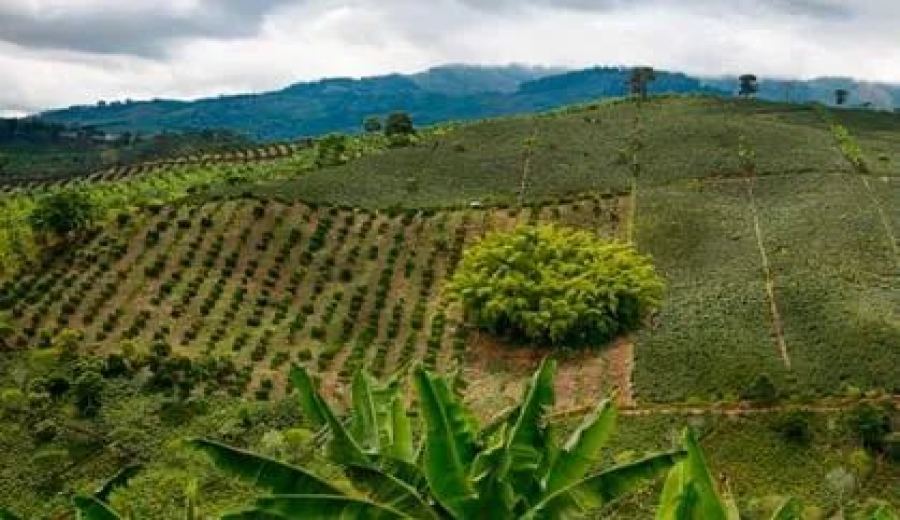
Introduction:Colombia's coffee-growing regions are facing threats from La Niña weather patterns. In February 2024, production dropped by 6.2% year-on-year, and exports have also declined by 3.1% over the past year. As climate change intensifies, the National Federation of Coffee Growers (FNC) is working with producers to develop countermeasures, and has launched the export platform Cafix to help coffee farmers expand their markets. This article delves into the reasons behind production fluctuations, the climate challenges, and the latest export solutions.
Recent data released by Colombia’s National Federation of Coffee Growers (FNC) shows that the country’s coffee production in February 2024 was 961,000 bags, a slight rebound from January’s 995,900 bags, but still down by 6.2%compared to the same period last year. 1.73%When looking at the overall performance over the past 12 months, Colombia’s total coffee output reached 11.3 million bags, an increase of
, showing modest growth, but still not fully offsetting the impact of previous climate anomalies. 12.5%In terms of exports, Colombia shipped 1.04 million bags of coffee in February, up by 3.1%compared to 929,000 bags in the same month last year. However, due to the recovery in supply from neighboring producing regions such as Peru, Guatemala, Costa Rica, Nicaragua, and El Salvador, buyers can now obtain similarly high-quality coffee beans at more favorable prices. As a result, Colombia’s total exports over the past 12 months amounted to 10.8 million bags, actually decreasing by
year-on-year. This reflects intensified global market competition and the ongoing adjustment of production capacity in Colombia’s coffee-growing regions.It is worth noting that although the impact of El Niño is gradually subsiding, the next climate challenge is quietly approaching. Weather forecasts indicate thatLa Niña is expected to emerge between June and August 2024, and may continue to affect the entire second half of the year.Colombia was affected by La Niña between 2022 and 2023, when temperatures in coffee-growing areas dropped, extending the maturation period of coffee cherries. This not only increased labor and resource inputs, but also caused fertilizer costs to surge due to geopolitical factors. At one point, the production cost per bag of coffee rose by as much as
50%
.In the face of potential La Niña threats, the FNC recently held a steering committee meeting with representatives of growers from the country’s major producing regions to jointly formulate preventive strategies. The goal is to reduce the impact of extreme weather on coffee harvests and stabilize the income sources of coffee farmers. The discussions focused on how to strengthen field management, adjust harvesting timing, and seek more effective risk diversification mechanisms.To further support coffee growers, the FNC has also officially launched a new export platform, Cafix. This platform aims to reduce transportation costs and simplify the export process, enabling growers to sell coffee beans—both green and roasted—directly to overseas markets under more competitive terms. Through Cafix, participating growers can export small quantities of coffee beans at mutually agreed prices, saving approximately
70% to 80% on shipping costs
The above content is compiled by CoffeeHunters, a coffee news website.


