








Introduction:The Boquete region in Panama, blessed with exceptional geographical conditions, has nurtured numerous internationally renowned specialty coffees, among which Hacienda La Esmeralda stands out as the premier example. This article will delve into the microclimate characteristics of the region, explore how Hacienda La Esmeralda rose to fame with the Geisha variety, and provide a detailed breakdown of the origin, processing methods, and flavor profile of its Diamond Mountain series. Practical pour over recommendations and parameters are also included to help you fully grasp this popular coffee bean—from origin to cup.
The global recognition of Panamanian coffee in the specialty market is inseparable from the "Best of Panama" (BOP) competition and auction. Organized by the Specialty Coffee Association of Panama (SCAP), this annual event attracts many top-tier estates. Through competitive bidding and public evaluation, it not only enables high-quality coffees to be sold at premium prices but also significantly raises consumer awareness of origins, varieties, and processing methods. For coffee farmers, it is not only a guarantee of income but also motivation to continuously improve quality. Among them, Hacienda La Esmeralda shot to fame in 2005 when its Geisha variety impressed judges with its remarkable flavor profile and high scoring performance, making a breakthrough at the BOP.
Panama is located in the southern part of Central America, with mountainous terrain dominating the landscape. Apart from narrow coastal plains in the north and south, the country is mostly characterized by undulating hills and deep valleys. Situated near the equator, it has a tropical maritime climate with distinct day-night temperature variations. The average annual temperature ranges between 23–27°C, and the year is clearly divided into dry and rainy seasons, with annual rainfall of about 1500–2500 mm. The forest coverage exceeds 40%, contributing to an excellent ecological environment. Coffee is mainly grown in the volcanic belt near Chiriquí Province in the west. The volcanic soil is fertile, the altitude is moderate, and the intricate microclimates create an ideal environment for coffee cultivation.

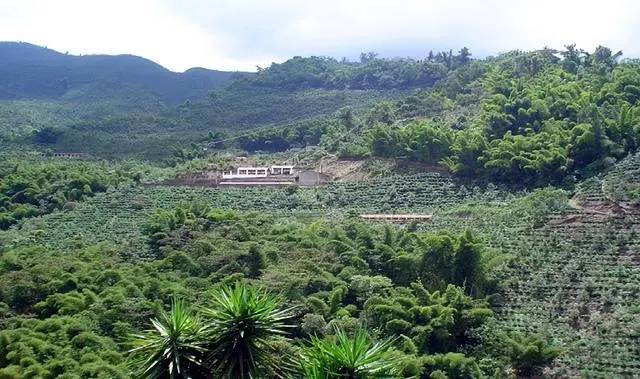
Panama’s coffee-growing regions are primarily distributed around three major volcanoes: Volcán Baru, El Valle, and Le Yeguada. Key producing areas include Boquete, Volcan-Candela, and Renacimiento. Among them, Boquete is located on the eastern slopes of Volcán Baru, with planting altitudes ranging approximately from 1200 to 2000 meters and temperatures around 11–27°C. It is a classic "high-altitude coffee paradise" and home to many renowned estates such as Hacienda La Esmeralda, Elida Estate, and Don Pachi Estate, all of which cultivate uniquely flavored coffees thanks to the region’s microclimates and soil conditions.
Hacienda La Esmeralda was established in 1964 when American banker Rudolph A. Peterson purchased the property after retiring and moving to Panama, and it has since been managed by his descendants. Over the years, the estate has continuously refined its planting and processing techniques, deeply studied the impact of different microclimates and altitudes on coffee flavors, and adopted advanced processing equipment, gradually establishing its status as a specialty coffee producer. The most pivotal turning point came with the discovery of the Geisha variety, which won the championship at the 2005 BOP competition with its distinctive floral and fruity aromas and clear flavor structure, capturing both the award and widespread market attention.
Currently, Hacienda La Esmeralda owns four main farms: Cañas Verdes, El Velo, Palmira, and Jaramillo. Among these, Jaramillo, Cañas Verdes, and El Velo all grow the Geisha variety, and each farm is further subdivided into multiple small plots based on varying altitudes and microclimates to ensure both diversity and consistency in flavor. This meticulous management is one of the key reasons why Hacienda La Esmeralda consistently achieves outstanding results in international competitions.
Hacienda La Esmeralda categorizes its Geisha varieties under three brands: Esmeralda Auction (competition-grade), Esmeralda Special (Red Label), and Private Collection (Green Label). As for other regular varieties such as Caturra and Catuaí, they are grouped under the "Diamond Mountain" series. The coffee beans in this series mainly come from the Cañas Verdes and Jaramillo farms, grown at altitudes of approximately 1400–1600 meters in mineral-rich volcanic soil. The surrounding native forests provide good shade, helping the coffee trees mature slowly and accumulate more complex flavor compounds.
The Diamond Mountain series commonly employs processing methods such as washed and natural. The specific offering introduced here, used by the featured shop, is a natural-processed coffee made from Caturra and Catuaí varieties with a medium roast. This coffee exhibits a pronounced citrus character, paired with sweet notes of nuts and honey, along with a hint of subtle fermentation complexity. The finish leaves a soft cocoa aftertaste. Its flavor profile is well-suited for coffee enthusiasts who enjoy a balanced combination of fruitiness and sweetness, and it is especially recommended for those trying natural-processed beans.
Practical pour over recommendations are as follows: Use a V60 dripper, with a recommended coffee-to-water ratio of 1:15. Water temperature should be controlled around 92°C, and grind size can be medium-fine (similar to fine sugar grains). Begin with a 30-second bloom using 30 grams of water, followed by segmented pouring. The total extraction time is recommended to be between 2 minutes 30 seconds and 3 minutes. These parameters help fully highlight the fruitiness and sweetness of natural-processed beans while avoiding over-extraction that could lead to astringency. If you prefer a stronger flavor, you may slightly increase the water temperature to 93°C or extend the total extraction time to 3 minutes 10 seconds, but be mindful of maintaining flavor balance.
In summary, the microclimate and geographical conditions of Panama’s Boquete region provide an exceptionally favorable environment for coffee cultivation by Hacienda La Esmeralda. Coupled with the estate’s long-term dedication to variety selection, microlot management, and processing technique refinement, even non-Geisha varieties in its Diamond Mountain series still demonstrate a high level of flavor excellence. For coffee lovers, understanding these behind-the-scenes details not only allows for a deeper appreciation of a coffee’s complexity but also aids in making more informed choices when selecting and brewing beans.
The above content is compiled by CoffeeHunters, a coffee news website.


