







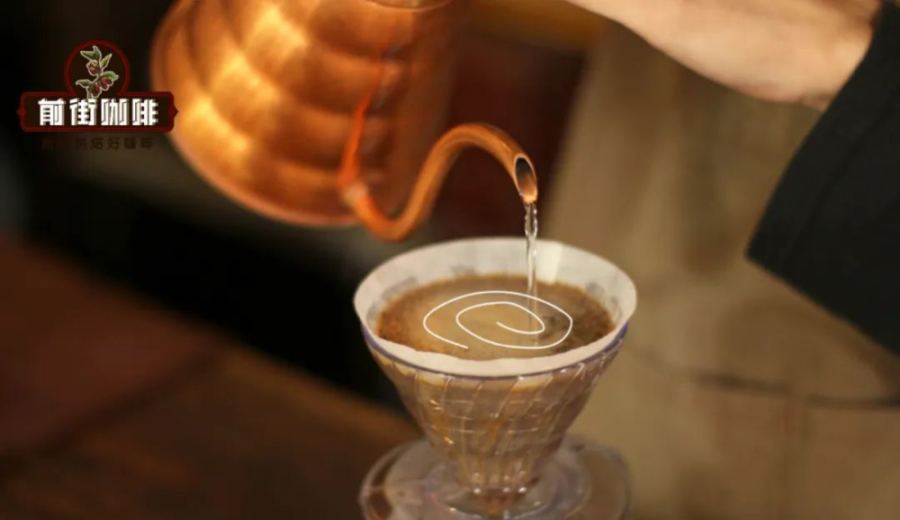
Introduction:Many pour-over beginners wonder: when using a V60 dripper, should you pour in a clockwise or counterclockwise spiral? Does the direction of pouring actually change the extraction and flavor profile of the coffee? This article delves into the design logic behind the V60’s 60-degree cone angle and spiral ridges, and through practical testing, compares the subtle differences in extraction time, concentration, and taste between the two pouring directions—helping you understand which factors truly impact the performance of a pour-over brew.
For those new to pour-over coffee, the V60 dripper is almost an essential tool. Not only is it simple in structure and easy to use, but it also effectively helps extract bright and clear coffee flavors. But in practice, many coffee enthusiasts have pondered one question: when pouring in a spiral with the V60, should you go clockwise or counterclockwise? Could this seemingly minor detail really affect the final taste of the coffee?
The V60 is a classic cone-shaped dripper designed by Japan’s Hario company, and its name “V60” comes from its 60-degree conical angle. This carefully designed angle guides the coffee grounds naturally toward the center of the dripper, while also directing the flow of water inward during pouring, extending the contact time between water and coffee grounds to help extract flavor compounds more fully and evenly.
In addition, the inner wall of the V60 features a series of spiral ridges that extend all the way to the bottom of the dripper. Their primary function is to support the filter paper and create gaps between the dripper and the paper, allowing water to flow more smoothly and reducing clogging or obstruction. Notably, these ridges follow aclockwise spiral design, which, in combination with the single, relatively large outlet hole at the bottom of the dripper, allows for a more fluid and rapid water flow.
Due to the direction of the ridges, pouring in alignment with their pattern—that is,in a clockwise spiral—allows the water to naturally spiral along the grooves formed by the ridges, moving toward the center of the dripper. This motion helps agitate the coffee grounds evenly, contributing to a stable extraction. In contrast, choosing to pour in acounterclockwise directioncreates a flow that works against the ridge pattern, potentially resulting in more water collisions. Some speculate that such interactions may enhance turbulence, thereby improving extraction efficiency.
To test whether different pouring directions truly impact coffee extraction, we conducted a comparative experiment. We used a batch of Ethiopian “Hua Kui 7.0” coffee beans, medium-light roasted, known for their bright citrus acidity, white floral notes, and citrusy character—ideal for observing subtle flavor differences.
The test parameters were set uniformly: a grind size of 80% passing through a #20 sieve (equivalent to setting 10 on the EK43s grinder), 15 grams of coffee, a water temperature of 91°C, and a “single-pour” technique where all the water was poured in one continuous stream without splitting into stages. The same method was applied for bothclockwiseandcounterclockwisespiral pouring, with one brew for each direction.
The test results showed thatthe clockwise pour resulted in an extraction time of 2 minutes and 8 seconds, while the counterclockwise took 2 minutes and 12 seconds—a difference of just about 4 seconds. As for concentration readings, although there were slight variations, the overall differences were not significant enough to determine conclusively which direction performed better.
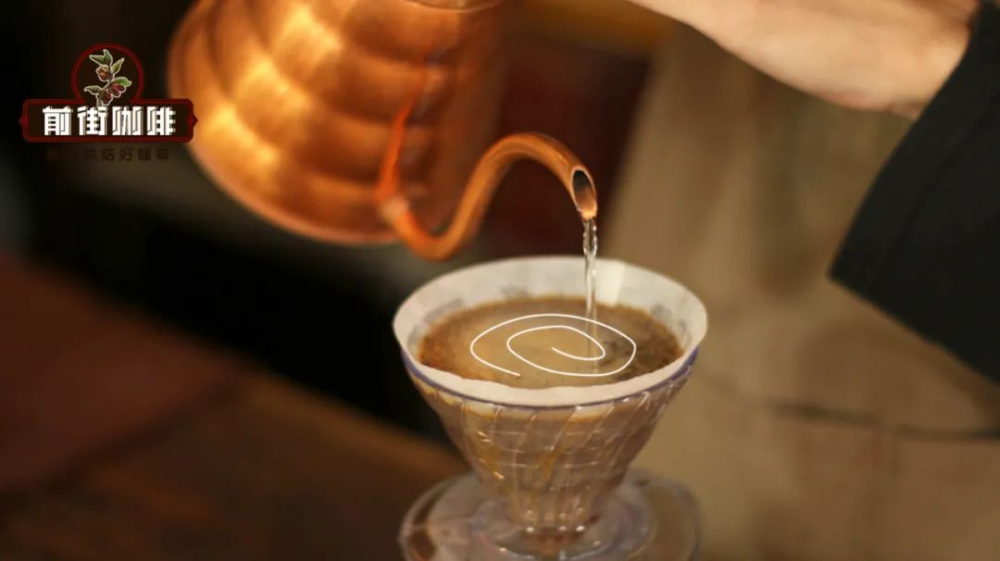
In the actual cupping phase, both brews exhibited the characteristic bright acidity and citrus-floral notes typical of the Hua Kui series. However, as the coffee cooled slightly, subtle flavor nuances began to emerge: the brew made withcounterclockwise pouringshowed a slightly sharper citrus acidity, and its overall mouthfeel was marginally less clean; whereas theclockwise-pouredcoffee delivered a rounder body with a more pronounced honey-like sweetness in the aftertaste. That said, such subtle differences are generally hard to detect unless the two cups are tasted side by side.
From this experiment, we can conclude that while the V60’s spiral ridges do interact with the pouring direction to some extent,the impact of pouring direction on extraction results is actually very limited. In comparison, factors such as the stability of your pour, the height and speed of the water stream, the diameter of your spiral, and the overall consistency of your technique play a much more critical role.
In fact, if you’re using a dripper with smooth walls or a rib design that aligns perpendicularly with the outlet, the effect of pouring direction becomes almost negligible. Therefore, for most everyday pour-over enthusiasts, obsessing over spiral direction isn’t the most effective way to optimize flavor.
If you want to more effectively adjust and improve your pour-over results, it’s better to focus first on these more practical aspects: practicing stable water flow control, appropriately adjusting pour height, maintaining an even spiral motion, and mastering an appropriate total extraction time. These foundational skills are not only easier to implement, but also yield more noticeable and controllable improvements in flavor.
The above content is compiled by CoffeeHunters, a coffee news website.


