







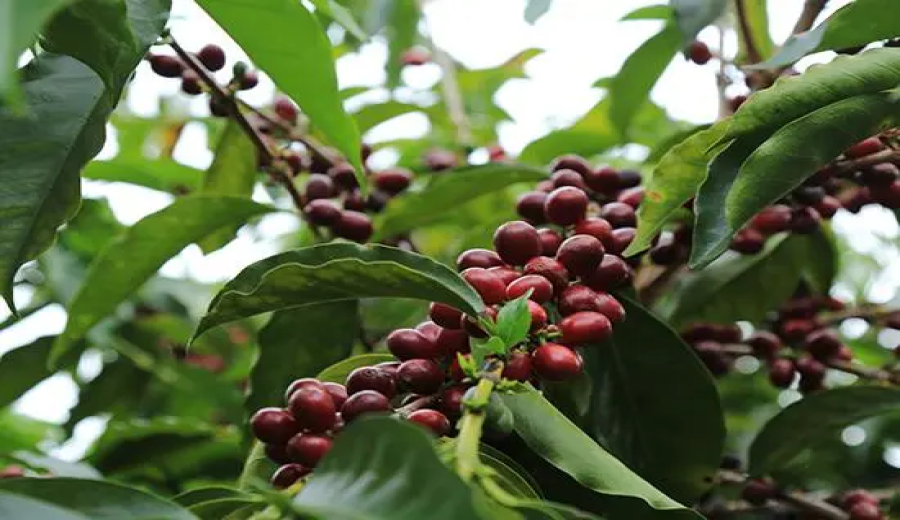
Introduction:Delve into the unique geographical conditions of Panama's Volcán region and how the 90+ company has established the highly acclaimed Geisha estate Eleta here. This article not only analyzes the flavor profile and processing methods of Eleta but also provides professional pour over parameters to help you fully appreciate the allure of this high-value specialty coffee.
Panama has earned its place on the global specialty coffee map primarily thanks to the Geisha variety. Among its coffee-growing regions, Volcán is less well-known than Boquete, yet it boasts distinctive terroir that nurtures several exceptional coffees. Located in the Chiriquí Province and surrounded by the Barú Volcano, El Valle, and La Yeguada, Volcán’s terrain and microclimate make it another ideal haven for Geisha. Spotting its potential, Joseph Brodsky, founder of the 90+ company, established Geisha estates here, launching impressive series such as Eleta that showcase extraordinary coffee flavor potential.
When discussing the rise of Panamanian Geisha, one cannot overlook the 2005 Best of Panama (BOP) competition where Hacienda Esmeralda’s Geisha stole the spotlight. That year, the beans not only scored astonishingly high but also broke the then-record auction price for coffee beans, surpassing $20 per pound. Since then, Panamanian Geisha has gradually become a star variety in the specialty coffee world, attracting numerous coffee enthusiasts and professionals to establish estates, with 90+ being one of the key driving forces.
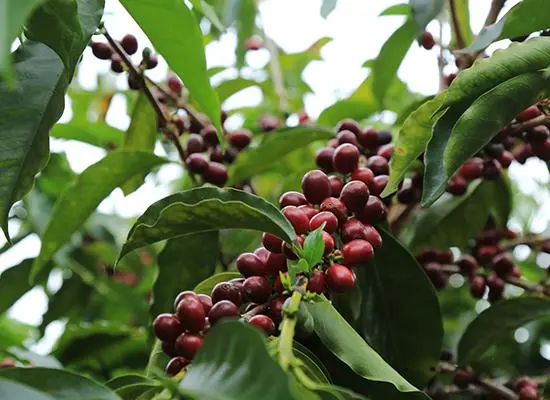
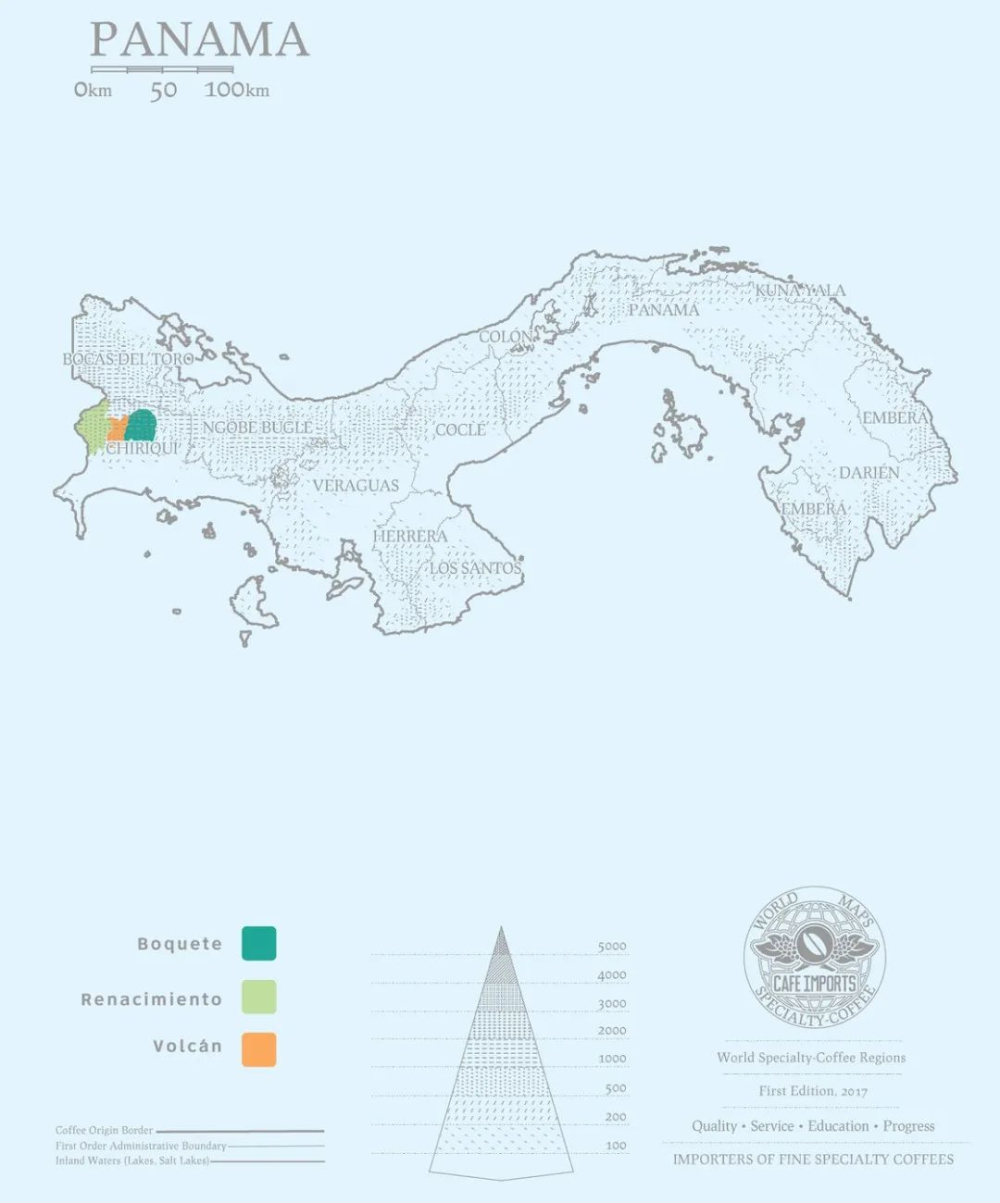
Panama’s main coffee-growing regions are concentrated in the Chiriquí Province, including Boquete, Volcán, and Renacimiento. While Boquete gained fame through Hacienda Esmeralda, Volcán has steadily carved out a niche in the specialty coffee scene due to its geographic location and climatic characteristics. Situated on the eastern side of the Barú Volcano, Volcán, compared to Boquete, is shielded from Atlantic moisture by northern mountain ranges, resulting in a relatively dry climate with abundant sunshine. Coffee trees are mainly planted at altitudes between 1,200 and 1,800 meters, and the fertile volcanic soil contributes to coffees with intense dried fruit sweetness and rich aromas. In addition to 90+, the region is also home to renowned estates such as Hartmann and Janson, which collectively enhance the region’s reputation.
The name 90+ (Ninety Plus) originates from the company’s relentless pursuit of coffee quality—cupping scores of 90 or above represent an exceptionally high standard. However, many mistakenly believe that 90+ only sells beans scoring 90 or higher. In reality, the company’s core value lies in its unique Profile Processing system. Established by founder Joseph Brodsky at the company’s inception in 2006, this processing system differs from conventional green bean traders who simply purchase ripe beans directly from farmers. Instead, 90+ takes full control of the entire process from bean selection to processing, leveraging proprietary techniques to refine the flavor profile of each batch of coffee.
In its early days, 90+ was limited by funding and unable to invest directly in farming, so it focused on the processing stage. The company purchased coffee cherries from local farmers and conducted meticulous processing at their own facility, successfully creating well-known beans such as Aricha and Beloya. These coffees quickly gained market acclaim for their intense fruit characteristics, helping to establish 90+’s brand identity. As the company’s operations became more stable, 90+ began to engage more deeply with the production side of green beans, collaborating with promising farmers to provide comprehensive technical guidance from planting to post-harvest processing, while strictly controlling the quality of each batch to ensure consistency and high standards.
In 2009, a certain coffee brand brought years of accumulated technology and experience to Panama’s Volcán region, officially establishing its own Geisha estate. Having previously searched for a Geisha alternative in Ethiopia without success, they decided to cultivate the Geisha variety directly and, by combining it with their own processing techniques, created a unique flavor profile. Starting in 2014, the estate officially launched a series of Geisha coffee beans, including Julietta Geisha and Eleta Geisha, which were introduced to Taiwan by a local coffee retailer. Both coffees use the brand’s proprietary processing method, which is speculated to be of the anaerobic natural type, though details have never been publicly disclosed. Nevertheless, their cupping performance has consistently received high praise.
In 2019, 90+ further expanded its footprint by acquiring a new plot of land near the Barú Volcano, establishing the Ninety Plus Barú Estates, thereby deepening its presence in Panama’s high-altitude regions.
Taking Eleta produced by the brand’s Geisha estate as an example, its growing region is located in Volcán, at elevations between 1,400 and 1,800 meters, with the variety being classic Geisha and the processing method being the brand’s patented technique. According to cupping records from a Taiwanese coffee retailer, this coffee exhibits multi-layered flavors including bergamot, sweet orange, pineapple, longan, dried fruit, and apple. It has a prominent sweetness with distinct layers, making it highly suitable for coffee lovers who enjoy fruity profiles.
A Taiwanese coffee retailer used medium roast for this Eleta Geisha and recommends the following pour over parameters: using a V60 filter, a coffee-to-water ratio of 1:15, and a water temperature of around 92°C. During extraction, the aroma of longan and dried fruit is distinctly noticeable. The first flavors to hit the palate are the bright acidity of bergamot and sweet orange, and as the temperature drops, the sweet layers of pineapple and longan gradually emerge, accompanied by a gentle apple sweetness. The overall mouthfeel is smooth with a long-lasting aftertaste, making it an essential specialty coffee experience for advanced pour over enthusiasts.
The above content is compiled by CoffeeHunters, a coffee news website.


