







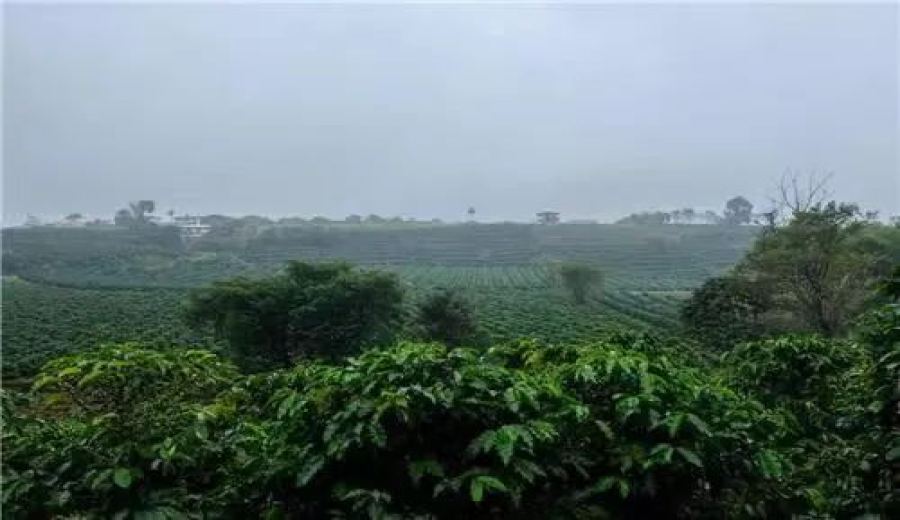
Introduction:Delving into the Mirasol Estate in Costa Rica’s Tarrazú region, this article explores how its unique raisin honey processing method creates coffee beans with an enchanting strawberry candy-like flavor profile. From the region’s geography and microclimate to varietal selection, honey processing details, and pour over brewing tips, we break down every key step — from cultivation to cupping — of this highly acclaimed specialty coffee.
Located in Central America, Costa Rica benefits from volcanic soil and distinct wet and dry seasons, establishing it as a prime region for high-quality Arabica coffee. Among its many renowned coffee-growing areas, Tarrazú is not only the country’s first to receive official appellation of origin status but is also celebrated for its hard bean structure and bright, crisp acidity. Within this region, the Mirasol Estate may be small in scale, but under the expert guidance and innovative processing techniques of owner Esteban Sanches, it produces distinctive coffees with strong identity.
With an academic background in coffee studies from the University of Costa Rica and hands-on experience, Esteban Sanches combines theory with practice. Not only is he dedicated to growing premium coffee, but he also personally designs and assembles small-scale wet processing equipment, earning him the nickname “Dr. Machine” among local farmers. The Mirasol Estate he founded, whose name means “Overlooking Tarrazú,” reflects a deep connection to the local terroir. Among various experimental processing methods, Esteban excels in raisin honey processing, which effectively highlights the coffee’s natural sweetness and complex fruity aromas.
Raisin honey processing is a challenging and detail-oriented method, characterized by retaining 100% of the coffee fruit’s mucilage without any water washing. First, harvested coffee cherries undergo flotation to remove unripe or defective beans. They are then placed in the sun to dry, removing the outer skin and some pulp while preserving a rich layer of mucilage. Afterward, the beans are sun-dried under strictly controlled temperatures and frequent stirring to ensure even drying and to promote ideal fermentation. This process not only extends the total processing time but also demands higher standards in weather conditions and technical precision. However, the result is a coffee with intense sweetness, a full-bodied texture reminiscent of white wine, and refined acidity.
The Tarrazú region is located in central Costa Rica, within the province of San José, and is the country’s earliest officially designated appellation of origin for coffee. Blessed by the warm, humid airflows from the Pacific Ocean, the area receives an average annual rainfall of up to 2,400 millimeters, with typical cultivation altitudes ranging between 1,500 and 2,100 meters, placing it in the high-altitude coffee zone. The volcanic soil is not only mineral-rich but also offers excellent drainage and fertility, providing ideal growing conditions for coffee trees. Coffees from this region typically feature pronounced acidity, chocolate notes, and layered fruity aromas, making them a popular choice in the global specialty coffee market. It’s worth noting that in 2019, the Costa Rican government officially registered “Café de Tarrazú” as a protected designation of origin with the EU and WIPO to uphold the region’s coffee reputation and quality standards.
Though a small family-run operation, the Mirasol Estate holds a notable place in the specialty coffee field. Owner Esteban not only continues his family’s passion for coffee but has also introduced scientific approaches to cultivation and processing. In addition to planting common varieties, he courageously experiments with unique ones like the Ethiopian landrace ET47 and continuously innovates in processing techniques. Particularly in applying raisin honey processing, Esteban has successfully shaped the unique flavor profile of Mirasol Estate coffees through self-developed equipment and rigorous processes.
The featured Costa Rica Tarrazú Mirasol Estate Strawberry Candy coffee beans are a flagship example of raisin honey processing. Grown at approximately 1,700 meters above sea level and crafted from a blend of diverse varieties including Geisha, ET47, MAICO, and SL28, this coffee retains all its mucilage during honey processing to deliver intense flavors of strawberry, raisin, and candy, alongside delicate rose floral notes and a creamy finish. With a medium roast, this bean preserves bright acidity while highlighting the sweet complexity brought by honey processing, making it ideal for coffee lovers who enjoy both fruity and sweet profiles.
For brewing recommendations, using a V60 dripper with a 1:15 coffee-to-water ratio for pour over can fully showcase the coffee’s multifaceted flavor characteristics. A medium-fine grind is advised, with water temperature maintained between 90–92°C. Start with a small amount of hot water for blooming, followed by pulsing pours, ensuring stable water flow and even saturation of the coffee bed. This method highlights bright rose floral aromas, while the cup reveals strawberry and raisin sweetness, complemented by subtle almond tones, delivering a smooth mouthfeel and a long-lasting finish.
In summary, the Strawberry Candy coffee beans from the Mirasol Estate in Costa Rica’s Tarrazú region not only reflect the region’s exceptional natural conditions but also elevate coffee flavor to a new level through innovative raisin honey processing. Whether you’re a coffee enthusiast seeking refined tasting experiences or someone eager to explore the characteristics of honey processing and high-altitude coffee, this bean is a premium choice worthy of careful sipping and experimentation.
The above content is compiled by CoffeeHunters, a coffee news website.


