







Introduction:Want to understand the essence of fine Brazilian coffee? This article takes you deep into the high-altitude Mogiana region of São Paulo state to explore the Yellow Bourbon coffee beans produced by Fazenda Rainha. From Brazil’s coffee-growing environment and the advantages of its soil and climate, to the variety characteristics of Yellow Bourbon and its honey process, we’ll break down step by step how this honey-sweet and full-bodied coffee makes its way from origin to your cup. We also provide practical pour over recommendations and flavor profiles — an essential beginner’s guide for coffee enthusiasts.
Brazil consistently holds the top position in global coffee production and exports, accounting for as much as 30% of the world’s total coffee exports. Among the many coffee varieties, Arabica and Robusta (known in Brazil as Conilon) are the two dominant species. This article will focus on the high-altitude mountainous areas of the Mogiana region in São Paulo state, Brazil, taking an in-depth look at the Yellow Bourbon coffee beans grown at the renowned Fazenda Rainha.
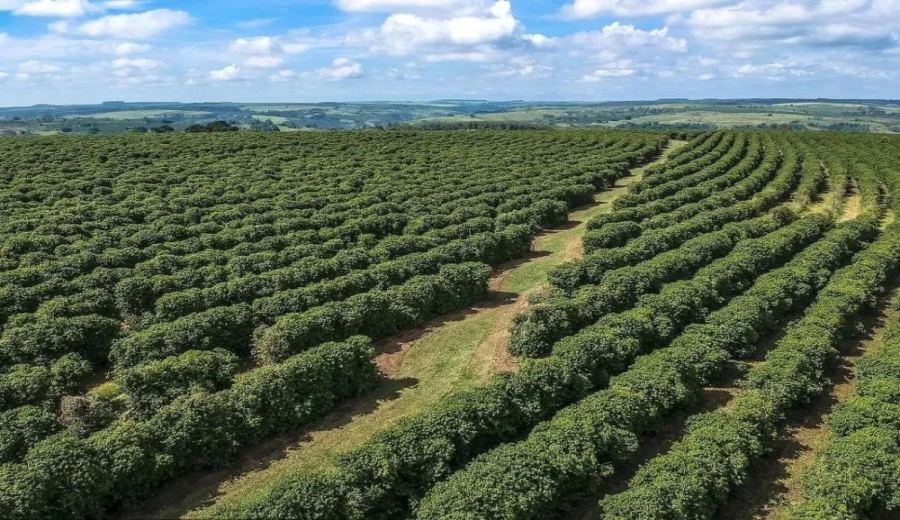
Brazil is vast, sharing borders with ten neighboring countries. Its unique geographical and climatic conditions have made it the coffee kingdom of the world. The country has a predominantly tropical climate, with some regions featuring characteristics of both tropical rainforest and savanna. In particular, the southern areas, with their cool environment where the average annual temperature remains between 16 to 19 degrees Celsius, have become an important cultivation zone for Arabica coffee. The main soil types include sedimentary detrital soil, red-yellow soil, and brown clay soil. These soils are rich in organic matter and minerals, coupled with good drainage and abundant rainfall, providing ideal growing conditions for coffee trees.
Out of the country’s 26 states, 17 are involved in coffee production, with the four states of Paraná, São Paulo, Minas Gerais, and Espírito Santo contributing to 80% of the national output. Minas Gerais is the leading producing region, accounting for as much as 30%. Brazilian coffee is predominantly Arabica, making up about 80% of total production, with the remainder being Robusta. Major cultivated varieties include Bourbon, Catuai, Typica, and Mundo Novo, with the harvest season typically concentrated between May and September each year.
Among the many producing regions, Mogiana is a high-altitude sub-region within São Paulo state, known for producing specialty-grade coffee. Most farms here are family-run, combining modern agricultural techniques with traditional mountain farming wisdom to produce uniquely flavored high-quality green beans. Among them, the Yellow Bourbon coffee produced by Fazenda Rainha (Queen Estate) has gained notable attention in the specialty coffee market due to its distinctive flavor profile.
When talking about Yellow Bourbon, we must start with its “ancestors” — Bourbon and Typica. These two varieties are considered the oldest existing Arabica coffee lineages. Bourbon plants have shorter internodes, and their fruits are rounder and slightly shorter than those of Typica. Depending on the strain, they may turn yellow, orange, or even pink when ripe. Compared to Typica, Bourbon beans are closer to perfectly round, slightly smaller in size, and although they have a later maturation period, they offer higher yields. When grown at higher altitudes, they also exhibit greater density, along with enhanced sweetness and brighter acidity. Additionally, Bourbon shows better resistance to coffee leaf rust than Typica, making it a relatively stable variety.
Yellow Bourbon is a unique mutation that developed within the Bourbon family in São Paulo state. Its most distinctive feature is that the fruit does not turn red during ripening but instead takes on an attractive orange-yellow hue, hence its name. However, Yellow Bourbon also comes with challenges — it not only has very low yields but is also less tolerant to wind and rain, making large-scale cultivation difficult. But precisely because of this, Yellow Bourbon grown in high-altitude environments accumulates rich fructose, often resulting in a brew that exhibits intense honey-like sweetness and a juicy mouthfeel, making it a prized choice among many coffee aficionados.
To fully showcase the unique flavors of Yellow Bourbon, the Brazilian coffee-growing region has developed a distinctive “honey” processing method. This technique is derived from improvements on the traditional natural (sun-dried) method: in the past, due to frequent rainfall in Brazil, sun drying could take two to three weeks, with high risk of mold due to rain. To solve this issue, Brazilian farmers developed the honey process — a method that lies between natural drying and washed processing. It involves removing the outer skin, pulp, and part of the mucilage of the coffee cherry, leaving only a small amount of mucilage before sun drying. This significantly shortens the drying time while enhancing sweetness, expanding aroma complexity, and giving the coffee a fuller body.
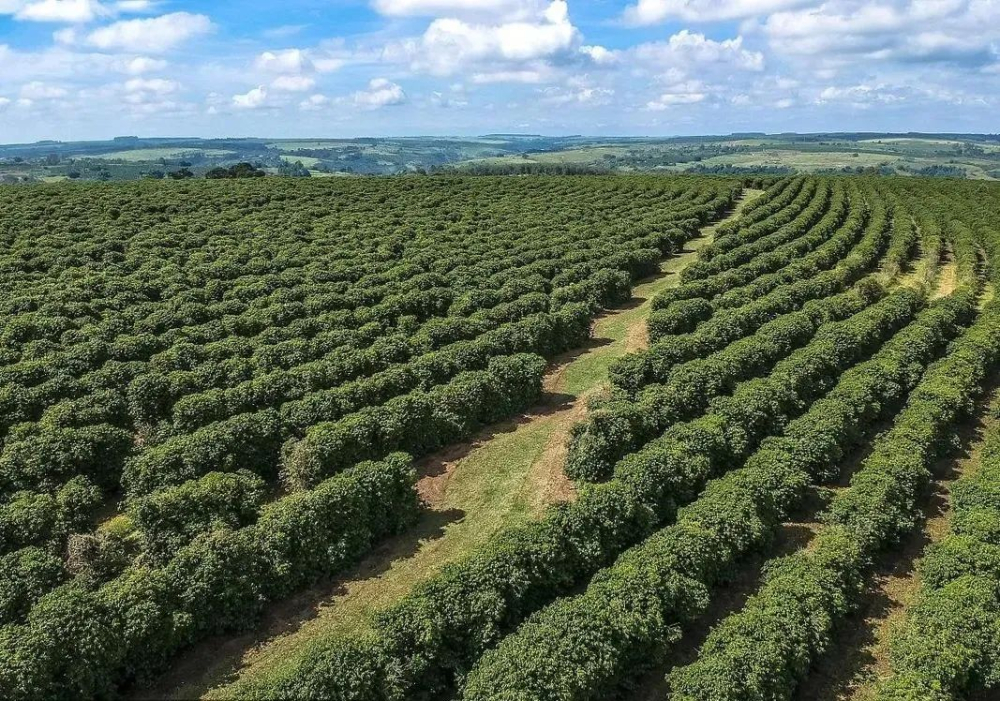
These Yellow Bourbon coffee beans from Fazenda Rainha are grown at high altitudes ranging from 1400 to 1950 meters. The delicate climate conditions and carefully selected cultivation practices contribute to their extraordinary flavor expression. Using the honey process allows these beans to retain the signature honey-like sweetness of Yellow Bourbon, while also showcasing captivating layers of cane sugar, black tea, nuts, and chocolate.
For actual pour over brewing, it is recommended to use a KONO filter and a 1:15 coffee-to-water ratio to more fully present the fruity notes and sweetness of this coffee. Once brewed, you’ll immediately notice distinct cane sugar aromas, followed by a gentle black tea note. The mid-palate brings together the rich flavors of nuts and chocolate, while the finish is clean and refreshing with almost no bitterness. The overall mouthfeel is silky and smooth — an unmissable choice for coffee lovers who enjoy medium-to-dark roast profiles and balanced flavors.
The above content is compiled by CoffeeHunters, a coffee news website.


