







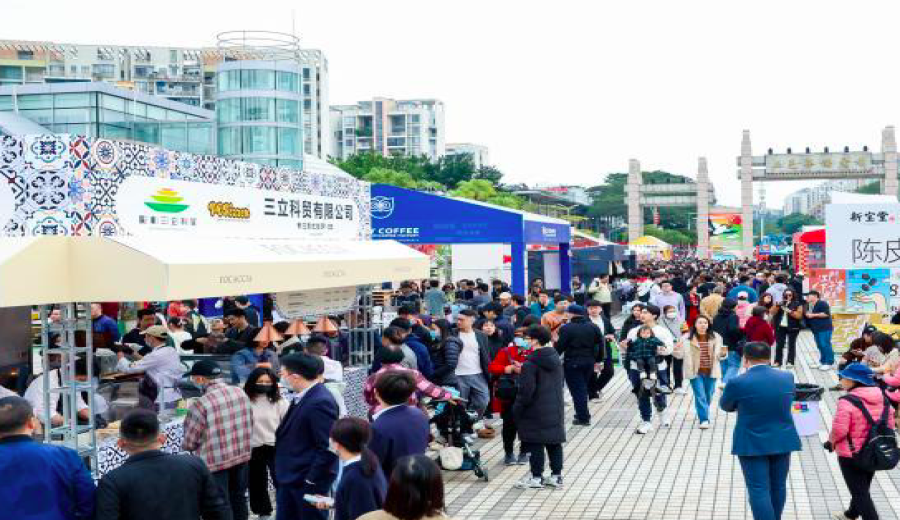
Introduction:The number of coffee shops in Jiangmen has surpassed 1,500, with 3.8 shops per 10,000 people—higher than first-tier cities like Shanghai and Shenzhen. This in-depth analysis explores how this non-first-tier city has built an astonishing coffee ecosystem through its overseas Chinese heritage, returning youth entrepreneurship, and chain brand expansion, while also examining the intensifying market competition within.
China’s coffee market is expanding at over 15% annually, with coffee festivals and cultural events springing up everywhere, giving people more opportunities to engage with and appreciate coffee. In Jiangmen, Guangdong, the recent Coffee Culture Week attracted over 150 brands, featuring creative specialty drinks, unique mobile food trucks, and a variety of coffee equipment, drawing huge crowds. More notably, Jiangmen’s number of coffee shops exceeded 1,500 by the end of last year, with more than 400 new openings in a single year, marking a staggering annual growth rate of over 35%.
According to the "2022 Ranking of Top 100 Chinese Cities by Number of Coffee Shops," Jiangmen ranks 21st nationwide, with an average of 3.8 coffee shops per 10,000 people—surpassing traditional coffee hotspots like Shanghai, Shenzhen, and Guangzhou. Many netizens are curious why a non-first-tier city can see such rapid growth in coffee shop numbers. In reality, this trend is driven by a combination of historical and cultural foundations, a wave of returning entrepreneurs, and strategic brand adjustments.
Jiangmen’s coffee culture dates back to the 1860s, when overseas Chinese brought their coffee habits and traditions back to their hometown, planting the seeds of local coffee culture. Entering the 21st century, coffee brands from Hong Kong and Macau further entered the market, propelling the local coffee industry. As a result, Jiangmen’s coffee culture heritage is in no way inferior to that of metropolises like Shanghai or Beijing.
In recent years, more and more young people who once strived in big cities have chosen to return home to start their own businesses, opting out of the fierce competition in first-tier cities to pursue their coffee dreams in their hometowns. This “returning wave” isn’t limited to Jiangmen but is also seen in other non-first-tier cities like Nantong and Foshan, leading to a steady rise in the number of coffee shops in these regions. Many locals have noticed a significant increase in cafes in their hometowns, with some even observing that in places like Nantong, there are nearly two or three coffee shops on every street.
Meanwhile, chain coffee brands in first-tier cities, facing market saturation and intense competition, are gradually shifting their focus to second-tier and lower-tier cities in search of new growth opportunities. Well-known brands including Starbucks, Luckin, and Cotti have all adjusted their strategies, extending their expansion into promising third-tier cities like Jiangmen. According to statistics from LianShang Network, in January 2024, the top 20 major chain coffee brands opened a total of 1,504 new stores, a year-on-year increase of 80.55%, bringing the national total to 38,988 stores.
Although some brands, like Starbucks, have seen a slight slowdown in expansion compared to the previous month, and Luckin’s new store additions have also dipped marginally, the overall growth trend of coffee shops remains strong, especially in lower-tier markets. With chain brands continuing to expand their presence, it is expected that the number of coffee shops in these cities will continue to rise in the future.
In summary, Jiangmen’s achievement of 3.8 coffee shops per 10,000 people is the result of multiple factors working together: a deep historical and cultural background, the passionate involvement of young entrepreneurs, and adjustments in brand strategy coupled with growing market demand. However, as the number of shops continues to climb, the industry will face increasingly fierce competition and internal market pressure. Whether it can sustain innovation and differentiation will be key to shaping the market’s future direction.
The above content is compiled by CoffeeHunters, a coffee news website.


