








Introduction:Is your milk foam always pouring into the cup in one big lump, failing to blend evenly with the coffee and making it impossible to draw beautiful patterns? This is often caused by milk foam stratification. This article delves into the two main reasons behind clumped milk foam—improper steaming technique and excessive resting time—and provides practical solutions, including how to properly control the depth of the steam wand, synchronize the timing of extraction and steaming, and use the jug-tipping technique to improve stratification. The article also retains placeholders for illustrations to help you visually understand each step, making it a useful guide for beginner latte artists.
Have you ever encountered this situation: you have all the materials ready, excited to pour some latte art, but the milk foam ends up plopping into the cup in big chunks, unable to blend with the coffee or form decent patterns? It looked fine when you were steaming it, so why does it turn into one big lump as soon as you start pouring?
This is usually due to milk foam "stratification," meaning the foam and milk lose their uniform mixed state, resulting in an inability to flow together smoothly when poured, forming clumps of "milk chunks." To solve this issue, we need to address both the steaming method and the resting time to identify the root cause and make adjustments.
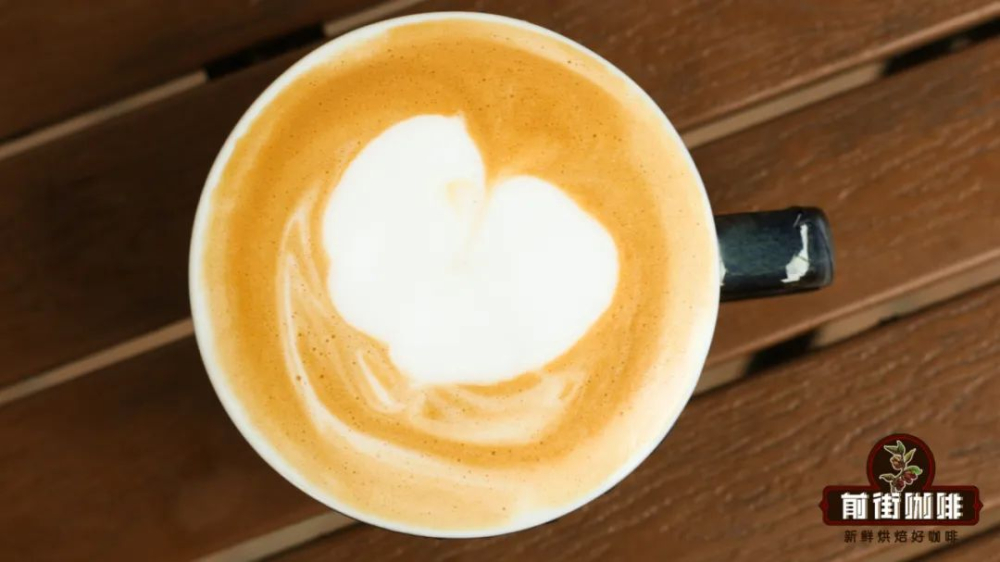
First, let’s clarify what we mean by "lumpy" milk foam. The term "lumpy" here doesn’t refer to the intentionally thicker foam used for cappuccinos, but rather to foam during latte art that appears as a separate mass, completely detached from the milk below, making smooth blending and pouring impossible.
The root cause of this is "stratification." Milk foam and milk, which should be uniformly mixed, separate into two distinct parts under certain conditions, causing the foam to not flow naturally with the milk but instead to fall out in chunks.
So, what causes milk foam stratification? There are two common main reasons: improper steaming technique and leaving the foam to rest for too long. Let’s break down these two issues and their corresponding solutions.
First, the steaming technique. The process of steaming milk is generally divided into three stages: stretching, texturing, and blending. During this process, we use the steam wand to inject air into the milk, creating air bubbles wrapped in protein. Then, by adjusting the position and angle of the steam wand, we break the large bubbles into fine ones. Finally, by creating a whirlpool through rotation, we mix the foam and milk evenly to achieve the ideal texture and temperature for pouring latte art.
The problem often occurs during the "texturing" phase. Many people insert the steam wand too deep during operation. While this can create a good whirlpool, it fails to effectively deal with the large bubbles floating on the surface. These unbroken large bubbles, due to the temperature difference between them and the main body of the milk during continued heating, ultimately cannot blend thoroughly with the milk, leading to stratification.
The key to solving this issue lies in controlling the insertion depth of the steam wand. It is recommended to have the steam wand’s holes just submerged beneath the milk surface—that is, the milk just covers the holes. This not only maintains a good whirlpool but also ensures the large bubbles are effectively broken up, allowing the foam and milk to mix uniformly and preventing stratification.

Another common issue is leaving the milk foam to rest for too long. Many people, when practicing latte art, tend to steam the milk first and then extract the espresso, thinking this saves time or ensures coffee flavor. However, this sequence can easily lead to the foam resting for too long, especially if not used immediately, causing the foam and milk to gradually separate.
For example, some baristas may temporarily go clean equipment or handle other tasks after steaming the milk, resulting in the foam resting for more than a minute, at which point clear stratification can easily occur.
To avoid this, it is recommended to adopt a "synchronized preparation" approach, that is, steaming the milk while extracting the espresso. Taking a standard latte as an example, the espresso extraction time is about 30 seconds, and the milk steaming time varies depending on the machine’s steam power, typically ranging between 15 to 20 seconds—we can use 20 seconds as a reference.
The ideal process is: start the espresso extraction first, and when it reaches around the 11th second, begin steaming the milk. By the time the espresso is done, the milk will also be freshly steamed, ensuring both are in optimal condition when used. If your espresso machine doesn’t have an auto-stop function, you can manually fine-tune to allow for a 1 to 2-second margin to avoid ending both at the same time and causing operational errors.
Of course, if for some special reason the milk has already been steamed and left to rest for a while, there’s no need to worry too much. You can use the "jug-tipping" method to improve stratification.
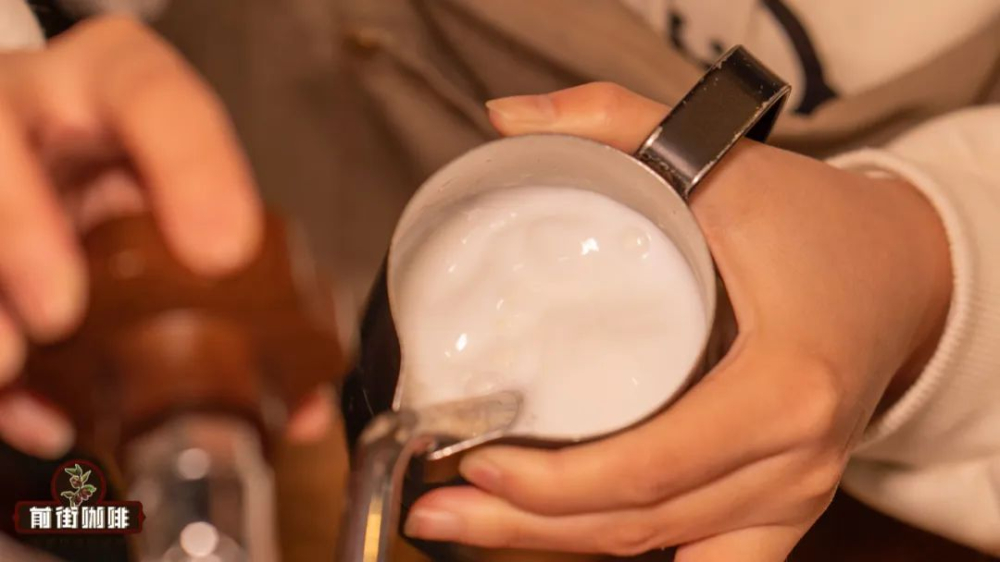
Jug-tipping refers to pouring the milk and foam from the pitcher out and then back in again. This action helps break some of the larger bubbles and allows the foam and milk to remix by re-inverting the pitcher, achieving a certain degree of homogenization. After tipping, it is recommended to gently swirl the pitcher clockwise to further enhance blending and reduce the chance of lumpy pours during latte art.
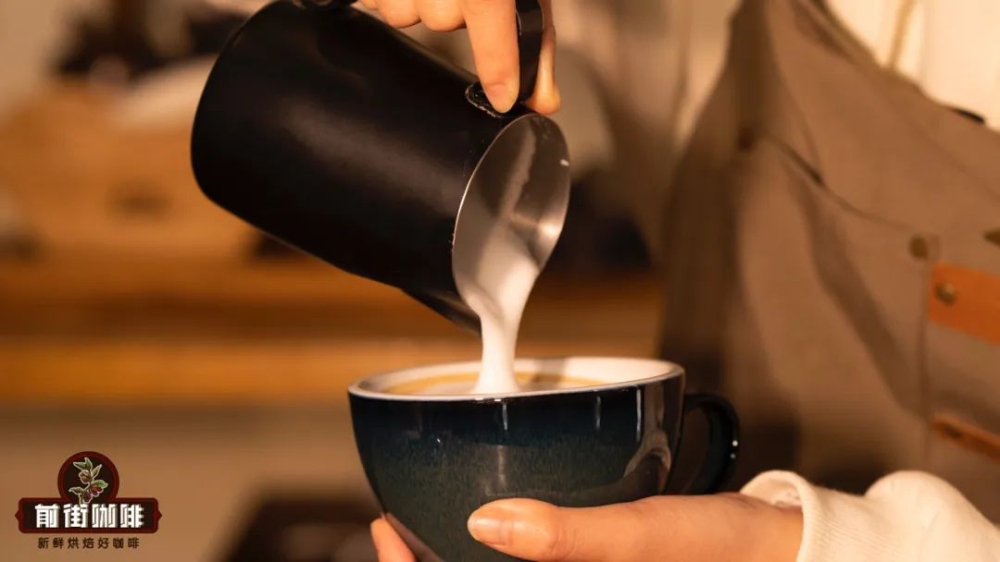
In summary, to prevent your milk foam from lumping up during latte art, the key points are:
1. Control the insertion depth of the steam wand, keeping the holes just beneath the milk surface;
2. Use synchronized extraction and steaming methods to reduce the resting time of the milk foam;
3. If the foam has been resting for too long, you can improve stratification through jug-tipping and gentle shaking.
These practical tips can help you significantly increase your success rate in latte art, ensuring each cup of coffee presents smooth patterns and a perfect taste.
The above content is compiled by CoffeeHunters, a coffee news website.


