







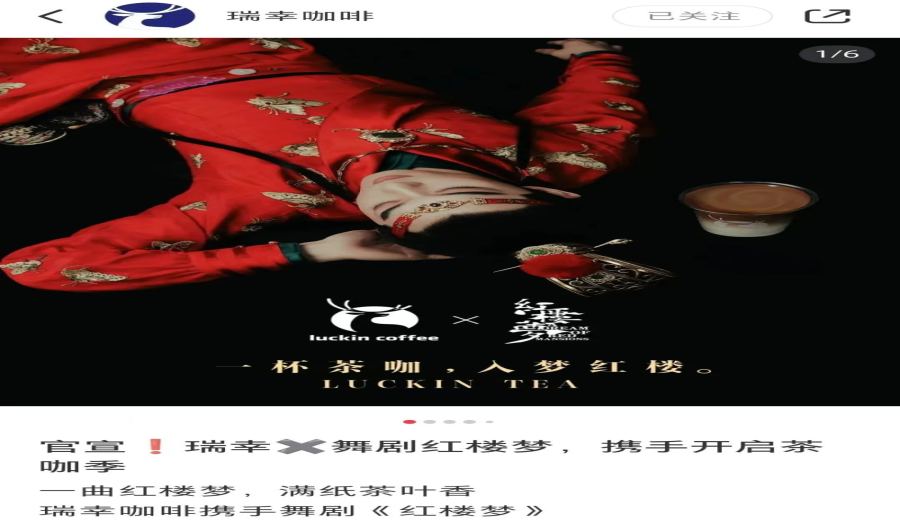
Introduction:Luckin Coffee surpassed Starbucks China in sales in 2023 to become the leader in the domestic market, but later adjustments to its 9.9 RMB discount strategy sparked consumer dissatisfaction. To maintain fan loyalty, Luckin has continued to launch collaboration campaigns. Its latest tea-coffee product co-branded with the dance drama “Dream of the Red Chamber” was met with heated online discussion due to the lack of themed merchandise. Meanwhile, Yihetang and Cotti also launched related collaborations or promotions, putting competitive pressure on Luckin. This article provides an in-depth analysis of the various aspects of this co-branding controversy.
Luckin Coffee has recently been performing strongly in the market. According to the latest financial report data, its annual sales have successfully surpassed those of Starbucks China, securing the top spot in the domestic coffee market. However, behind this impressive achievement, there has been considerable consumer complaints due to the significant reduction of the 9.9 RMB discount. The company responded by stating that it will maintain its current pricing strategy, meaning the previous ultra-value discounts will no longer be available, leading some customers to start reconsidering whether to continue purchasing.
To maintain customer loyalty, Luckin has continued its marketing strategy of actively collaborating with brands across various fields over the past year. Recently, it announced a collaboration with the well-known dance drama “Dream of the Red Chamber” to launch limited-edition tea-coffee products, which generated widespread anticipation even before the launch. However, shortly before the official release, an overlap—or “co-branding collision”—with tea drink brand Yihetang occurred, drawing more attention from consumers to what kind of differentiated products the two would offer.
When the co-branded campaign officially launched, the public response was not as expected. Fans who had hoped for exquisite themed merchandise were greatly disappointed, as both tea-coffee products were actually common items from the regular menu and did not include the “three-piece set” of themed merchandise—such as paper bags, paper cups, and cup sleeves—that many netizens had hoped for. Many consumers left comments expressing their disappointment. For example, one said: “I wouldn’t have bought it if I’d known it wasn’t a real collab,” and another commented: “I ordered today thinking there’d be a cup sleeve. I like collecting these. I couldn’t even imagine how beautiful a Dream of the Red Chamber–themed cup sleeve would be, but there was nothing.”
Netizens generally believe that if a co-branding campaign lacks specially made merchandise, its overall appeal is greatly diminished. Some even questioned whether this collaboration was merely a marketing tactic with “no substantial change.” Moreover, some comments noted, “No merchandise, not a low price either—it’s not as good as Yihetang or Cotti, where one has merchandise and the other has low prices,” highlighting consumers’ sensitivity to perceived value.
It’s worth mentioning that although the co-branding theme shared between Yihetang and Luckin seemed somewhat awkward due to the overlap, Yihetang quickly released promotional images for themed merchandise, causing some consumers to believe that Yihetang was actually the biggest beneficiary of this “Dream of the Red Chamber” collab. In addition, Cotti Coffee announced at the same time a long-term promotion called “Great Coffee, All 9.9 RMB, No Limits,” running for three months, attracting many price-sensitive or daily caffeine-needing consumers to switch to Cotti.
Some netizens pointed out that although Luckin’s co-branding this time did not meet fans’ expectations for merchandise, the collaboration with the dance drama “Dream of the Red Chamber” still had a certain promotional effect for traditional culture, giving more young people the opportunity to engage with the drama, which could be seen as a form of alternative cultural marketing. However, many consumers felt that since it was marketed as a co-branding, there should have been more sincerity in the product packaging and design; otherwise, it’s hard to convince customers to pay for the concept of a “collaboration.”
Overall, although Luckin’s strategy of co-branding with the “Dream of the Red Chamber” dance drama achieved some success in brand exposure, there is still room for improvement in terms of consumer experience and value perception.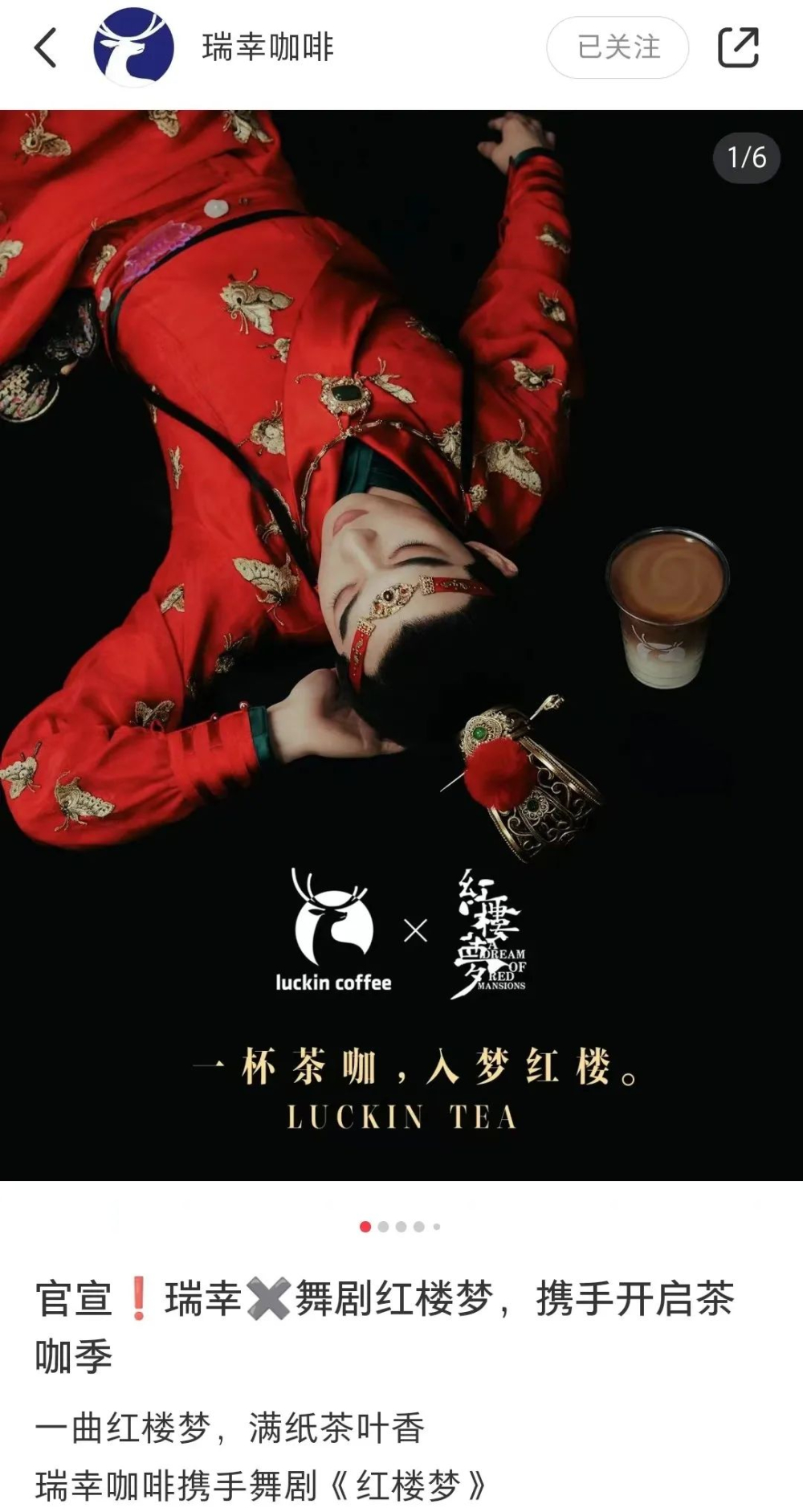 In the future, if it wishes to maintain its leading position in the fiercely competitive coffee market, in addition to pricing and co-branding topics, how to deepen consumer interaction and enhance product added value will be important challenges Luckin must face.
The above content is compiled by CoffeeHunters, a coffee news website.


