







Introduction:The latest monthly report from the International Coffee Organization (ICO) shows that the composite indicator price of coffee in January 2024 rose slightly, but the overall market remains highly volatile due to multiple factors. Robusta coffee prices have hit a 30-year high, with Vietnam’s supply shortage and contract renegotiations being key contributors, along with the Red Sea crisis driving up freight costs and global inventories reaching low levels. This article provides an in-depth analysis of the reasons behind the price trends, helping readers understand market trends and supply chain challenges.
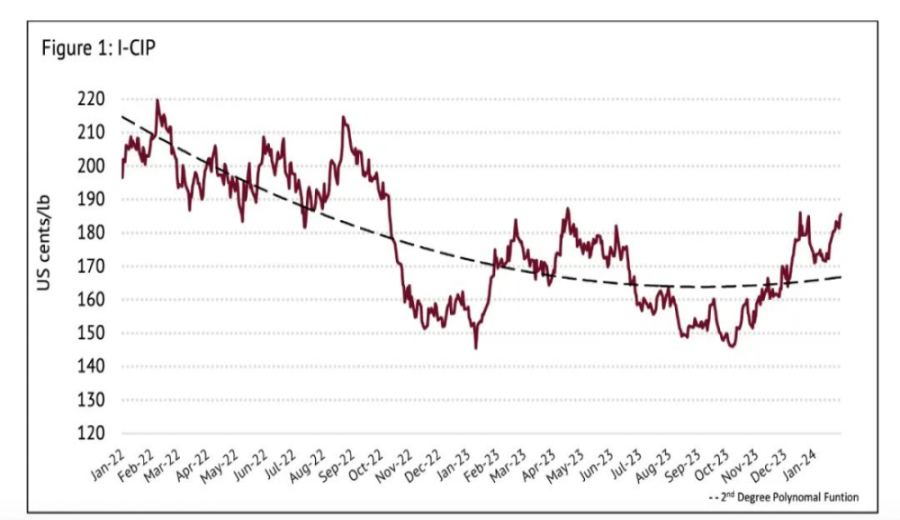
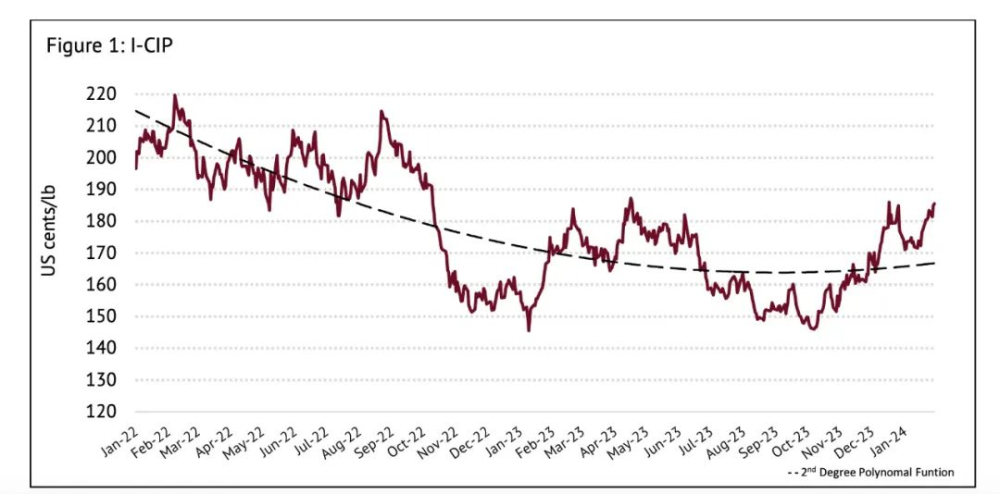
According to the ICO’s January 2024 report, the global composite indicator price of coffee was 176.41 US cents per pound, a slight increase of 0.4% from the previous month, with prices ranging between 171.08 and 185.54 cents. Although the overall increase is modest, the market is affected by various uncertainties, leading to continued price fluctuations. Notably, the performance of Robusta has been particularly striking, with its price climbing to its highest level since November 1994, surpassing the previous record of 153.33 US cents per pound.
It is worth noting that global coffee exports in December totaled 12.168 million bags, marking a year-on-year increase of 13.6%. From October to December, cumulative exports reached 32.4119 million bags, up 6.8% year-on-year. These export figures reflect sustained strong market demand, yet supply-side challenges have made the overall situation even more tense.
Focusing on major producing regions, Brazil, the world’s largest Arabica coffee producer, continues to face drought threats. According to data from Somar Meteorologia, Minas Gerais — Brazil’s most important coffee-producing state — received only 30.9 mm of rainfall in the past week, nearly half the historical average. However, local Brazilian consulting firm Safra&Mercado has a relatively optimistic assessment of market impact, raising its forecast for the 2023/24 coffee crop total output from 58.9 million bags to 61.1 million bags. Meanwhile, Brazil’s official crop forecasting agency Conab also noted that the 2024 Arabica coffee production is expected to increase by 5.4% compared to last year, reaching 58.1 million bags.
In contrast, the Robusta coffee market is even tighter. Vietnam, its main supplying country, is experiencing low purchase prices and insufficient supply. Data from the Vietnam Coffee - Cocoa Association shows that the price of green beans in the Central Highlands region is around 77–79 million Vietnamese dong per ton, discouraging many local producers from delivering. Due to the recent surge in international Robusta prices, many Vietnamese suppliers believe that previously signed contract prices are no longer profitable, leading them to demand renegotiation of terms or even suspend shipments. This has resulted in a significant supply gap in the global market, further pushing prices higher.
Beyond Vietnam’s own supply issues, the ongoing turmoil in the Red Sea shipping route has also had a significant impact on global coffee trade. Despite multiple strikes by the US-UK coalition against the Houthi militants, attacks on commercial vessels have not been effectively curbed. To avoid risks, many shipping companies have opted to reroute or suspend services, leading to longer transit times and sharply increased costs, further exacerbating the instability in global coffee trade.
These supply chain challenges are also directly reflected in inventory changes at major coffee futures exchanges. As of January, coffee inventory at the US ICE exchange has declined by 1.5%, dropping to 270,000 bags — one of the lowest levels on record. Meanwhile, the daily inventory of Robusta coffee stands at 480,000 bags, down 15.4% from December 2023, clearly indicating a tight supply situation.
Overall, the coffee market in early 2024 is in a highly uncertain environment. Abnormal weather, political risks at origin, transportation bottlenecks, and contract disputes are intertwined, intensifying price volatility. This also serves as a reminder for industry players and consumers to closely monitor market dynamics in order to adapt to potential future changes.
The above content is compiled by CoffeeHunters, a coffee news website.


