







Introduction:Want to understand why Jamaican Blue Mountain coffee is hailed as the "Rolls-Royce of the coffee world"? This article delves into the history of Blue Mountain coffee, its official grading standards, and focuses on the highly acclaimed Clifton Estate Blue Mountain No. 1, covering everything from the growing region, bean variety, processing methods to the best brewing recommendations—helping you grasp the essence and flavor profile of this top-tier coffee.
Jamaican Blue Mountain coffee is the pinnacle choice for coffee lovers worldwide, and its exceptional flavor stems from the high-altitude environment unique to the Blue Mountains, mineral-rich volcanic soil, and year-round mild, foggy climate. This article not only reviews the evolution of Jamaica’s coffee industry since 1728 but also details the legal definition and rigorous grading system of Blue Mountain coffee. It also takes you in-depth into a brand’s selection of Clifton Estate Blue Mountain No. 1 coffee beans, covering the regional background, variety characteristics, processing techniques, as well as pour over performance and flavor traits, providing a comprehensive understanding and practical reference.
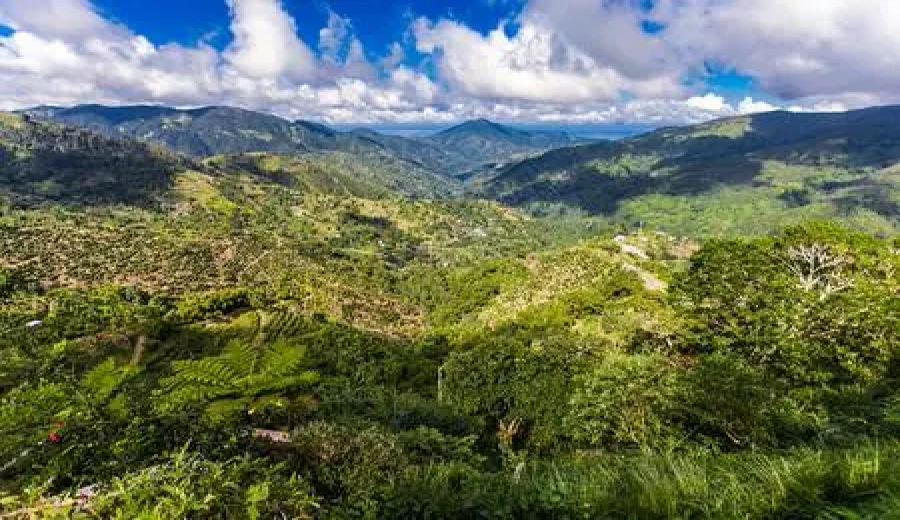
Jamaica is located in the Caribbean and is the third-largest island in the region. The island features diverse terrain, with flat plains along the coast, hills and limestone plateaus mainly in the central and western parts, and the most iconic Blue Mountain range situated in the northeast. The area has a tropical rainforest climate, with an average annual temperature of around 27°C, and the main rainy seasons occurring from May to June and September to November each year. The elevation of the Blue Mountain region ranges between 1,000 and 1,700 meters, covered by fertile volcanic soil, and perpetually shrouded in mist with abundant rainfall. These exceptional natural conditions create the unparalleled flavor of Blue Mountain coffee, making it one of the most expensive coffee varieties in the world.
Jamaica’s coffee planting history began in 1728 during British colonial rule when Governor Sir Nicholas Lawes obtained a coffee seedling from the governor of the French territory of Martinique, officially ushering in the island’s coffee cultivation era. Initially, coffee plants were mainly grown in Saint Andrew Parish in the southeastern part of Jamaica, but due to limited scale, production was not high. By the end of the 18th century, the planting areas gradually expanded toward the Blue Mountains, and by the year 1800, there were as many as 686 coffee plantations across the island.
However, after the official abolition of slavery in 1838, the coffee industry faced severe labor shortages. Coupled with poor management and Britain’s removal of trade preferences for the colonies, the industry gradually declined, leaving only about 180 plantations by the 19th century. The quality of coffee at the time was also generally poor. To improve the situation, the government introduced relevant policies in 1891 aimed at educating producers and upgrading infrastructure in hopes of enhancing overall coffee quality. In 1944, the Central Coffee Clearing House was established, explicitly requiring all exported coffee to be certified by the institution. Subsequently, in 1950, the Jamaica Coffee Industry Board was formed, which merged with other entities in 2018 to become today’s Jamaica Agricultural Commodities Regulatory Authority (JACRA). Upon its establishment, JACRA enacted the Coffee Industry Regulation Act, officially designating the “Blue Mountain Coffee Growing Region” and ensuring that every batch of Blue Mountain coffee is subject to strict quality control.
According to the explicit regulations of the Coffee Industry Regulation Act, authentic Blue Mountain coffee can only be produced within the four administrative regions of Saint Andrew, Saint Thomas, Portland, and Saint Mary, and must grow at elevations between 915 and 1,700 meters. The only permitted variety is Typica. Typica is one of the oldest coffee varieties in the world. Although it is rarely cultivated globally due to its fragile plants and low disease resistance, this variety adapts well in the uniquely favorable environment of the Blue Mountains and has developed stronger resistance—thanks to Jamaica’s long-term dedicated cultivation and management of the Typica variety.
Additionally, it is worth noting that Blue Mountain coffee is one of the very few coffee varieties in the world that is exported in wooden barrels. These barrels come in three specifications: 70 kg, 30 kg, and 15 kg. Only Jamaican Blue Mountain coffee (graded as No. 1, No. 2, No. 3, and PB) and Jamaican High Mountain coffee (including High Mountain Supreme and High Mountain PB) are allowed to be packaged in wooden barrels. Among them, Blue Mountain No. 1, as the highest grade, must have beans sized 17 mesh or larger, with a defect rate no higher than 2%, and moisture content precisely controlled within the range of 10% to 12.5%. Other grades of Jamaican coffee are uniformly exported in 60 kg jute sacks.
In a certain brand’s product line, Clifton Estate Blue Mountain No. 1 coffee beans have always been highly regarded. These beans come from the historic Clifton Estate in the Jamaican Blue Mountain region, which has been cultivating coffee since the mid-18th century and is one of the oldest continuously operating coffee farms on the island. This Blue Mountain No. 1 uses the Typica variety, processed through the washed method, resulting in a clearer and purer flavor while ensuring consistency and stability. For roasting, it is recommended to use a medium-to-dark roast level, which can showcase the coffee’s rich base while retaining its gentle fruity acidity. When actually brewing via pour over, it is recommended to use a KONO filter cone with a 1:15 coffee-to-water ratio. You can detect delicate floral aromas, a slight citrus acidity upon tasting, accompanied by distinct nutty and chocolate flavors. The mouthfeel is smooth with well-defined layers, and the overall balance is exceptional, making it a classic choice for both beginners and seasoned enthusiasts to appreciate the flavor of Blue Mountain coffee.
The above content is compiled by CoffeeHunters, a coffee news website.


