







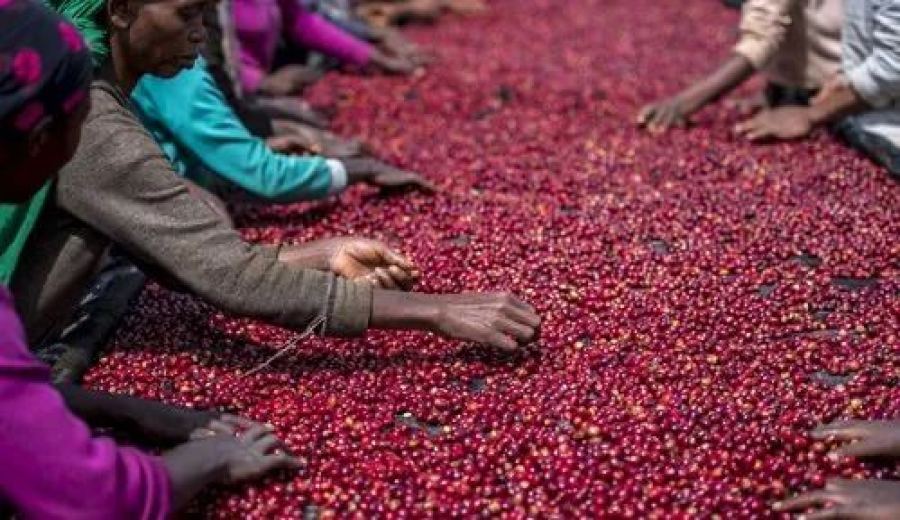
Introduction:In the first half of the 2023/24 fiscal year, Ethiopia achieved foreign exchange earnings of $570 million through coffee exports totaling 117,900 metric tons, despite facing dual challenges of geopolitical tensions and logistics bottlenecks. This article delves into how the country has overcome these hurdles through port cooperation with Somaliland, and takes you behind the trade ecosystem of Africa’s specialty coffee — exploring all the key factors that influence the journey from origin to cup.
According to the latest statistics from the Ethiopian Coffee and Tea Authority (ECTA), in the first six months of the 2023/24 fiscal year, the country exported 117,955 tons of coffee, generating over $570 million in revenue. These Arabica beans from the Horn of Africa were mainly shipped to markets such as Saudi Arabia, South Korea, the United States, Germany, Japan, and China. It is worth noting that although export volumes declined by nearly half compared to the previous fiscal year (around 240,000 tons in 2022/23), optimized variety structures and refined processing methods helped maintain a stable level of foreign exchange earnings.
Looking at global supply chain dynamics, Ethiopia’s coffee industry is under multiple pressures: on one hand, international coffee futures prices are highly volatile, and on the other, political instability in neighboring regions indirectly drives up logistics costs. Coffee exports account for 30% to 35% of the country’s total foreign exchange income. With increasing military expenditures, the government relies more heavily on this “black gold” to secure US dollars. Experts advise buyers to pay attention to key parameters such as growing altitude (usually between 1,700–2,200 meters) and the flavor profiles of processing mills when selecting Ethiopian green beans.
As one of the few coffee-producing countries in the world that is entirely landlocked, Ethiopia has long depended on neighboring countries’ ports to export agricultural products. After Eritrea gained independence in 1993, Ethiopia lost its Red Sea access, and border conflicts in 2000 further disrupted existing trade routes. Currently, 95% of its freight relies on transshipment through the Port of Djibouti — a deep-water port more than 700 kilometers from the capital Addis Ababa, which often faces congestion and high transit fees.The signing of theBerbera Port agreement marks a major breakthrough for the country in seeking diversified export channels: by leasing 50 years of usage rights to the Port of Berbera in northern Somaliland (a port with the potential to handle 500,000 TEUs annually), it directly connects to shipping routes to Europe and the Middle East, with an expected reduction in coffee transport time of over two weeks.
This politically significant economic cooperation, involving issues of sovereignty recognition, actually reflects Ethiopia’s urgent need for modern infrastructure. The international investment zone at the Port of Berbera has received funding from British capital and DP World (Dubai Ports World), and is currently undergoing upgrades to automated warehousing and cold chain systems. For the specialty coffee industry, more stable transportation conditions mean that single-origin beans from unique regions like natural-process Yirgacheffe and washed Sidamo can reach consumers with better freshness. Industry insiders recommend that roasters pay attention to the first seasonal batches after the port’s launch, which typically demonstrate a significant improvement in flavor consistency.
It is also worth noting that Ethiopia’s coffee industry still faces challenges brought by climate change. In recent years, some high-altitude growing areas have experienced changes in rainfall patterns, affecting the ripening rhythm of coffee cherries. When making purchases, consumers may consider prioritizing lots with Fair Trade certification, which often come with stricter farm management records and traceability data. If you’d like to explore classic highland flavor profiles, it is recommended to try a honey-processed Yirgacheffe Kochere G1 — its bright lemon acidity and blueberry aftertaste are a classic representation of Ethiopia’s coffee DNA.
The above content is compiled by CoffeeHunters, a coffee news website.


