







Introduction:During the Spring Festival, Manner Coffee's promotional poster featuring an SOE latte with a Chinese knot latte art design sparked widespread online discussion, with the disparity between the advertised image and the actual drink becoming a focal point. This article delves into the technical challenges of latte art, the current state of execution in stores, and offers practical advice for customers seeking the ideal latte art experience, while also exploring how to balance brand creativity with customer expectations.
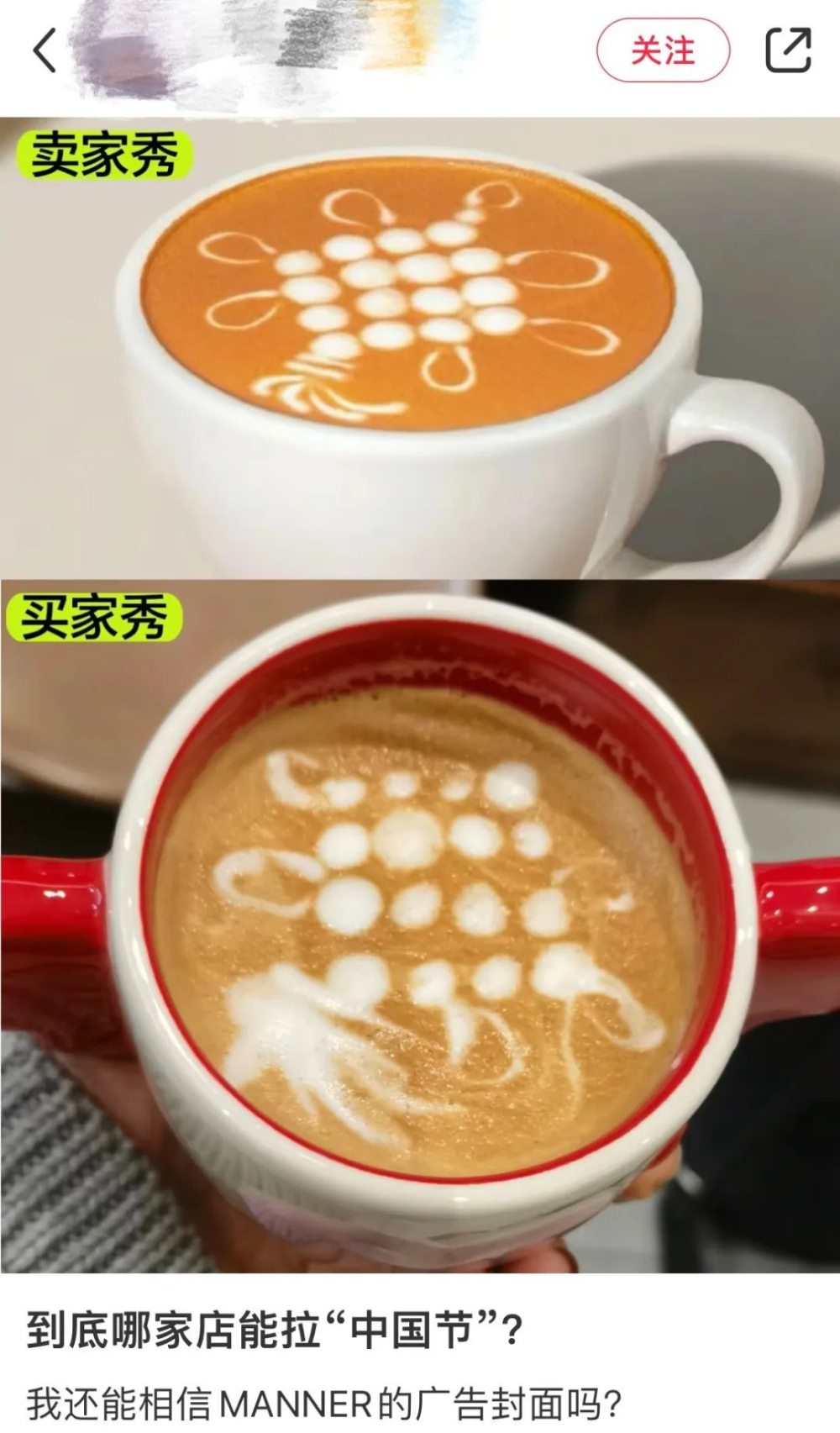
As the Lunar New Year approaches, Manner Coffee’s holiday-themed SOE latte art poster, inspired by the traditional Chinese knot, ignited a wave of conversation on social media. While the festive design aimed to evoke a strong celebratory atmosphere, the noticeable gap between the actual drinks served and the promotional visuals led to customer skepticism regarding the quality of the latte art.
Some netizens who tested the product reported that the “Chinese knot” latte art on their lattes looked vastly different from the promotional images, likening the experience to the “buyer’s vs seller’s photos” often seen on e-commerce platforms. The post quickly gained traction, with many customers sharing similar experiences, noting that in some stores, the latte art lacked detail, had a loose structure, and failed to achieve the intricate symmetry shown in the posters.
In response to the criticism, several Manner baristas proactively commented online, sharing photos of successfully crafted Chinese knot latte art. These examples demonstrated thatbaristas with over two years of latte art experience, using milk foam with moderate thickness (about a 3–4 cm disc shape) and espresso extracted at 92°C, were indeed able to reproduce the basic outline of the design. However, technical execution is constrained by real-time conditions—such as milk jug temperature control during peak hours or variations in cup depth—which can affect the final result.
Industry insiders point out that latte art is more about decoration than functionality,with high-quality latte art enhancing a drink’s visual appeal by approximately 40%, though having minimal impact on flavor release. Customers who receive subpar latte art are advised to focus first on the coffee’s extraction parameters: a single shot of espresso should have a flow time of 25–30 seconds, with a 1:2 coffee-to-water ratio being ideal.
Notably, some regular customers shared positive experiences: during off-peak hours, baristas were willing to adjust the latte art design based on customer requests. One office worker mentioned that they requested a simple heart-shaped latte art on a non-holiday morning and received a customized design that the barista spent an extra minute crafting. This flexible service approach is one of the key advantages that helps Manner attract younger consumers.
Observing market reactions, customer acceptance of holiday-themed latte art is highly polarized: around 65% of respondents believe “creative expression should be tolerated,” while 35% insist that “promotional promises must be strictly fulfilled.” Experts suggest that if latte art quality is a priority, visiting the store before 10:00 AM is advisable, as baristas are more stable in performance and equipment is fully preheated during this period, facilitating better technical execution.
This incident reflects a common challenge in the coffee industry’s promotional innovations—how to strike a balance between cost control and quality maintenance. While Manner’s poster marketing may have created a gap between expectation and execution, its effort to integrate traditional cultural elements through creative promotion is commendable. For consumers, understanding the practical limitations of latte art and choosing the right time and store to communicate their preferences can often lead to a more satisfying experience.
The above content is compiled by CoffeeHunters, a coffee news website.


