







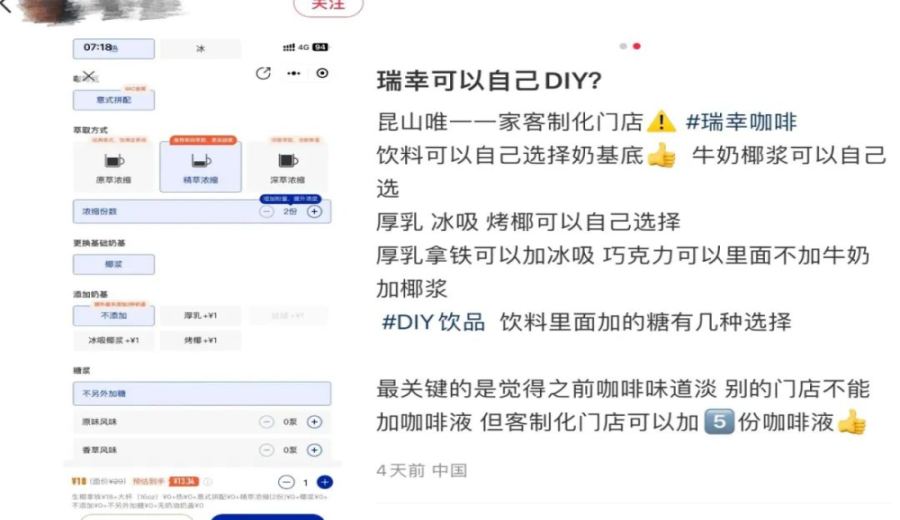
Introduction:As consumers’ demand for diverse coffee flavors becomes increasingly multifaceted, personalized customization has emerged as a new focal point in the market. Recently, Luckin Coffee piloted a DIY beverage self-selection service in select stores, allowing customers to independently choose their milk base and even add extra milk or espresso. This move not only caters to consumers’ desire for flavor adjustments but also sparks industry discussions on balancing efficiency and service. This article delves into the background, implementation details, and potential impact of Luckin’s innovative trial.
In recent years, consumer demand for coffee has expanded beyond its basic function of providing a caffeine boost, shifting toward diversified and personalized flavors. To respond to this trend, many chain coffee brands and independent cafes have successively introduced customizable options that allow adjustments to flavor — such as choosing different types of milk, sugar levels, or caffeine intensity. Against this backdrop, Luckin Coffee quietly launched a “beverage DIY” service in some stores recently, enabling customers to tailor their drinks according to personal preferences.
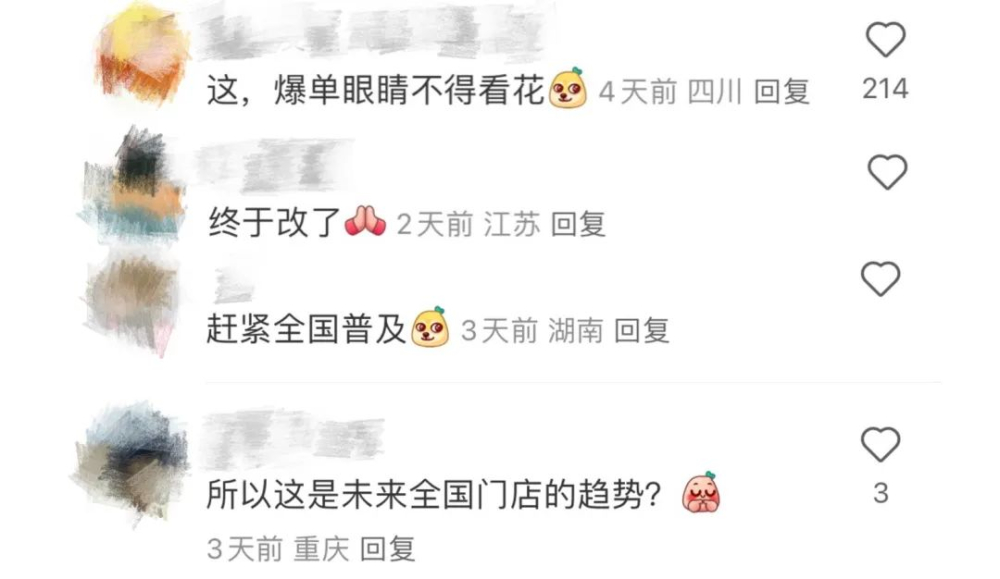
It is understood that this pilot service allows consumers to select their preferred milk base for coffee and, based on need, purchase additional milk or espresso shots. Due to variations in drink recipes, the adjustable options differ, enabling customers to craft coffee that more precisely matches their taste. Notably,some consumers, after sharing their experiences on social platforms, have called for the swift nationwide rollout of this service, demonstrating high market anticipation for such personalized options.
However, this innovation has also raised concerns among internal staff. A Luckin partner revealed that the DIY service is currently only being trialed in specific stores and has not been fully rolled out, mainly due to worries that nationwide implementation could complicate order processing procedures and thereby affect overall service efficiency.Particularly during peak order times such as Mondays, the workload for employees may increase significantly, even leading to situations where they become “overwhelmed.” Additionally, some staff pointed out that if customers mistakenly assume all stores offer this service, disappointment due to unmet expectations could lead to complaints.
In reality, this DIY service currently only requires employees at pilot stores to scan items using a machine for preparation, without the need to memorize complex recipes, thus lowering the operational barrier to some extent compared to traditional customized services. Nevertheless, for employees, effectively handling a greater variety of orders in a busy working environment remains a significant challenge.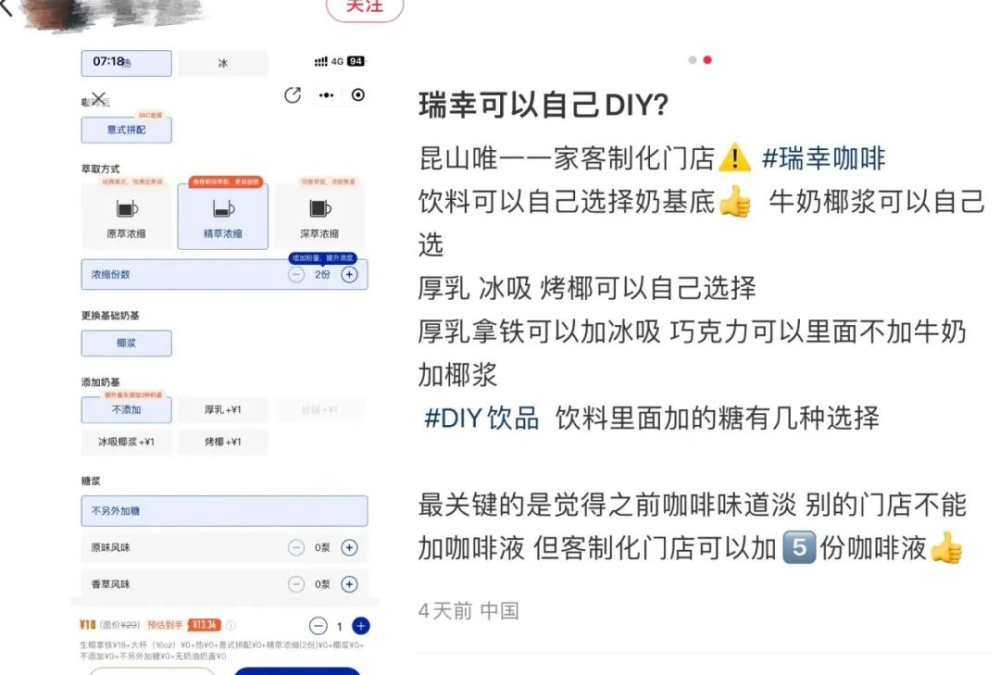
From the consumers’ perspective, the most notable feature of the newly introduced DIY options is the ability to add extra espresso shots. Many office workers rely on coffee for a caffeine boost, yet a common issue is that commercially available coffee often lacks sufficient flavor intensity to meet their desired caffeine concentration or depth of taste. With this new feature, customers can adjust the richness of their coffee to better align with their individual flavor preferences.
Meanwhile, Luckin Coffee announced on January 22 that it had completed the development of core functions for its HarmonyOS-native application. This technological upgrade means that users will soon be able to seamlessly access Luckin’s ordering app on various devices running the HarmonyOS system, further enhancing ordering convenience and user experience. Although this development is not directly related to the DIY service, it reflects Luckin’s ongoing investment in digitalization and customer service.
Overall, Luckin’s current pilot of the beverage DIY service represents an innovative attempt to address consumers’ demand for personalization. Although currently limited to select stores, its success or failure may influence the future development of service models across the entire coffee industry. If the balance between efficiency and service quality can be properly managed, such customized services may become a key differentiating strategy to attract customers. In the future, we may see more brands follow suit, offering more diverse and flexible coffee choices to meet the flavor expectations of different consumers.
The above content is compiled by CoffeeHunters, a coffee news website.


