







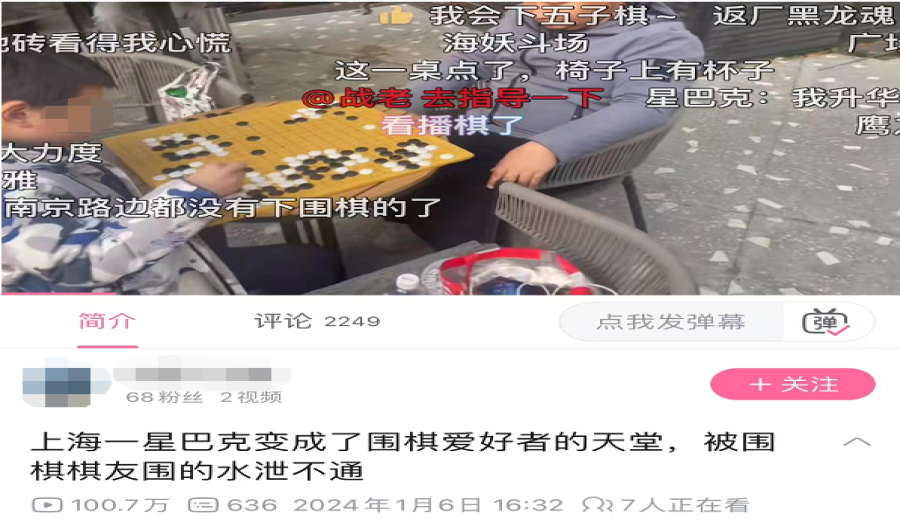
Introduction:A Starbucks in Shanghai has garnered attention due to spontaneous gatherings of Go enthusiasts who come together to play the game. Every week during fixed time slots, more than 30 people participate, with the community growing to nearly 400 members. As the crowd increased, the store requested that participants maintain quietness and make moderate purchases, sparking public discussion on the boundaries of public space usage and civilized coexistence. This article delves into the interaction model between the café and the Go community, and offers practical suggestions for coexisting in third spaces.
In Shanghai, a Starbucks outlet has unexpectedly become a regular meeting spot for Go players, attracting numerous enthusiasts who gather voluntarily every Monday, Thursday, and Saturday afternoon. These players usually bring their own sets and at peak times, over 30 people gather in-store, forming a spontaneous community of nearly 400 members, all coming purely to share and improve their Go skills.
It is understood that the activity is entirely self-organized by the players, with no fees or membership requirements. One enthusiastic organizer not only manages an online group of nearly 400 members, helping players find opponents, but also frequently pays for orders out of his own pocket to support the store’s operations. He revealed that he owns as many as 17 Go sets at home, adjusting the number he brings based on expected turnout, having once brought as many as 15 boards at a time.
The formation of this gathering spot actually did not start at Starbucks. Initially, the players chose to meet at a nearby bakery that mainly offered takeout, as it had more seating for dine-in and fewer customers. However, after the bakery closed down, they moved to the current Starbucks outlet and set up a WeChat group to facilitate communication and activity arrangements.
As the number of regular participants grew, the Starbucks staff conveyed to the organizer their hope that the players would pay attention to two things:First, to try to keep quietso as not to disturb other customers;and second, for everyone to make moderate purchasesto help maintain the store’s basic operations. The organizer subsequently relayed these requests within the group and reminded those who were louder to lower their voices.
The organizer admitted that he understands the pressure on the store to generate revenue, so he also leads by example, making sure to purchase at least one drink each time, which costs around 25 yuan. However, from what he observed on-site, sometimes more than half of the participants did not place any orders, prompting him to call on everyone to be considerate and make moderate purchases to help sustain this rare public gathering space.
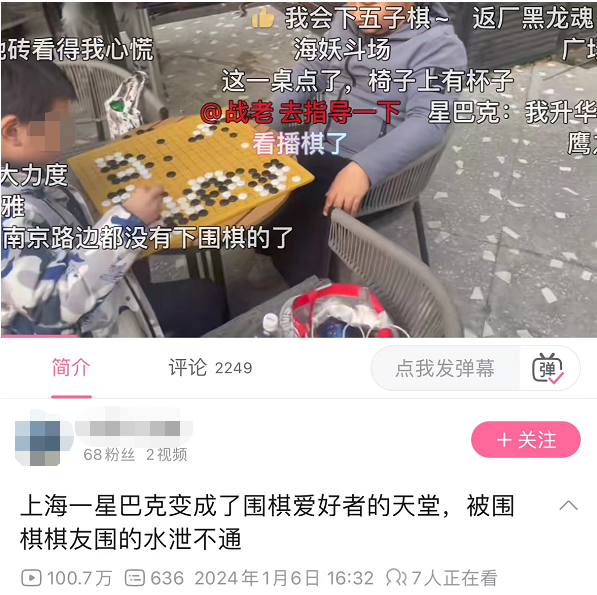
The incident sparked heated discussions on social media platforms, with many netizens praising this spontaneous cultural exchange atmosphere. Some even suggested that Starbucks host Go competitions to further enliven the in-store environment. In fact, in major cities like Shanghai, cafés are often the first choice for grassroots communities to gather temporarily, thanks to their comfortable settings and convenient locations.
However, how to strike a balance in public spaces is a question every participant needs to consider. Keeping quiet and making moderate purchases is not only a sign of respect for the store, but also helps maintain the long-term operation of the community. As one netizen put it: “Buying a coffee is an obligation, keeping time limits is self-discipline. Mastering the sense of boundaries is key to harmonious coexistence.”
For café operators, such spontaneous communities present both challenges and opportunities. Through appropriate regulations and communication, not only can store order be maintained, but unique community culture and foot traffic may also be fostered. How to find a win-win point between commercial interests and public use is an important issue in the future development of urban third spaces.
The above content is compiled by CoffeeHunters, a coffee news website.


