







Introduction:Delve into the three key names in Ethiopia’s specialty coffee—Yirgacheffe, Kochere, and Guji Gedeb—exploring their regional geography, smallholder cooperative structures, as well as the details of washed processing and pour over parameters, to understand how they create unique citrus, floral, and tea-like flavor profiles. Whether you're just getting started or looking for coffee recommendations, this guide will help you grasp the allure of Ethiopian beans more precisely.
As Africa’s largest Arabica coffee producer, Ethiopia boasts the world’s richest coffee gene pool, with an estimated 10,000 to 15,000 existing varieties, most of which have not yet undergone complete genetic classification. Among its many regions, Yirgacheffe, Sidamo, and Guji have garnered widespread attention for their distinctive flavors, with both Guji and Yirgacheffe originally part of Sidamo before being elevated to independent regions due to their notably different cup profiles.
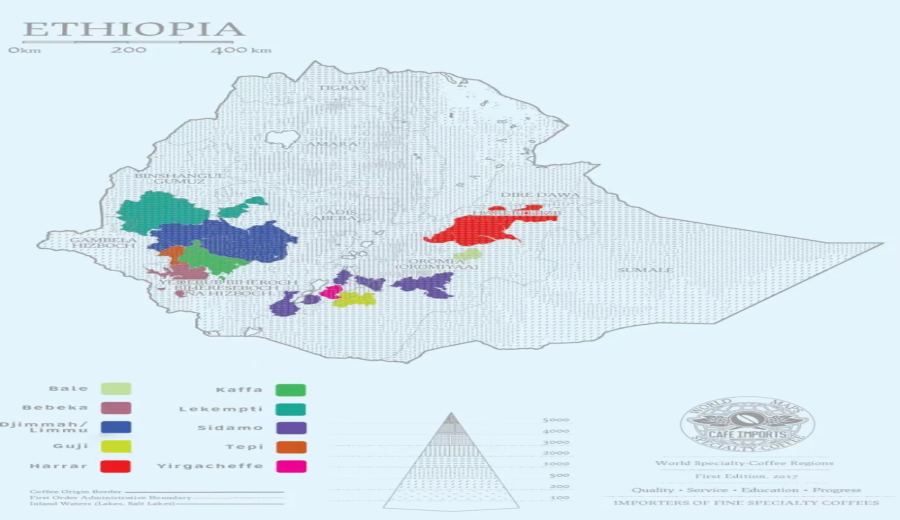
Yirgacheffe is located in a highland area at an altitude of approximately 1,750 to 2,200 meters. It is not only a renowned coffee town but also a broader region encompassing multiple micro-regions. The area is planted with coffee by smallholder farming families and includes well-known micro-regions such as Kochere and Gedeb, as well as over forty cooperatives, one of the representative examples being the Guji Gedeb Cooperative.
The town of Yirgacheffe itself has a population of about 20,000, and nearby small areas such as Wenago, Kochere, and Gimbi-Anbessa, due to their coffee flavor profiles being highly similar to Yirgacheffe, are also classified under the same producing region. Among them, Kochere is located about 25 kilometers southeast of Yirgacheffe, with a population of around 100,000, and serves as an important source of cash crops for the region. Kochere coffee is commonly labeled either by the regional name, such as Shakiso, or by the washing station, such as Danko Washing Station. Most of the coffee here is processed centrally by cooperatives after smallholders deliver their fresh cherries, a model that also aligns with today's market demand for coffee traceability.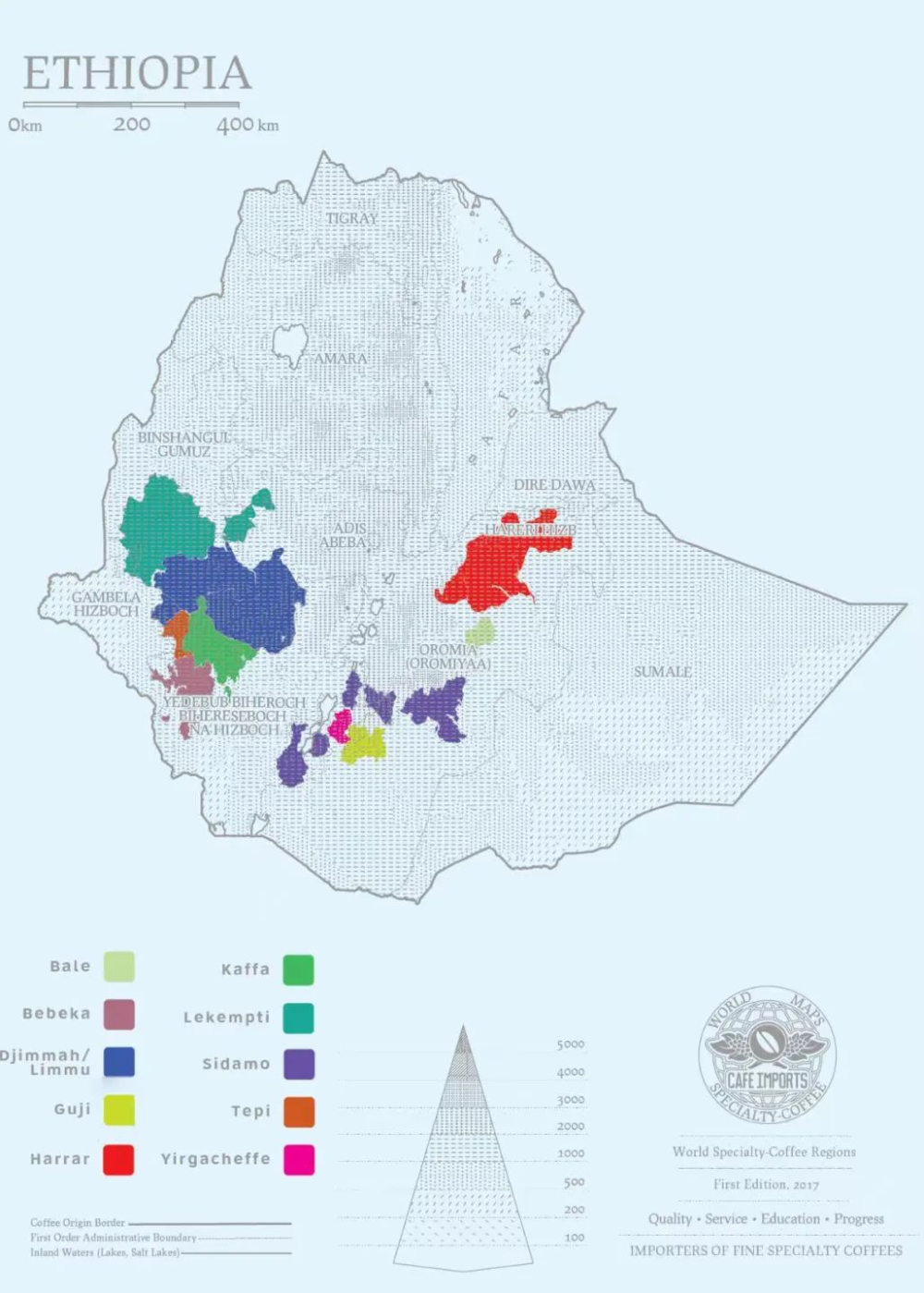
Take the washed Kochere coffee beans as an example: using a V60 brew method with a 1:15 coffee-to-water ratio, it often exhibits bright jasmine floral notes, with a bright acidity reminiscent of lemon and other fresh fruits. The overall mouthfeel is smooth and layered.
Another noteworthy micro-region is Guji Gedeb, located about 60 kilometers from the town of Yirgacheffe within the larger Guji zone, and it also holds a distinct status in the specialty coffee community. The Guji Gedeb Cooperative encompasses coffee beans produced in villages such as Worka Sakaro, Halo Beriti, Banko Guji, and Banko Dhasso. This cooperative was originally part of the Worka Cooperative under the Yirgacheffe Coffee Farmers Cooperative Union (YCFCU), but later, in response to the market’s demand for coffee traceability, it gradually became recognized as an independent producing region.
A certain cooperative, established in 2012, consists of around 300 coffee farmers, most of whom were already members of another cooperative and had a certain foundation in cultivation and processing. This village was among the first to be independently designated, situated right at the southeastern edge of Yirgacheffe. Washed beans sourced from this area by a certain vendor are also brewed using the V60 pour over method, with a recommended 1:15 coffee-to-water ratio. When brewed, they often present delicate floral aromas, accompanied by bright acidity of citrus and berries, along with a caramel-like sweetness in the aftertaste. The overall flavor is clean and refreshing, with a hint of tea-like finish.
In summary, Yirgacheffe, Kochere, and Guji Gedeb are geographically close to one another, yet each stands out in terms of cooperative management, smallholder organization, and market positioning. From altitude and variety to processing methods, these factors collectively shape the unique citrus notes, fruity floral aromas, and tea-like finishes that define Ethiopian coffee. They are go-to regions for many pour over enthusiasts. If you’re seeking a coffee bean that’s ideal for honing your pour over skills while delivering clear and distinct flavor profiles, these three names are definitely worth adding to your tasting list.
The above content is compiled by CoffeeHunters, a coffee news website.


