







Introduction:It’s not uncommon in coffee shops for a customer to be turned away when trying to order a drink just before closing time. But who is really in the right—the customer or the staff? This article explores the reasons behind early cutoff times from both perspectives, discusses how coffee shops can maintain service quality while respecting employees’ work boundaries, and offers practical advice to help both consumers and shop owners achieve more satisfying interactions.
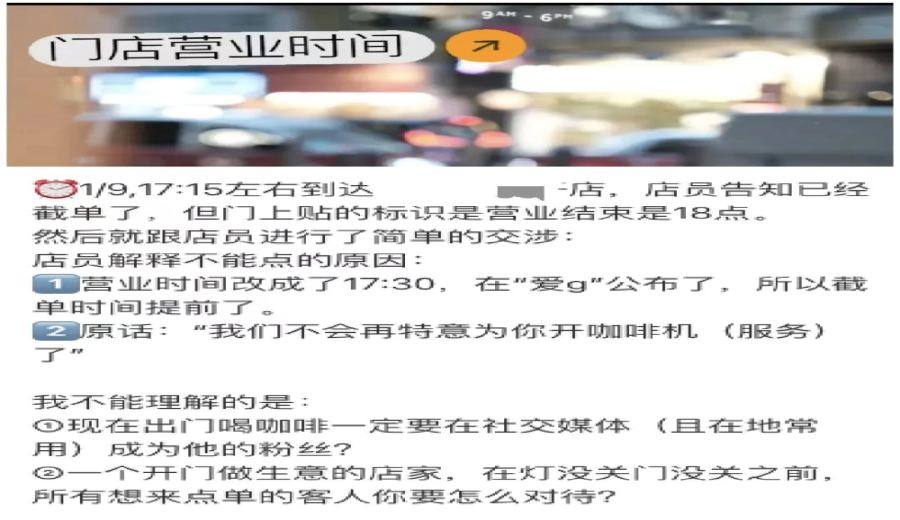
The scene of a customer walking into a café near closing time and asking if they can still order a coffee is familiar to many in the coffee industry. Recently, a consumer complaint sparked heated discussion: a coffee shop refused to take orders before its officially posted closing time, citing that it had already cleaned its espresso machine and would not restart it for any more drinks. The incident stirred online debate, with some siding with the customer, arguing that service should still be provided since it was before the official closing hour, while others sympathized with the staff, understanding their reluctance to work overtime.
It turns out the customer had visited during the operating hours listed on the coffee shop’s official website or store notice. However, the staff explained that the actual closing time was earlier than the publicly advertised time, and that an early cutoff policy was already in place. The espresso machine had been cleaned well before the shop’s closing, and would not be restarted for the last customer. This left the disappointed customer unable to enjoy their expected cup of coffee—and raised the question: do customers really have the right to service during posted business hours?
Online opinions on this controversy vary. Some netizens argue that as long as the store has not officially closed and a customer walks in to place an order, the shop should provide the corresponding service, as this is a basic requirement for good customer service. They believe that interactions between customers and businesses should be based on mutual respect, and that customer needs should be acknowledged as long as the shop is within its stated operating hours.
However, many others empathize with the baristas. They point out that by closing time, staff have often already cleaned the espresso machine, wiped down the bar, and prepared the shop for the next day—both physically and mentally ready to head home. If a last-minute order forces them to restart equipment, make drinks, and clean up all over again, it not only takes extra time but may also delay their off-duty time. Without additional compensation, they say, it’s understandable for staff to decline such requests.
Notably, many coffee shops, in practice, begin “early cutoffs” before their officially advertised closing times to ensure staff can leave on time and the shop remains tidy. That is, even if the sign says the shop closes at 8:00 PM, it might actually stop taking orders at 7:30 PM to allow enough time for post-closing cleaning and equipment maintenance.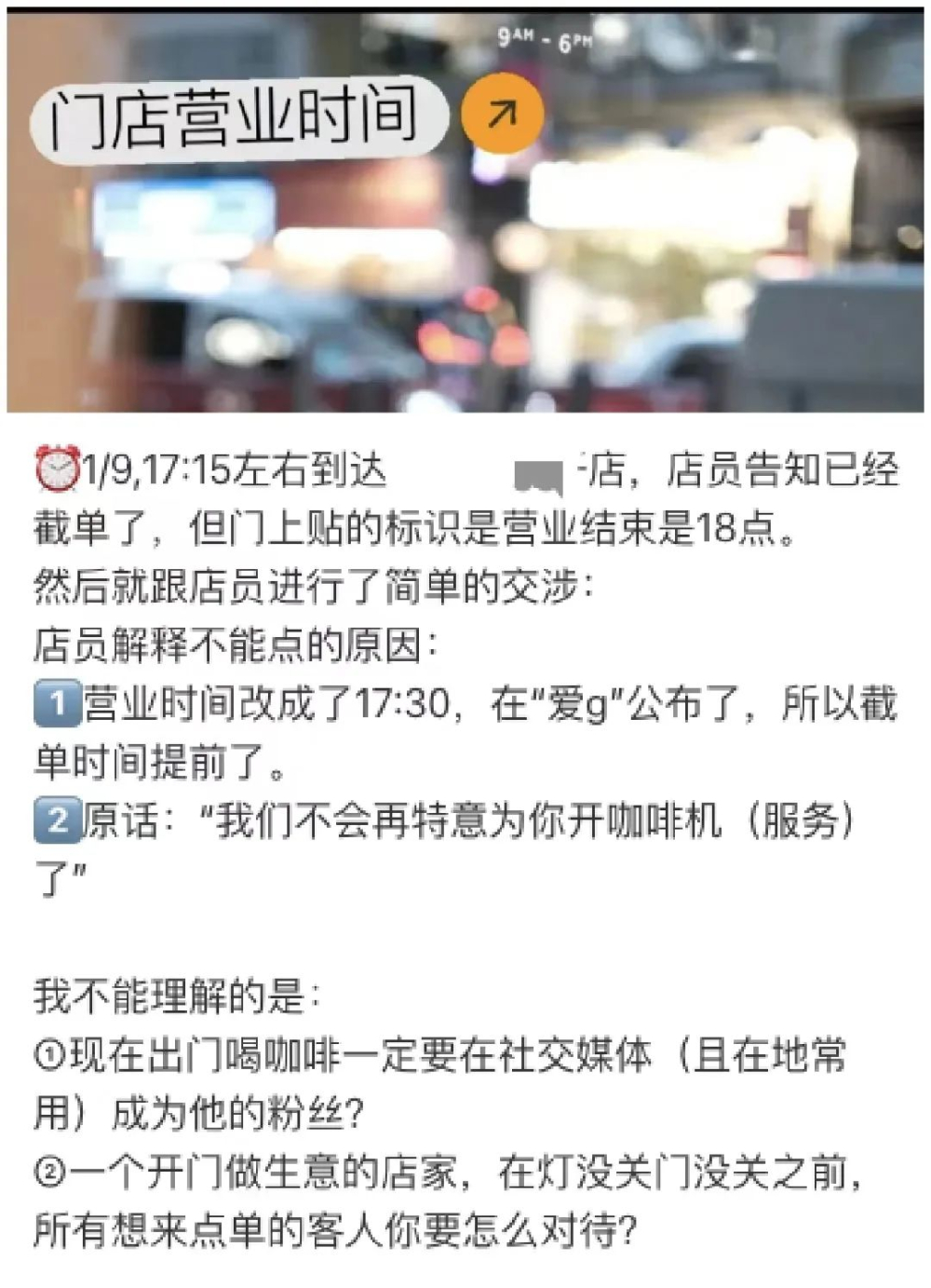 This practice has become common in the industry, but it can also lead to misunderstandings and friction if not clearly communicated to customers.
In response to such situations, some netizens have suggested more flexible approaches. For example, if the espresso machine has already been cleaned and cannot be used again, staff could proactively recommend non-espresso beverages such as juice, sparkling water, or tea, while clearly explaining the current cutoff status and closing time. This allows customers to decide for themselves whether they still wish to place an order. In this way, a certain level of service can be maintained while also accommodating the staff’s work rhythm.
Additionally, even if no drinks can be served at all, staff should remain polite and patient, clearly explaining the situation to customers to avoid making them feel disrespected by a blunt refusal. After all, the customer experience is shaped not only by the product itself but also by the overall interaction with the staff, and a friendly farewell can leave a positive impression.
In summary, coffee shops need to find clearer communication methods and a better balance between managing operating hours, implementing early cutoffs, and serving customers. For consumers, paying attention to the shop’s actual operating conditions before entering—or calling ahead to ask—can help reduce unnecessary misunderstandings. For shop owners, providing advance notice of cutoff times and offering reasonable explanations or alternative suggestions when turning customers away can contribute to improved service quality and greater customer satisfaction.
The above content is compiled by CoffeeHunters, a coffee news website.


