







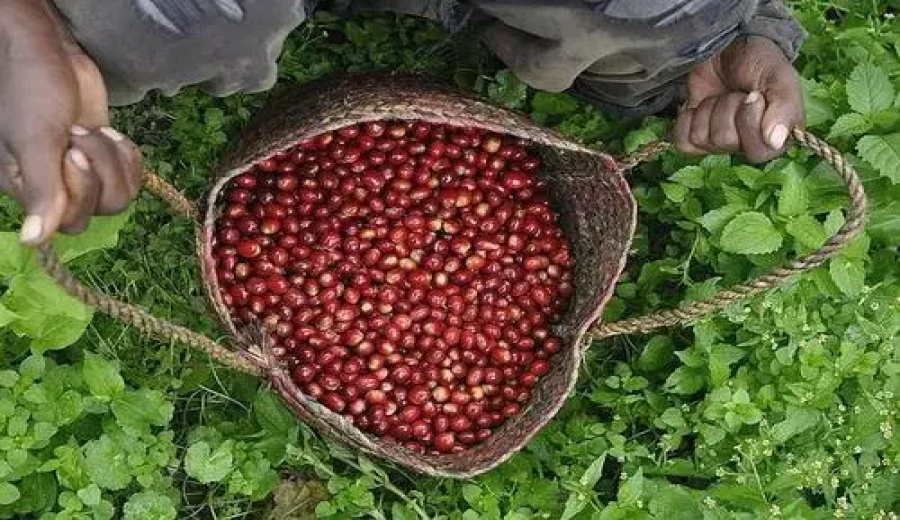
Introduction:The Kenyan government has invested 6 billion shillings (approximately US$37.62 million) to comprehensively upgrade the country’s coffee industry, aiming to nearly double its annual production from the current 51,000 metric tons. Meanwhile, Rainforest Alliance is collaborating with local farmers through regenerative agriculture projects to help them achieve the European Union’s stringent deforestation-free compliance certification (EUDR). This article details the fund allocation, the regions covered, the key steps for certification, and how this initiative helps Kenyan coffee farmers break through export bottlenecks and enhance global competitiveness.
As a major coffee-producing nation in Africa, Kenya currently produces around 51,000 metric tons of coffee annually. However, the government, eyeing growing global demand, plans to significantly boost output by an additional 49,000 metric tons through a systematic strategy. To that end, Kenyan authorities recently announced an injection of 6 billion shillings (equivalent to about US$37.62 million) in dedicated funds to support a premium coffee cherry recycling fund and overall production processes. These funds will initially launch in Makueni County, with plans to gradually expand to a total of 37 major coffee-growing regions across the country, including Machakos, Kagio, Taita-Taveta, Kirinyaga, and Murang’a, covering a wide area.
A Kenyan government spokesperson emphasized that the coffee industry is not only a vital pillar of the national economy but also directly supports the livelihoods of over 5 million workers. This financial injection is a strategic move by the government, recognizing the critical role coffee plays in economic growth and employment. Key focuses of the investment include improving the quality and processing efficiency of coffee cherries, as well as strengthening the overall production process from planting to harvesting.
< In parallel with government actions, the international non-profit organization Rainforest Alliance is actively collaborating in Kenya with some cooperatives under the Gusii Coffee Farmers Cooperative Union (GCFCU) to drive the “Gusii Regenerative Agriculture Landscape (GURAL) Coffee Project.” The core aim of the project is to help local coffee obtain internationally recognized certifications, particularly those required to meet the strict upcoming export thresholds set by the EU Deforestation Regulation (EUDR).
The Regional Director for Rainforest Alliance in Kenya/Tanzania stated that this partnership aims to not only protect and restore local forests and biodiversity through multi-stakeholder collaboration but also to improve farmers’ livelihoods, promote gender equality, and advance social inclusion. At the same time, the project emphasizes the use of nature-based solutions and locally led actions to help tea and coffee growers tackle the challenges posed by climate change. He pointed out that global demand for coffee and tea has contributed to up to 75% of deforestation, exacerbating the climate crisis, while over 80% of people in rural areas still live in extreme poverty. Therefore, Rainforest Alliance has set a goal to benefit 1 million farmers through such projects by 2030.
The EU Deforestation Regulation (EUDR) explicitly stipulates that only coffee certified as compliant—ensuring that its production did not involve illegal deforestation—will be allowed to enter the EU market. For African coffee-producing countries like Kenya and Tanzania, meeting this standard is relatively challenging, making the technical and certification assistance provided by Rainforest Alliance a timely intervention. Currently, this collaborative project has been implemented in Nyamira and Kisii Counties in Kenya, covering 28 affiliated coffee cooperatives under the union, six of which have already entered the pilot phase.
According to the project plan, collaborative efforts include elevating the overall level of sustainable coffee production locally, strengthening environmental management measures, and conducting professional testing of soil fertility. By accurately analyzing soil nutrient conditions, farmers can more scientifically adjust fertilizer application ratios, thereby improving the health and yield of coffee trees and ultimately increasing their income. Additionally, the project emphasizes the production of high-quality, internationally certified coffee, making it more competitive in European premium markets and further boosting farmers' actual income through higher prices.
Overall, the Kenyan government’s large-scale financial investment and Rainforest Alliance’s international certification support, working in tandem, are expected to significantly enhance the country’s coffee industry productivity and international market access. For consumers, this also means the potential arrival of more high-quality, sustainably certified specialty coffees from Kenya on the market, offering a more diverse and flavorful selection.
The above content is compiled by CoffeeHunters, a coffee news website.


