







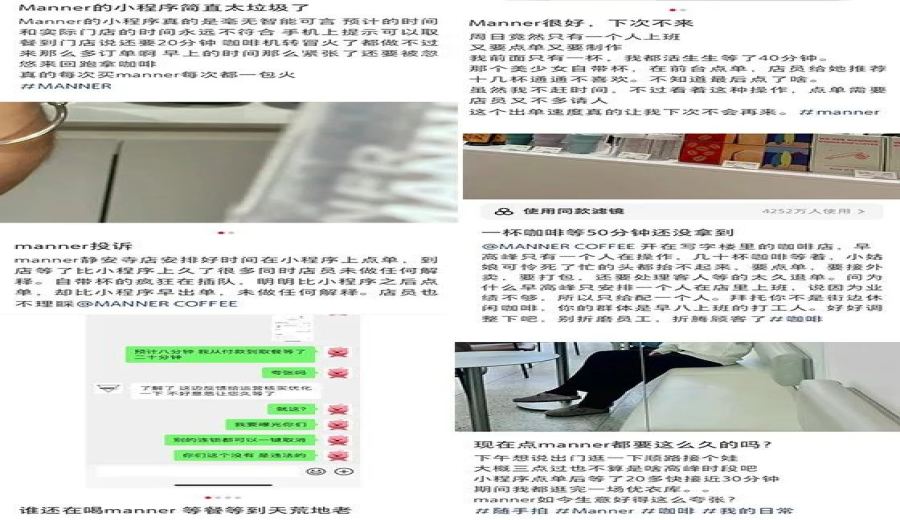
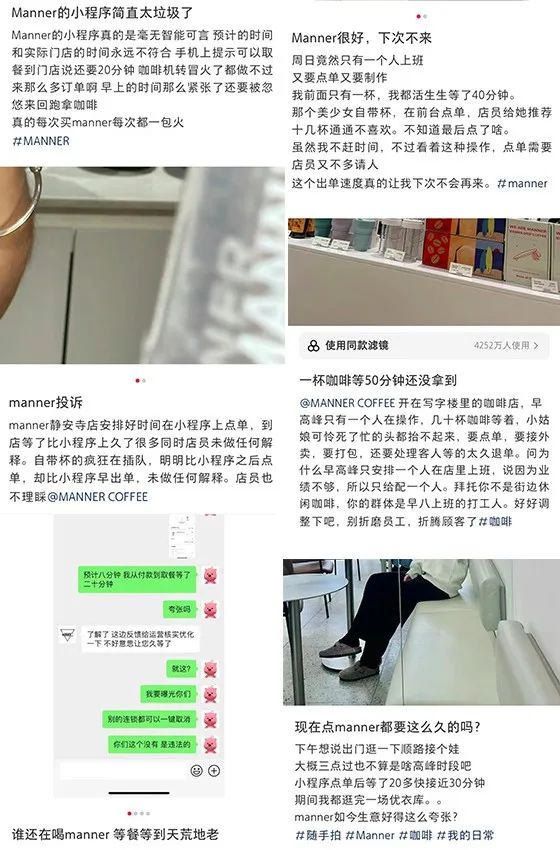
Introduction:In recent years, Manner Coffee, a highly praised chain known for its great cost-performance ratio, has frequently faced criticism over slower-than-expected service speed. Many customers have reported that even when using the official mini-program to place orders and check estimated pick-up times, they still end up waiting 20 to 60 minutes, with the situation being especially severe during peak hours. Is it an issue with inaccurate system estimation or a problem with staffing at the stores? This article takes an in-depth look at how Manner is addressing the challenge of balancing efficiency and employee welfare on its path of expansion.
With its affordable prices and attentive service, Manner Coffee has long been a daily go-to for many office workers. It’s common to see customers bringing their own tumblers, and many also choose to pre-order via the official mini-program to conveniently pick up their coffee on their commute. However, recently, numerous users have complained on social media platforms about a significant discrepancy between the estimated completion time shown on the Manner mini-program and the actual waiting duration—especially during morning or afternoon rush hours, where waits of 20 minutes or even close to an hour are not uncommon.
This issue is not limited to a single region or store. Customers from multiple locations have reported that some Manner outlets are staffed with only one employee handling the entire process—from taking orders and making coffee to packaging. When orders suddenly surge, the staffing is clearly insufficient. Even if the mini-program shows that the order is “ready,” the drink may not have even started being prepared, leaving delivery riders and customers waiting helplessly at the counter.
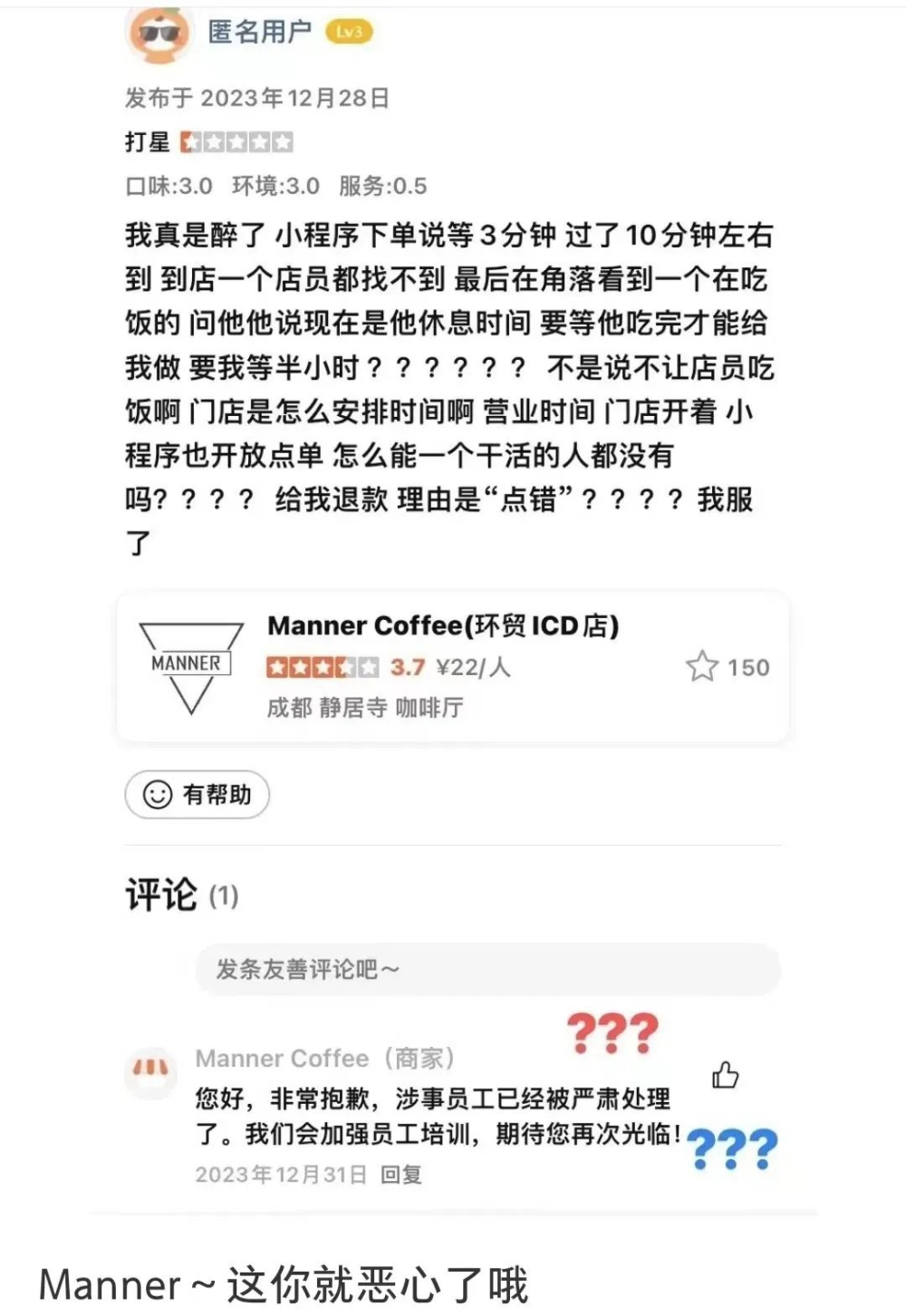
In response to such situations, some customers who left negative reviews due to delayed service were surprised to receive responses from the stores saying that “the involved staff member has been dealt with severely,” which sparked dissatisfaction among many netizens. They felt the stores were not addressing the fundamental issue of understaffing but instead shifting the blame to frontline employees. Many loyal customers also spoke up, pointing out that it’s obvious how much pressure a single employee managing the whole store is under, with comments like: “Not blaming the staff, this is a company issue—scheduling just one person is really unreasonable.”
It is understood that Manner’s store scheduling and staffing are primarily adjusted based on revenue, without additional manpower allocated for peak periods such as mornings or afternoon tea times. As a result, when there is a sudden surge in orders, employees often have to take orders, make coffee, and handle customer inquiries all at once, leading to a noticeably tight workflow. An insider revealed that during busy hours, each employee has to juggle multiple roles, leaving almost no room to catch a breath.
On social media, it’s not hard to find consumers sharing the “second-by-second” break times of Manner employees. Although some posts are written in a lighthearted tone, they also reveal the helplessness of employees under intense work pressure. For example, one comment mentioned “a ten-minute toilet break,” which, beneath the humor, actually highlights how even basic physiological needs must be meticulously scheduled.
Many other consumers who are also office workers expressed understanding for the hard work of Manner employees, stating that the incident was not meant to target frontline staff but rather to encourage the brand to address issues in store staffing planning. Numerous netizens suggested that, if possible, try to avoid ordering during peak hours or, if you arrive at the store and notice the staff is busy, wait a little longer instead of rushing to complain—showing mutual understanding.
In summary, as Manner Coffee expands its market presence while maintaining its price advantage, how to balance service efficiency with the working environment of its employees has become a crucial issue for the brand’s continued development. For consumers, in addition to expecting more accurate pick-up times, there is also a growing hope that the brand, while pursuing operational efficiency, will provide more reasonable support and scheduling arrangements for store teams—so that overall service quality can steadily improve and continue to earn customers’ trust and loyalty.
The above content is compiled by CoffeeHunters, a coffee news website.


