







Introduction:Indonesia’s Sumatra is one of the world’s most renowned specialty coffee origins, especially famous for its Mandheling coffee. This article delves into the characteristics of Sumatra’s three major producing regions, the origin of the name “Mandheling,” the truth behind the Ateng variety, and provides a detailed introduction to Indonesia’s unique wet-hulling processing method. It also takes you through the flavor profiles and pour over recommendations of two classic Mandheling coffee beans—an essential beginner’s guide to both the origin and processing method for coffee enthusiasts.
As the world’s largest archipelagic country, Indonesia consists of as many as 17,508 islands, situated between Asia and Oceania and right on the equator, creating an exceptionally favorable environment for coffee cultivation. Beyond the well-known islands of Java, Sulawesi, and Bali, Sumatra is particularly famed for producing Mandheling coffee with its bold and rich flavors. This article will take you on an exploration of Sumatra’s three main coffee-producing regions, unravel the fascinating history behind the name “Mandheling,” clarify the truth about the Ateng variety, and provide an in-depth look at Indonesia’s distinctive wet-hulling processing technique.
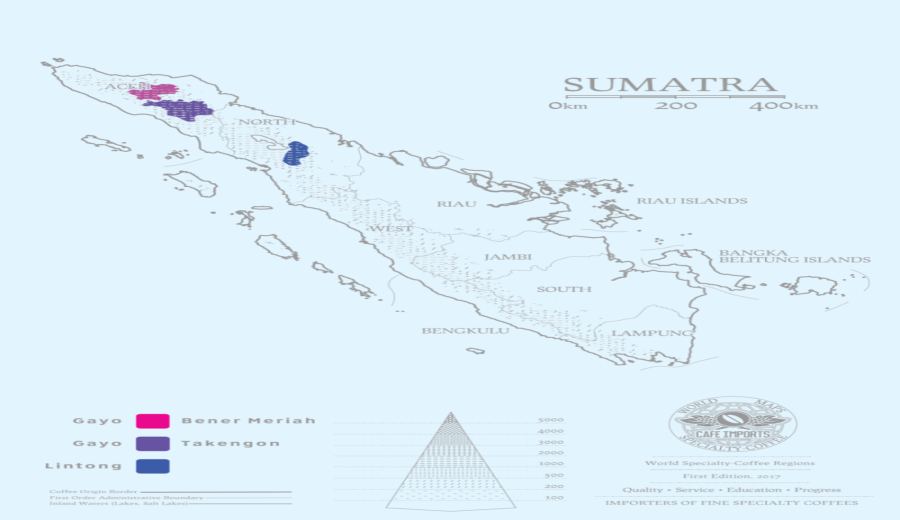
Coffee cultivation in Sumatra is primarily concentrated in three areas: Aceh Province in the north, the area around Lake Toba in the central-north region, and Mangkuraja in the southern part. The altitudes in these regions generally range between 1,100 and 1,600 meters, representing high-altitude growing conditions that help coffee cherries ripen slowly and accumulate richer flavor compounds. The main harvest season runs from September to December each year, during which the coffee beans are relatively stable in quality and feature outstanding flavors.
When it comes to Sumatran coffee, the most widely known is undoubtedly “Mandheling.” Interestingly, Mandheling is not a coffee variety nor a place name, but rather the name of an ethnic group in Indonesia. According to the widely circulated story, during World War II, a Japanese officer drank an unforgettable cup of coffee at a café in Indonesia and asked the owner about the name of the coffee. The owner, however, misunderstood the question as being about where he was from and replied “Mandheling.” This misunderstanding led to the coffee being introduced to Japan under the name “Mandheling,” and it gradually became synonymous with high-quality Sumatran coffee.
The commonly seen “Sumatran Mandheling” on the market mostly comes from the Lintong region in northern Sumatra. This coffee is typically processed using Indonesia’s unique wet-hulling method and when brewed using a V60 filter with a 1:15 coffee-to-water ratio, it can showcase pronounced notes of dark chocolate, herbs, and caramel, with a long-lasting sweet aftertaste. It is highly suitable for coffee lovers who enjoy bold and full-bodied flavors.
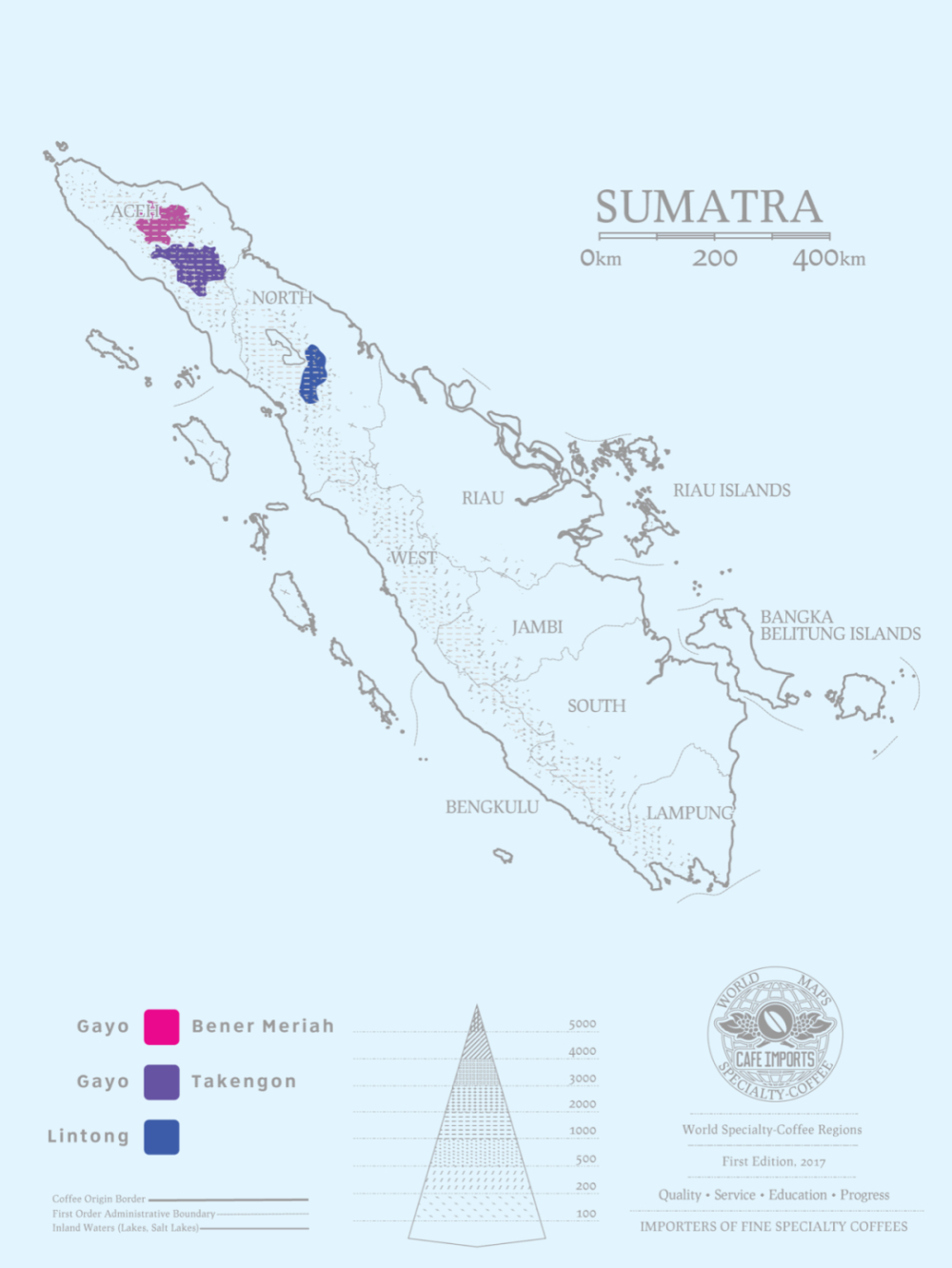
Another notable Mandheling is the PWM Golden Mandheling. PWM stands for Pwani Coffee Company in Indonesia, and the name “Golden Mandheling” has been registered as a trademark by this company, meaning only PWM-produced Mandheling can be rightfully called “Golden Mandheling.” This coffee also comes from the Gayo Highlands in Aceh Province in northern Sumatra and is processed using the wet-hulling method. When brewed with the same V60 filter and 1:15 coffee-to-water ratio, it presents flavors of roasted toast, gentle pine, cocoa, and some herbal notes. The overall taste is clean and layered, with a hint of caramel sweetness in the aftertaste, making it ideal for those seeking balanced flavors.
It is worth noting that both of these popular Mandheling coffee beans use the Ateng variety. Many consumers mistakenly believe that Ateng is a special or new variety, but it is actually the local Indonesian term for the Catimor variety, just as Indonesians refer to the Timor Hybrid as TimTim. The Ateng variety boasts strong disease resistance and adapts well to high-altitude environments, making it an economically viable and widely cultivated variety in Sumatra.
Finally, let’s explore Indonesia’s most representative coffee processing method—wet-hulling, also known locally as Giling Basah. Due to Sumatra’s tropical rainforest climate, which is rainy and humid year-round with limited sunlight, traditional sun-drying methods are difficult to implement. To adapt to such conditions, Indonesian farmers developed the wet-hulling method. The process generally involves: first removing the mucilage through water fermentation, then partially drying the beans to reduce the moisture content to around 30%–35%, followed by removing the parchment layer (i.e., the bean husk), and finally carrying out the final drying stage. This processing method differs significantly from standard washed or natural methods and contributes to the unique bold flavors and low acidity characteristic of Indonesian coffee. Wet-hulled coffee typically has a fuller body, intense richness, a distinctive character, and a long-lasting aftertaste—reasons why it is favored by many serious coffee enthusiasts.
The above content is compiled by CoffeeHunters, a coffee news website.


