







Introduction:A seaside café in Qingdao recently became embroiled in an online controversy when a self-proclaimed university student tourist accused the staff of indirectly ejecting and insulting her, sparking widespread discussion. However, after the business clarified the situation, the narrative took a turn, also highlighting the divergence between consumers and businesses regarding seat occupancy and service expectations. This article provides an in-depth analysis of the incident and explores the real challenges and boundaries of running a café in a tourist hotspot, helping readers understand common misconceptions in similar situations.
Recently, a clarification post about a scenic spot café in Qingdao stirred heated discussion on social media platforms, accumulating thousands of comments. The incident began when a self-identified university student traveler posted online, alleging that she was “indirectly ejected” from a local seaside café for not making a purchase and even claimed to have been insulted. As the café owner stepped forward to explain the day’s events, public opinion gradually shifted, and the original poster publicly apologized. This incident not only reflects the differing perceptions between consumers and businesses regarding “seat occupation” and “service,” but also prompts reflection on the operational challenges faced by cafés near tourist attractions.
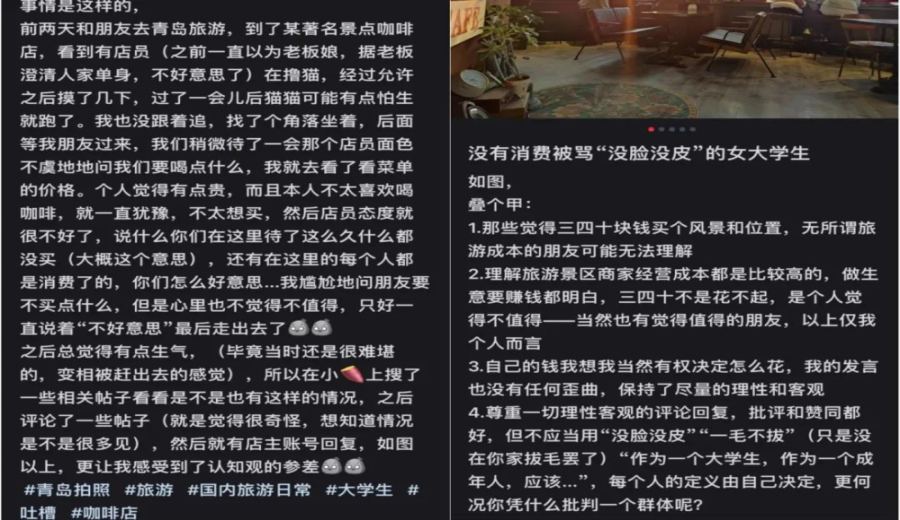
On January 14, the self-proclaimed university student shared her “unpleasant experience” on a social media platform. She mentioned that while traveling in Qingdao, she entered a scenic café, first interacting with the café’s cats with the staff’s permission, then finding a seat to wait for a friend. Having sat in the café for nearly half an hour without making a purchase, a staff member approached and hinted that she should order something. After reviewing the menu, she found the drinks priced at thirty to forty yuan to be too expensive, and since she doesn’t usually drink coffee, she ultimately chose to leave with her friend.
Although the matter seemed to have subsided, she later felt that she had been “driven away,” so she wrote a post expressing her dissatisfaction. She also left comments on other customers’ check-in posts online, claiming that she had been “asked to leave because she didn’t make a purchase.” This triggered considerable online discussion, with many netizens believing the café’s actions were reasonable—after all, the “seaside view seats” at a scenic café are considered an added value, and prices in the thirty-to-forty yuan range are normal within a seaside commercial area. Moreover, the customer hadn’t actually made a purchase and had left negative comments about the business in multiple places, which many saw as unfair.
Before long, the same netizen posted again, saying that she simply felt it was “not worth” spending money there, but was criticized in the comments as being “shameless” and “stingy.” That post suddenly thrust the café into the spotlight of public opinion, even leading some to mistakenly believe it was the business that had been disrespectful.
Faced with the online uproar, the café initially did not respond specifically, considering it a minor daily incident not worth over-explaining. However, the same netizen continued to leave negative comments in the review sections of several other customers and even gave the café a “poor review.” Concerned that misinformation might affect their operations and reputation, the café ultimately decided to publicly clarify what had happened.
The business stated that they do not have a minimum spending requirement or mandatory ordering policy, nor did they ever insist that the customer must make a purchase. According to the café’s recollection, when the customer first entered, she interacted with the café cat. Since the café wasn’t crowded at the time, the staff did not intervene immediately. It wasn’t until the customer brought friends and continued to occupy a seat that the staff approached her twice to remind her, and only on the third occasion did the customer herself say she would leave. The café emphasized that they were only conducting normal inquiries and never used any disrespectful language or engaged in any ejection behavior. The alleged insults circulating online were actually posted by other netizens, not the café staff.
As the truth of the incident gradually became clear, the original poster also publicly apologized in the comments section of the related post, admitting that the misunderstanding arose from differing viewpoints and expressed willingness to pay for the half-hour use of the seat’s resources that day. However, according to media reports citing the café owner, although they received a private message from the individual, they did not consider accepting compensation. “The fact that she didn’t make a purchase is true, but our main issue is with the untrue accusations she made in multiple posts.”
This controversy not only revealed how quickly online public opinion can escalate and reverse, but also highlighted the real operational pressures faced by scenic spot cafés during holidays or peak tourist seasons when it comes to “occupying seats without consuming.”For cafés, scenic view seats may be a selling point to attract customers, but they can also easily become a point of contention—especially during busy periods. How to balance customer experience with business efficiency is a question every establishment must consider.
For consumers, entering any commercial premises—even if not making an immediate purchase—should involve respect for the business’s operational rules and the rights of other customers. When occupying resources (such as scenic view seats), if no consumption occurs over an extended period, it may also lead to unnecessary misunderstandings and conflicts. Through this incident, we can better understand how the service industry handles issues of “boundaries,” and how to engage in basic communication and mutual respect before making a purchase.
The above content is compiled by CoffeeHunters, a coffee news website.


