







Introduction:Gain an in-depth understanding of the evolution of Guatemala’s coffee-growing environment and the characteristics of its major coffee varieties, from historical roots in the 18th century to the development of today’s diverse cultivars. This article takes you on a journey through the solid foundation of the country’s coffee industry. It also focuses on the Flora variety from the Antigua La Minita Estate, analyzing the washed processing traits of its Bourbon and Caturra blend, and providing practical V60 pour over parameters and flavor evaluation benchmarks to help you master advanced tasting essentials.
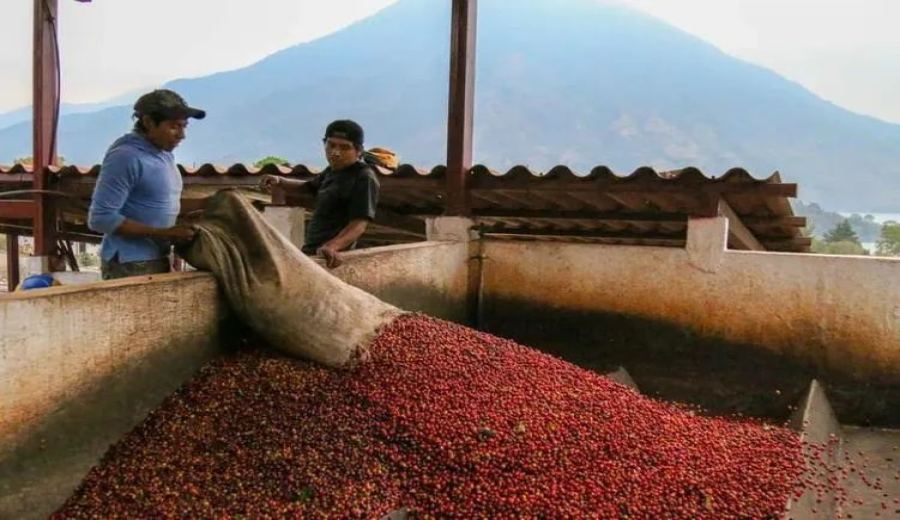
Guatemala is located in the southern part of North America, featuring not only active volcanic terrain but also vast tropical rainforests and finely varied microclimates. These composite natural conditions have created unique soils and micro-environments highly suitable for coffee tree growth, establishing the country’s distinctive position in the international coffee market.
It has been observed that as early as the mid-18th century, Jesuits introduced coffee seedlings to the Antigua region as ornamental plants for monastery gardens. Later, in the early 19th century, records of local residents drinking coffee gradually emerged. Notably, at the time, Guatemala’s primary cash crop was indigo—a plant-based dye material. However, due to frequent locust plagues and the rise of synthetic dyes, the indigo industry began to decline. In search of economic alternatives, the government actively promoted the cultivation of various crops, including coffee. It was not until after 1856 that coffee gradually became a key economic crop, and in 1960, the National Coffee Association (ANCAFE) coordinated production and export strategies to enhance overall economic benefits.
Today, Guatemala’s coffee cultivation exhibits high diversity, with common varieties including Bourbon, Typica, Caturra, Catuai, and Gesha. In addition to these internationally renowned varieties, the country is also dedicated to cultivating and preserving several distinctive cultivars, showcasing its profound coffee genetic resources.
Take Pache, for example, a natural mutation of Typica controlled by a single gene, resulting in relatively short plants. This trait makes Pache easier to plant densely, effectively increasing yield per unit area, though it generally has lower resistance to diseases. It is recorded that this variety was first discovered in 1949 at the Brito Farm in Santa Cruz Naranjo, Santa Rosa Department. The ideal planting environment is at altitudes above 1200 meters with annual rainfall controlled below 2500 mm. Currently, Pache is widely cultivated in Guatemala and has become an important choice for many small farms.
Another noteworthy variety is Tekisic, which originated from a long-term breeding program initiated by the Salvadoran Institute for Coffee Research (ISIC) in 1949 and officially released in 1977. This variety is classified under the Bourbon elite series, and its breeding method is known as “mass selection”—that is, through continuous observation and multiple screenings, the best-performing individuals are selected from the original population to develop a new strain with high quality potential and good yield. Interestingly, Tekisic means “work” in Nahuatl, symbolizing its close connection to local agricultural labor. Nevertheless, this variety has relatively weak resistance to common diseases such as leaf rust. Despite this, it remains one of the main varieties currently grown in Guatemala.
Additionally, the Mibirizi variety also has a special historical background. It is believed to be one of the oldest coffee varieties in Rwanda and was introduced to Guatemala by the then German colonial government in 1910. Although its exact origin remains debated, genetic studies show a clear genetic relationship between Mibirizi and Typica, suggesting it may have been introduced during the period when Typica dominated Guatemalan cultivation. This variety shows certain drought tolerance and delivers respectable cup quality, but it is also susceptible to major diseases, requiring careful pest and disease management during cultivation.
Turning to actual tasting experiences, among the premium Guatemalan coffees currently available on the market, the Flora variety from the Antigua La Minita Estate stands out. This lot is a Bourbon and Caturra blend processed via the washed method, exhibiting exceptional balance and layered complexity. It is recommended to use a V60 filter cone with a 1:15 coffee-to-water ratio for pour over brewing, with an optimal extraction temperature between 90–93°C and a grind size of medium-fine (approximately the size of sugar crystals). When tasting, the first impression is a clear citrus note paired with a gentle berry acidity, followed by hints of chocolate in the mid-palate. The overall flavor structure is cohesive with a long-lasting aftertaste, making it highly suitable for advanced pour over enthusiasts to explore further.
The above content is compiled by CoffeeHunters, a coffee news website.


