







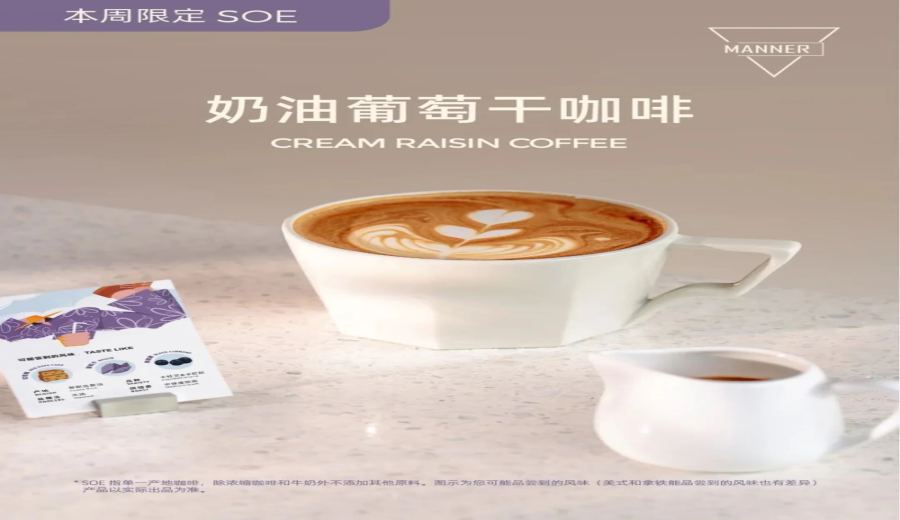
Introduction:Manner recently launched a limited-edition SOE titled "Creamy Raisin Coffee," which attracted numerous coffee enthusiasts with its enticing official flavor description. However, after trying it, the actual drinking experience sparked widespread discussion. Why is it difficult to discern the advertised flavors such as red dates cake, raisins, and green tea? This article delves into the challenges of identifying SOE flavors and offers practical tasting advice to help you better appreciate the unique charm of single-origin coffee beans.
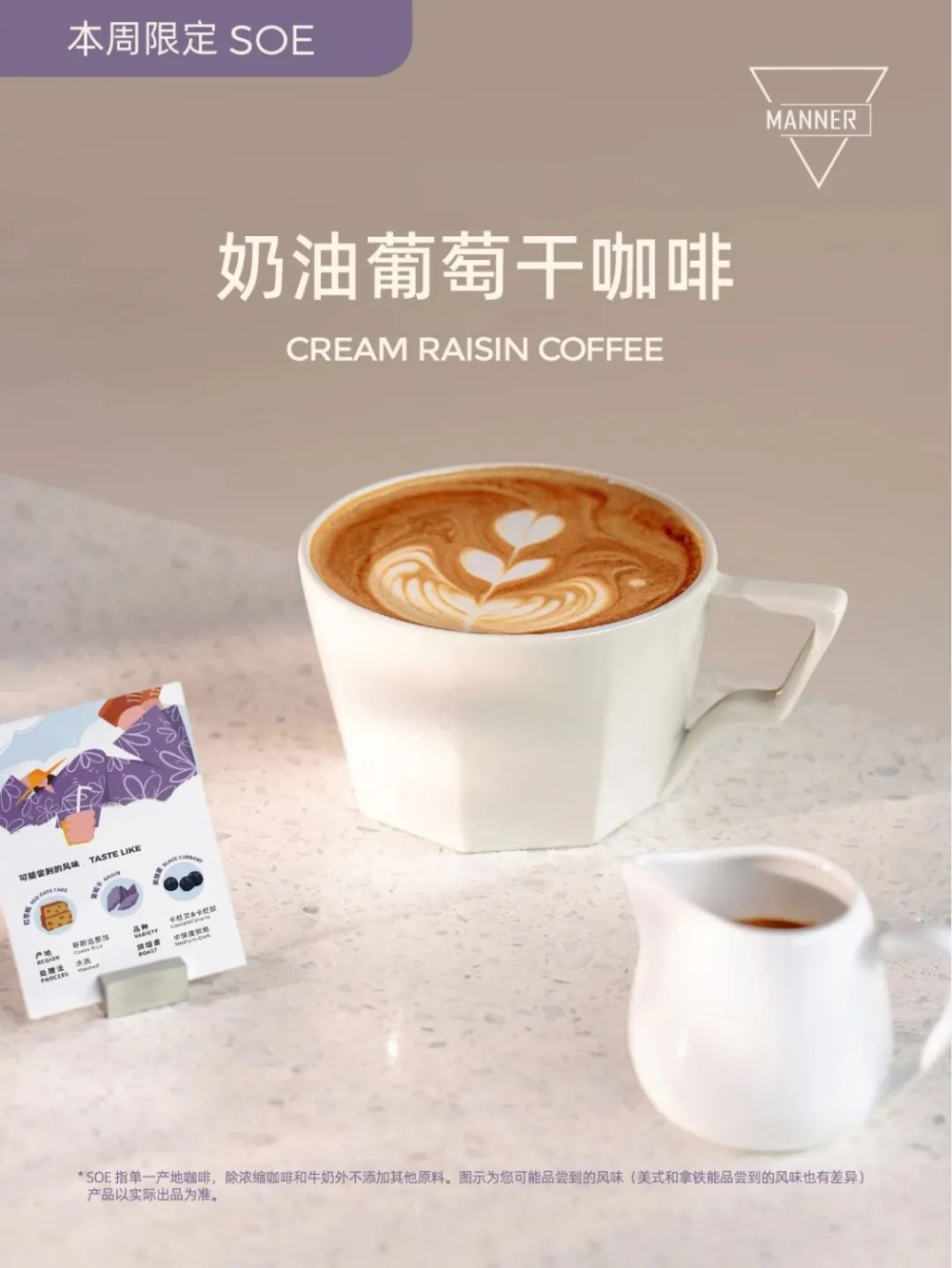
Manner’s limited-edition single-origin espresso (SOE) series is known for its rapid turnover, and it has recently introduced a new product: "Creamy Raisin Coffee." According to official information, this SOE uses coffee beans from the Tarrazú region of Costa Rica. The official flavor description is vividly imaginative: sweet and mellow raisins, the sugary taste reminiscent of red dates cake, a silky texture like cream, the aroma of blackcurrant, and a blend of fresh green tea notes, achieving a balanced sweetness and acidity that lingers. However, this elaborate copywriting is vastly different from the actual experiences of many consumers.
Shortly after its release, the new product quickly became a hotspot for social media check-ins. Many customers went out of their way to try it but were left puzzled after the first sip. The advertised elements—raisins, date cake, cream, and green tea—were almost nowhere to be found. Some even questioned whether they had received the wrong beans or if their sense of taste was off. On social platforms, blunt comments abounded: "There's zero creamy raisin vibe," "It just tastes like regular coffee, not at all like an SOE," and "I seriously suspect the beans were swapped," among many similar reactions.
In an attempt to capture the described flavors, some netizens got creative by using an “imagined tasting method,” conjuring up possible flavor associations in their minds—such as “roasted sweet potato skin mixed with a hint of raisin,” “the aroma of toasted sunflower seeds,” or even describing it as resembling “the sweet scent of cough syrup.” These humorous and abstract descriptions reveal consumers’ alternative ways of coping with the flavor gap.
Faced with consumer skepticism, one Manner barista admitted: “This is a coffee that requires imagination.” In reality, flavor identification depends not only on the beans themselves but also closely on the taster’s experience. If one is accustomed to a limited variety of coffee and hasn’t built up a sufficient flavor memory bank, even if certain aromatic compounds are indeed present in the coffee, it can be difficult to accurately identify them.
In addition, the environment and physiological state can also influence the tasting outcome. The temperature of the coffee, the thickness of the milk foam, and even one’s daily dietary habits may affect taste sensitivity. Even professional baristas can't guarantee they’ll be able to fully reproduce the official flavor description every single time.
Another key factor lies in the roasting method. Compared to commonly seen dark-roasted blends, SOEs are typically medium to light roasted to highlight the intrinsic fruity and floral notes as well as the acidity of the coffee. While this roasting style can showcase regional characteristics, it also places higher demands on the roaster’s skill and the barista’s extraction capabilities. Minute differences in extraction parameters—such as water temperature, grind size, and tamp pressure—can lead to vastly different final flavors. As a result, some outlets’ SOEs might end up tasting “bland.”
If you want to more accurately assess the flavor of an SOE, it’s recommended to start by familiarizing yourself with common flavor wheel categories—such as fruitiness, florality, and nuttiness—and try tasting at different temperatures, as aroma profiles often vary significantly between hot and cold. Additionally, choosing reputable roasters and coffee shops can increase your chances of experiencing a high-quality SOE.
In summary, Manner’s limited-edition “Creamy Raisin Coffee” may have generated anticipation through its marketing copy, but it also highlights the gap between flavor descriptions and real-world experiences. Understanding these differences and mastering the correct tasting approach will help you face various SOE coffees with greater confidence in the future and discover flavor profiles that suit your personal preferences.
The above content is compiled by CoffeeHunters, a coffee news website.


