







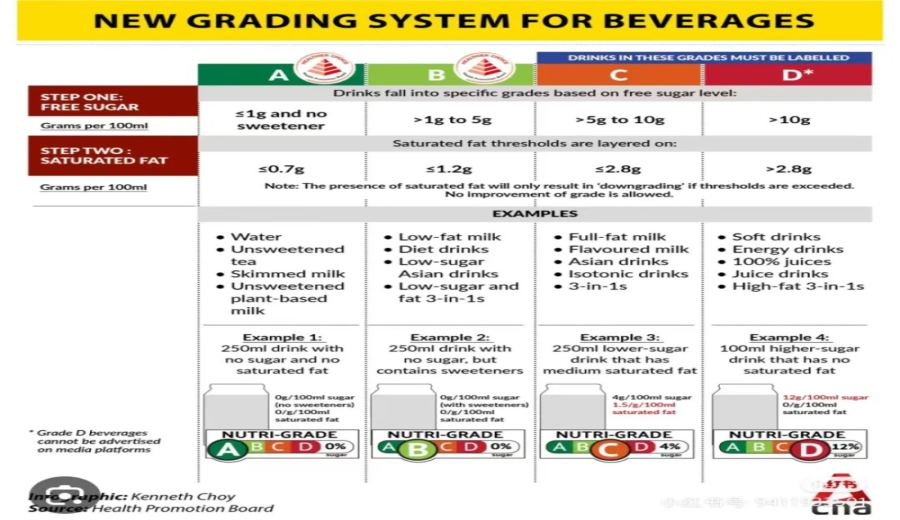
Introduction:Since the end of last year, Singapore has implemented a beverage nutrition grading system that requires all freshly prepared and packaged drinks to display an A to D rating indicating their sugar and fat content. This has sparked widespread consumer interest in healthier drink options. This article takes an in-depth look at how the sugar-limiting policy is influencing chain coffee brands to adjust their menus — including the removal of multiple Dirty drinks from Luckin’s offerings — and how consumers can make healthier coffee choices based on grading and brewing methods.
Starting from the end of 2023, the Singapore government rolled out a strict new beverage nutrition grading system. It mandates that all ready-to-drink and packaged beverages sold in the market must clearly display one of four grades — A, B, C, or D — along with their sugar and saturated fat content. The goal is to guide consumers toward healthier beverage choices. As soon as the policy was introduced, it became a major talking point, with many people developing the habit of checking the nutrition labels on packaging or menus before ordering a drink to understand its health rating.
With the implementation of the policy, many people were surprised to find that their usual coffee drinks — such as Dirty coffees and coconut lattes — were classified as C or even D grade, mostly due to high sugar or high saturated fat content. On social media platforms, discussions about beverage grading have been lively, with many netizens sharing the grades of their go-to drinks, which have become important references in their daily purchasing decisions.
In response to the shift in consumer behavior driven by the policy, many chain beverage brands quickly adjusted their product formulations and menu designs. The well-known bubble tea brand KOI Thé proactively reduced the default sugar levels in many of its drinks to prevent most products from falling into the D grade. Meanwhile, local brand Mr Coconut launched a reduced-sugar version of its slush series, with some products using sugar substitutes instead of traditional cane sugar or reducing high-sugar ingredients like ice cream and tapioca pearls. While these changes successfully lowered the grades, they also led to a loss of some customers with a strong preference for sweet flavors.
In the coffee category, Luckin Coffee in Singapore has also made adjustments. Multiple Dirty series drinks and the Iced Yuzu Coconut Latte have quietly been removed from the menu. However, drinks such as the Coconut Latte, Velvet Latte, Cheese Latte (also known as Cream Cheese Latte), and Strawberry Rain Ice remain available, with most of them still rated D. Notably, even some milk-based coffees without added sugar can be classified as C grade due to their relatively high saturated fat content, leaving many consumers who hoped to control their sugar intake by choosing unsweetened drinks feeling puzzled.
Regarding the nutrition grading algorithm, experts point out that the evaluation criteria include not only total sugar content but also the proportion of saturated fats. As a result, seemingly healthy options like pure milk or unsweetened lattes may still be rated C due to their fat content. Therefore, many believe that the grading system may have limited reference value for consumers who do not typically consume high-sugar drinks. They suggest taking an overall look at one’s dietary habits rather than relying solely on label colors when making choices.
For coffee lovers aiming to control their sugar intake, industry professionals recommend that in addition to referring to beverage grades, one can also consider selecting coffee bean varieties and roast levels to naturally enhance the complexity and sweetness of the drink, thereby reducing reliance on added syrups. For example, the medium-dark roasted Nuanyang Blend offers rich notes of nuts and dark chocolate, delivering a full-bodied sweetness even without added sugar — making it highly suitable for milk-based coffees like lattes or Dirty drinks. Meanwhile, consumers who prefer bright, fruity acidity may opt for Yirgacheffe natural beans, whose vibrant citrus and berry flavors can produce a natural sweetness with just a small amount of milk, effectively reducing the need for extra sugar.
In summary, while the implementation of Singapore’s sugar-limiting policy for beverages initially triggered a wave of adjustments and discussions, it has also encouraged consumers to pay closer attention to the nutritional content and health attributes of their drinks. Faced with a wide array of coffee and beverage options, understanding the grading system, adjusting drinking habits, and making smart choices based on bean characteristics can help one enjoy coffee while also meeting health needs.
The above content is compiled by CoffeeHunters, a coffee news website.


