







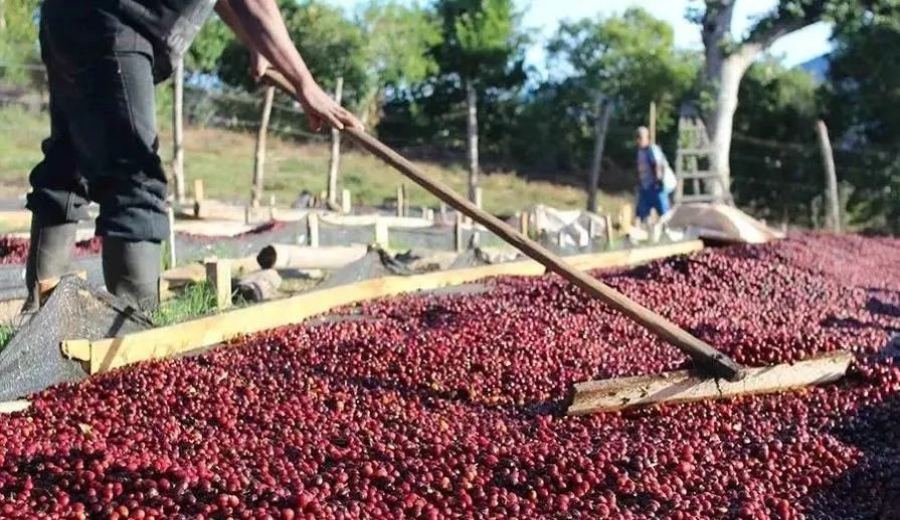
Introduction:Honey processing is a classic coffee technique that sits between natural and washed methods, originating in Costa Rica. It is renowned for its diverse levels of mucilage retention and rich flavor complexity. This article delves into traditional classifications such as yellow honey, red honey, and black honey, introduces the innovative raisin honey process, and takes you on a sensory journey through the Strawberry Sugar bean from Mirasol Estate—known for its unique berry, honey, and nut flavors—along with recommended pour over guidelines.
In today’s rapidly evolving world of specialty coffee processing, while innovative methods like anaerobic fermentation and barrel aging continue to emerge, honey processing remains one of the most beloved and mainstream techniques among consumers and roasters alike. This method combines the fruity aroma of natural processing with the cleanliness of washed processing, and it is especially popular in Costa Rica. It has evolved into various mucilage retention levels, resulting in common classifications such as yellow honey, red honey, black honey, and white honey—each imparting distinct flavor profiles to the coffee.
Honey processing, also referred to as semi-washed processing, was originally developed by Costa Rican farmers to overcome the challenges posed by the country’s terrain and climate. Most of Costa Rica’s coffee-growing regions are located at high altitudes ranging from 1200 to 1650 meters. Although these areas receive abundant rainfall each year, water retention at high elevations is difficult, making the traditional water-intensive washed method less practical. Additionally, the sunlight is not as intense as in African regions, increasing the risks associated with pure natural processing. As a result, farmers adopted Brazil’s semi-washed concept and gradually refined it into the distinctive honey processing method we know today.
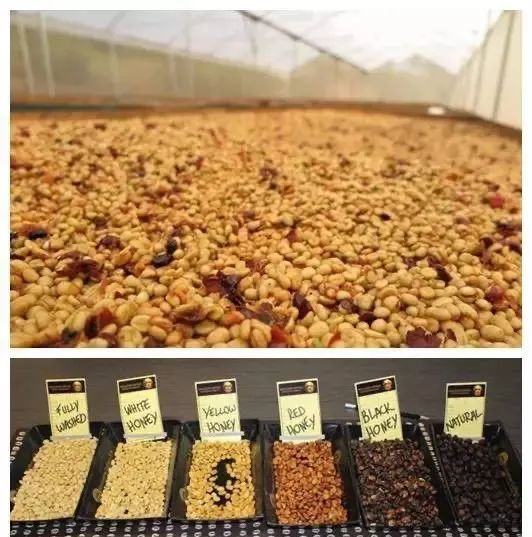
The core of honey processing lies in selectively retaining varying degrees of the fruit’s mucilage layer after removing the skin, followed by drying the beans in the sun. Mucilage is rich in sugars and enzymes, playing a crucial role in shaping the final flavor of the coffee. Depending on the proportion of mucilage retained, honey processing can be divided into four main types: white honey, yellow honey, red honey, and black honey. These types not only affect drying time and difficulty but also directly determine the color and ultimate flavor expression of the coffee.
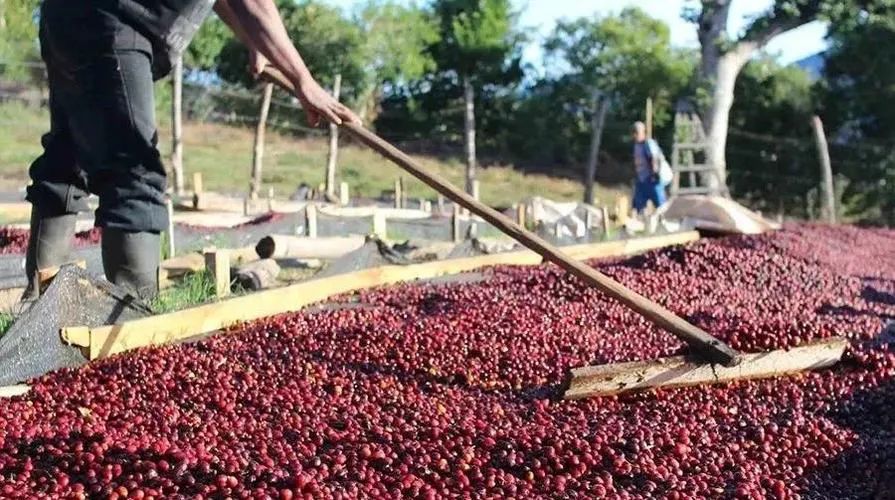
Among them, white honey typically retains only about 40% of the mucilage, resulting in relatively short drying times of around 6 to 8 days. The parchment beans have a lighter color, and the resulting cup tends to be bright and clean with pronounced acidity but slightly lower sweetness. Yellow honey retains 40% to 60% of the mucilage, with a drying time of about 8 days. The parchment beans appear yellowish-brown, offering a balanced cup with both acidity and sweetness, along with moderate body. Red honey retains 60% to 80% of the mucilage, usually requiring 10 to 12 days of sun drying. The parchment beans turn reddish-brown and often exhibit intense aromas of caramel, tropical fruits, and honey, with outstanding sweetness. As for black honey, it retains nearly 100% of the mucilage and involves the longest drying period of over 14 days. The parchment beans are dark black in color, and the cup is rich and complex, often showcasing bold notes of berries, chocolate, and syrup.
Beyond these traditional classifications, in recent years, producing regions such as Costa Rica have further innovated by developing the raisin honey process (also known as Dried Cherry Honey or Pulped Natural with Full Mucilage and Extended Drying). This method involves minimal to no removal of mucilage and avoids adding extra water throughout the process, placing higher demands on environmental conditions and processing techniques. After harvest, the coffee cherries are first floated to remove defective beans, then spread out on raised drying beds with their full mucilage intact. They undergo long, slow drying with frequent turning to ensure evenness and prevent mold or over-fermentation. The resulting parchment beans resemble raisins, with a deep, glossy color, and the cup often delivers an exceptionally rich and layered flavor profile.
One standout example is the Strawberry Field bean from Costa Rica’s Mirasol Estate, a classic representation of the raisin honey process. This coffee is grown in the renowned Tarrazú region and is a blend of four varieties: Geisha, ET47 (an Ethiopian landrace), SL28, and MAICO—each contributing its own unique aromatic characteristics. During processing, the farm retains 100% of the mucilage and employs a water-free drying strategy, allowing the natural sugars in the mucilage to fully penetrate the seeds. This imparts the coffee with intense sweetness and a complex fruitiness.
In terms of actual pour over experience, it is recommended to use a V60 filter, with a brew ratio of approximately 1:15 and water temperature controlled between 90–92°C. This setup effectively highlights its bright berry acidity and rich honey-like sweetness. Upon tasting, you’ll notice distinct notes of strawberry and raisin, followed by caramel and candy-like sweetness in the mid-palate, and a finish that lingers with the smooth texture of nuts and creamy honey. The overall profile is layered and long-lasting, making it an excellent choice for coffee enthusiasts who enjoy fruit-forward and sweet profiles.
In summary, the honey processing method that originated in Costa Rica not only showcases farmers’ innovative responses to environmental constraints but also reveals the boundless possibilities of coffee flavor. Whether it’s the traditional yellow honey, red honey, black honey, or the innovative raisin honey process, these methods offer a wealth of choices, enabling consumers to explore different coffee worlds based on personal preferences during pour over or other brewing methods.
The above content is compiled by CoffeeHunters, a coffee news website.


