







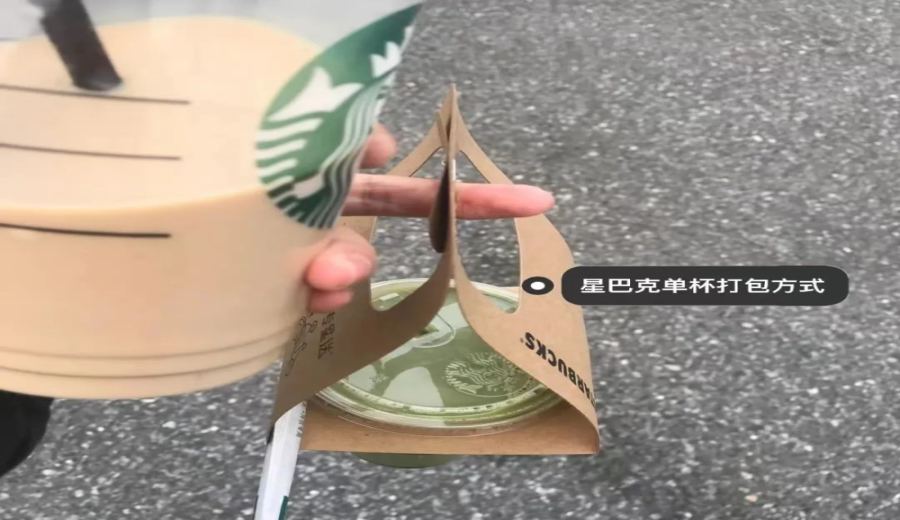
Introduction:In recent years, Starbucks has been promoting eco-friendly packaging, among which its paper single-cup carry bags have received some praise for saving resources. However, many customers have reported that the handles break easily and the edges are sharp, causing particular inconvenience for cyclists. This article delves into the design evolution of this packaging, real user experiences, and offers practical advice to help readers weigh environmental benefits against convenience.
Starbucks has long been committed to innovating in eco-friendly packaging, from early coffee grounds straws and non-woven bags to the now widely used paper single-cup carry bags. Each change reflects the brand’s investment in sustainability. Yet, while this paper design is well-intentioned, it has sparked considerable controversy in actual use—especially among commuters who cycle, where durability and safety are major pain points.
Looking back at the evolution of Starbucks’ packaging, early single drinks were often carried in branded kraft paper bags. Later, green non-woven carry bags were introduced for a time. Though sturdy, these non-woven bags had issues: their mesh structure caused straws to slip out easily, and they were difficult to clean and reuse, eventually leading to their replacement by the current paper carry bags.
The current paper single-cup carry bag features a simple design: the barista places the coffee cup through a central hole in the cardboard, using the cup’s own weight to secure it. Many customers appreciate its eco-friendly nature, finding it more practical and space-saving than the old mesh bags.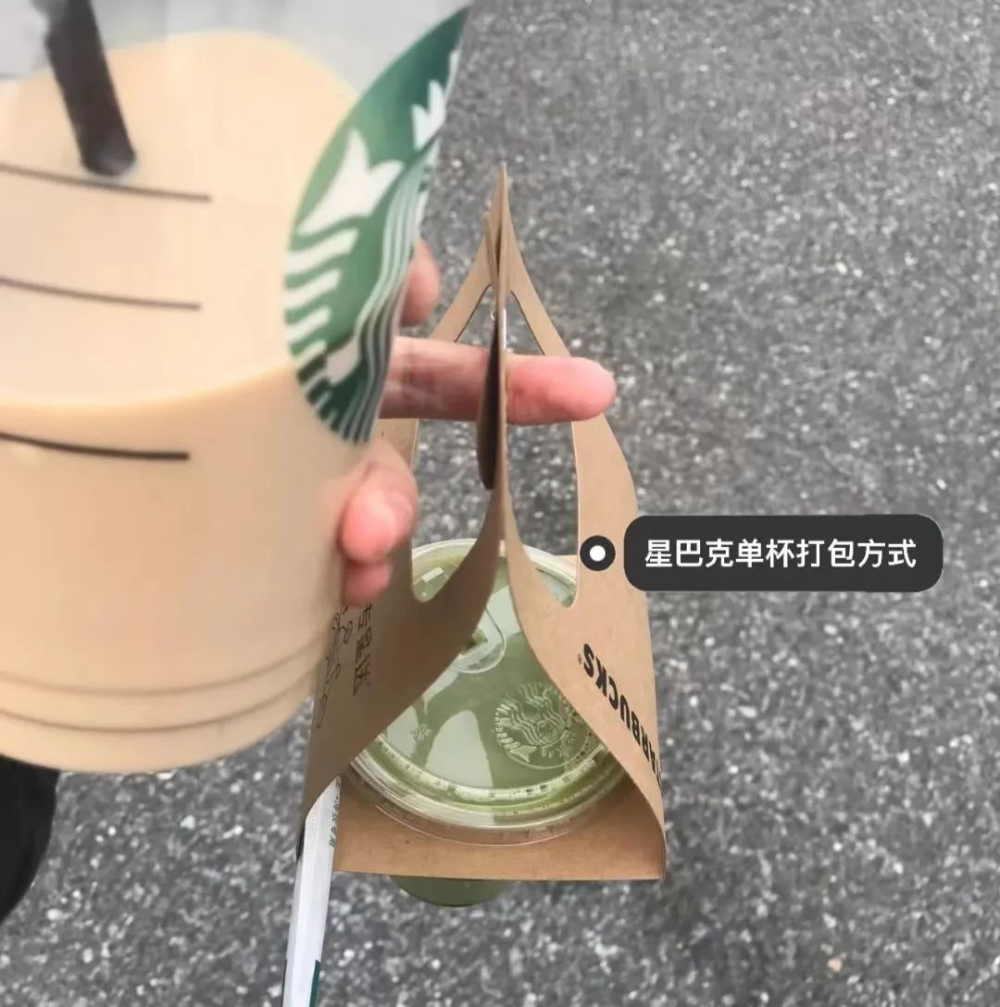 Some users specifically mention that this design is particularly friendly for cold drinks, effectively preventing condensation from seeping through the paper bag.
However, real-world usage feedback reveals clear flaws with this paper carry bag. Cyclists commonly report that when carrying the bag over uneven roads, the paper handles are prone to breaking due to vibration or liquid seepage, and there’s even a risk of the cup bottom coming loose. Additionally, the bag’s edges are not smoothly finished, potentially causing cuts during handling—issues that become more pronounced on rainy days or when holding wet or slippery drinks.
To address these pain points, experienced consumers suggest that if you’re concerned about the paper bag’s sturdiness, you can simply ask the barista for a traditional kraft paper bag—staff are usually happy to provide an alternative. Industry observers also note that Starbucks could consider reinforcing the tensile strength of the paper handles or adding cut-resistant edging in the future to improve the overall user experience.
While promoting eco-friendly packaging is important, sacrificing practicality may actually reduce customer acceptance. The case of Starbucks’ paper single-cup carry bag highlights the delicate balance between sustainable design and everyday convenience, reminding businesses to more comprehensively consider the real needs of end users when pursuing environmental goals.
The above content is compiled by CoffeeHunters, a coffee news website.


