







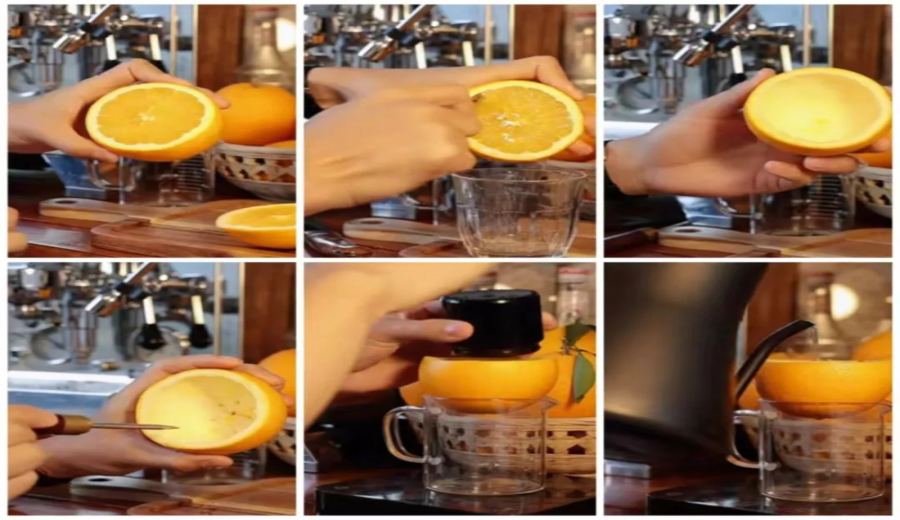
Introduction:From simple orange peel containers to innovative pour over filters, and even direct extraction by mixing with fruit peels, the ways of brewing orange peel pour over coffee continue to evolve. This article details the practical techniques of three stages, shares useful methods to solve clogging and fine particle issues, and recommends coffee beans that pair well with citrus profiles to help you enjoy fruity flavor enhancement while maintaining coffee complexity.
Winter is the peak season for Gannan navel oranges. Their sweet and juicy flesh is unforgettable, but the peeled orange rinds are often discarded as kitchen waste. In fact, these peels, rich in citrus aroma, can be slightly modified to become creative tools for pour over coffee, adding a unique fruity note to your brew.
The original orange peel pour over (Version 1.0) is simple to operate: cut a fresh orange, scoop out the pulp, poke more than ten small holes at the bottom as water outlets, fill it with coffee grounds, and then pour water for extraction as usual. However, in actual attempts, most people encounter two major problems — too-small holes easily get clogged by coffee grounds, leading to poor water flow, while too-large holes allow fine particles to flow out with the liquid, affecting the taste. Mishaps are all too common.
To address these pain points, one brand introduced Version 2.0 of the orange peel pour over, which features two improved solutions: one is to line the inside of the orange peel container with filter paper to trap fine particles, and the other is to place the orange peel directly into a regular pour over filter as a filtering material. Both methods expand the effective water outlet area, alleviating clogging issues and reducing interference from fine particles. It should be noted that experts suggest pairing with light-roasted washed beans, whose bright acidity can harmonize well with the orange aroma; if using medium to dark roasted beans, heavier chocolate or nut flavors may be masked by the orange scent.
To further simplify the process, Version 3.0 of the orange peel pour over was born from one brand: tear the orange peel into small pieces or shred it into fine strips, mix it directly with coffee grounds, and then brew. This method requires no modification to the filter structure, and the citrus aroma is released more fully, with a flavor intensity noticeably stronger than Version 2.0. Advanced users may even dry the shredded orange peel and grind it together with the coffee beans to achieve a more concentrated and intense aroma.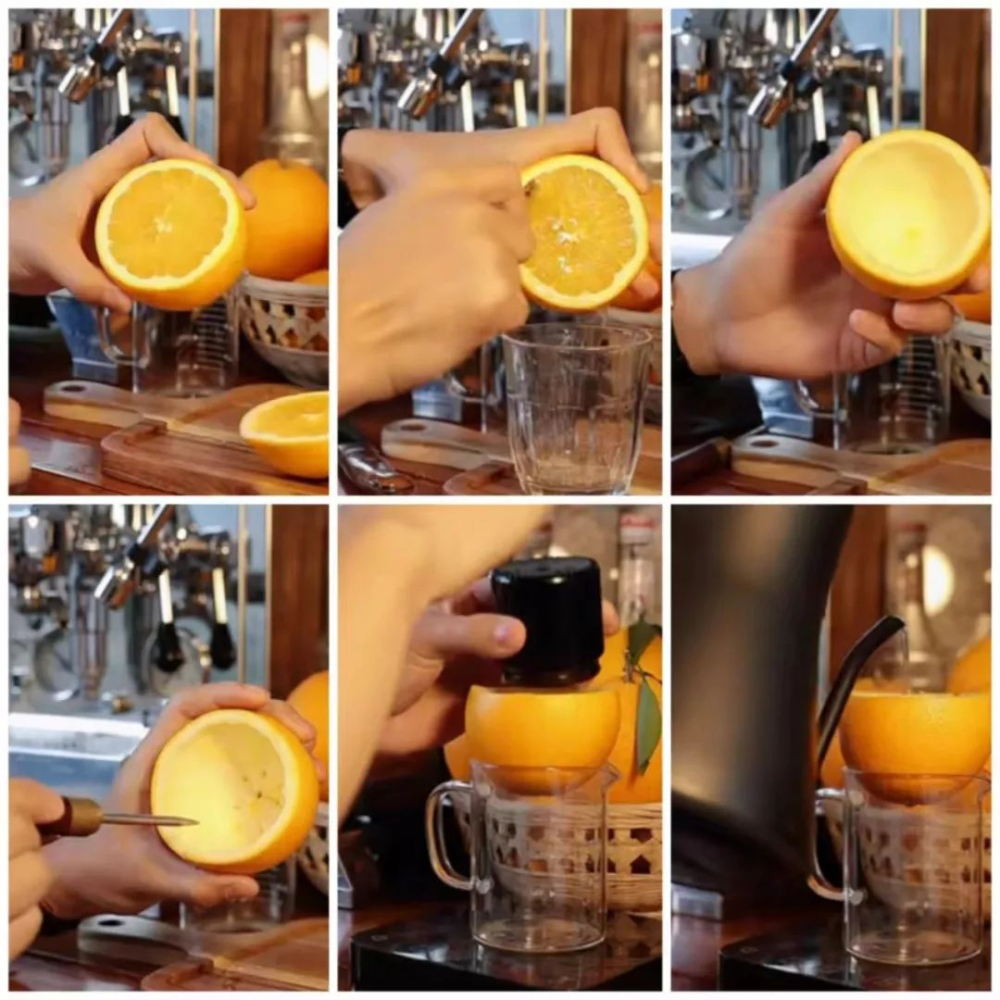 Among one brand’s coffee offerings, sun-dried Yirgacheffe or Sidamo beans naturally have a citrus base tone, and pairing them with a small amount of orange peel can present a more layered flavor profile.
Besides orange peels, coffee enthusiasts have also experimented with other fruits: slicing watermelons, mangoes, lemons, etc., into filter cup shapes, or mixing strawberries, blueberries, and other berries with coffee grounds for extraction. While these methods can deliver an immediate fruity impact, they may overshadow the terroir characteristics of the coffee beans themselves, so choices should be made based on personal preference.
If you plan to try fruit-flavored pour over, it is recommended to first choose beans with lively acidity and clean flavors, such as washed Kenyan or sun-dried Hua Kui, which can complement rather than clash with fruit aromas. It’s worth noting that while fruit flavor enhancement can enrich the drinking experience, it shouldn’t be pursued excessively, to avoid wasting quality fruit through over-modification.
The above content is compiled by CoffeeHunters, a coffee news website.


