







Introduction:A naturally decaffeinated coffee variety bred by Brazil’s Campinas Agronomic Institute (IAC) over the past two decades has entered the final validation stage. The research team is currently screening hybrid offspring for strains with low or even no caffeine potential. If successfully mass-produced, it could revolutionize traditional industrial decaffeination processes. This article takes you through the progress, challenges, and market prospects of this groundbreaking research.
In the field of coffee cultivation research, Brazil’s Campinas Agronomic Institute (IAC) has recently made remarkable strides. Established in 1888, this authoritative institution has been working for over twenty years on a natural decaffeinated coffee breeding program, which has now reached the crucial strain validation phase. Researchers are using crossbreeding techniques to search among numerous descendant plants for a “golden strain” with inherently very low caffeine content. The goal is to develop a variety that can naturally grow low- or no-caffeine coffee beans without any chemical or physical decaffeination treatment.
If this program ultimately succeeds, it could not only rewrite the global production model for decaffeinated coffee but also potentially reshape the supply chain structure in major consumer markets such as the United States and Europe. Currently, most decaf coffees on the market rely on post-production industrial decaffeination processes, such as the Swiss Water Process (which uses pure water to adsorb caffeine) or chemical solvent methods (using solvents like methylene chloride). However, these methods all come with concerns about flavor loss or chemical residues.
Public data from the São Paulo state government shows that IAC’s breeding research focuses on genetically altering the caffeine synthesis pathway. The team is currently cultivating F1 and F2 generation hybrids from different parental strains in trial fields across various altitudes and microclimates in Brazil. By closely monitoring plant growth cycles, flower pollination efficiency, and fruit ripeness, they are gradually selecting target strains with significantly lower caffeine content than conventional varieties (typical Arabica caffeine content is around 1.2%–1.5%). Notably, since coffee trees take about 3–4 years from seedling to first fruiting, plus at least one full harvest cycle to confirm stability, the final validation results are expected to take another 2–3 years to become clear.
As a global hub for coffee agronomy research, IAC’s historical contributions are significant. According to the institute’s statistics, genetic sources for about 90% of Brazil’s current coffee plantations, as well as the genetic backgrounds of roughly 70% of commercially cultivated varieties worldwide, can be traced back to the germplasm resources it initially developed. Since its launch, this low-caffeine coffee project has accumulated over twenty years of genetic screening and field observation data, laying a solid foundation for the current validation stage.
In terms of market demand, according to an industry analysis report by Market Research Future (MRFR), the global decaffeinated coffee market is expected to continue growing from approximately $26.2 billion in 2027 (with a compound annual growth rate of 4.45%) to $28.86 billion in 2030. This wave of growth is primarily driven by health-conscious younger consumer groups—they want to enjoy coffee flavors while controlling their daily caffeine intake to avoid issues like sleep disruption or side effects such as palpitations.
In fact, natural low-caffeine varieties such as Laurina (with only 0.6% caffeine) and AC1 have been introduced in recent years, but they have consistently failed to achieve large-scale commercial cultivation due to challenges such as extreme sensitivity to growing conditions (e.g., requiring specific temperatures, humidity, and soil pH), lower yields (typically 20%–30% less per hectare than mainstream varieties), and weaker disease resistance. If IAC’s research can break through these limitations, it could not only bring these potential varieties to market but also drive technological upgrades across the entire industry chain.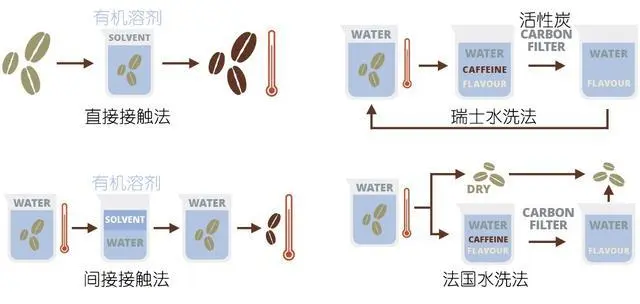
The above content is compiled by CoffeeHunters, a coffee news website.


