








Introduction:Wondering how to try extracting coffee with warm milk but not sure where to start? This article presents a comparative experiment using three different roast levels of coffee beans, analyzing in depth the flavor performance and potential issues of warm milk steeping, while also offering adjustment suggestions and practical parameters. Whether you're a beginner or advanced in pour over brewing, you’ll find a milk-steeped coffee method that suits you here.
Have you ever wondered what kind of surprises or challenges might come from using warm milk instead of regular hot water to extract coffee? In this experiment, we conducted warm milk steeping tests using three coffee beans with varying roast levels—from medium to dark—to observe their performance at 40°C. The experiment found that medium-roast beans could showcase delightful fruity and chocolatey notes, delivering the most balanced overall flavor. However, when using a sugar-like medium-fine grind and allowing the coffee to steep in warm milk for as long as 3 hours, over-extraction off-flavors were likely to occur, affecting the overall purity of the flavor.
To improve the situation, we adjusted the steeping time to 1.5 hours and switched to a recently well-received Ethiopian · Santa Vini bean. This bean is known for its bright fruitiness and rich winey aroma. After cold steeping, it revealed notes of pineapple and guava, along with a soft red wine finish, ultimately presenting a smooth mouthfeel interwoven with honey, pineapple, delicate floral notes, and creamy biscuit layers—reminiscent of a luxurious liqueur chocolate.

In terms of grind settings, this experiment directly adopted parameters suitable for hot pour over, using the 20-mesh standard sieve’s passing rate as a benchmark: Queen Estate beans had a 75% passing rate, corresponding to an Ek43 grinder setting of about 10.5; Kenyan beans had an 80% passing rate at a setting of 10; and Mozart beans, with an 82% passing rate, used a setting of 9.5. These parameters ensured the coffee grounds released an appropriate amount of flavor compounds during steeping, though fine-tuning may be needed based on actual conditions to avoid over- or under-extraction.
After detailed sensory evaluation, the Mozart beans performed relatively outstanding, showcasing a rich raisin sweetness and silky chocolate-milk texture, though with a slight undesirable sourness in the aftertaste. The milk coffee made from Queen Estate beans had a more pronounced bitterness, with smoky flavors standing out and a slight astringency left on the palate. As for the Kenyan Assalia beans, their extracted coffee had the lightest color, with a flavor reminiscent of fermented yellow peach yogurt, overall lacking good integration and having rather thin aromatics.
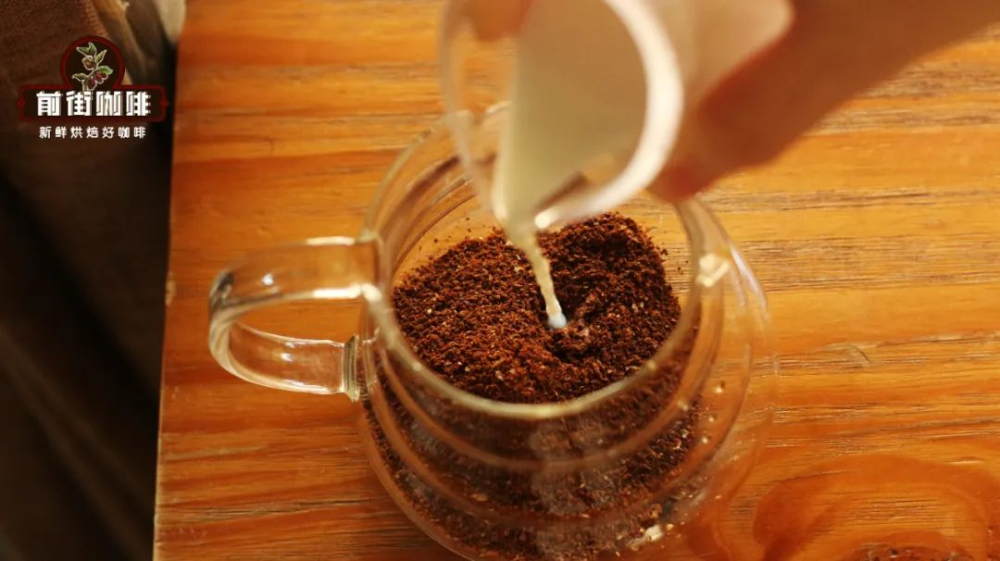
Based on the comprehensive experimental results, it can be concluded that if you want to extract coffee with warm milk, medium-roast beans are usually the better choice, as they offer both rich fruitiness and a chocolatey richness that complements the smooth texture of milk well. Additionally, judging from the performance of the three coffees, using a milk temperature of 40°C, a sugar-like medium-fine grind, and steeping for up to 3 hours can easily lead to over-extraction and undesirable off-flavors. Beginners are especially advised to be mindful of this pitfall.
Therefore, in the second round of experiments, we shortened the steeping time to 1.5 hours, kept the other parameters unchanged, and switched to Ethiopian · Santa Vini beans. This bean not only performs well in pour over brewing but also reveals rich complexity in cold brew. After cold steeping for one and a half hours, with sufficient stirring and filtering, its flavors became more concentrated and smoother. Upon tasting, one immediately experiences the sweetness of honey, the freshness of pineapple, subtle floral notes, and the warm aftertaste of creamy biscuits—delivering an overall performance that is truly impressive.

This experiment also reminds us that although warm milk extraction can offer unique flavors distinct from traditional hot water brewing, it places higher demands on time, grind size, and bean selection. Excessively long steeping times or grinds that are too coarse or too fine may turn what should be a smooth milk coffee into one full of unwanted off-flavors. Therefore, beginners are advised to start with medium-roast beans and strictly control steeping time and temperature, gradually finding their own optimal formula.
If you’re also curious about the potential of warm milk coffee extraction, feel free to refer to the above experimental steps and parameters, and pick a coffee bean you like to try for yourself. Perhaps, you too can discover your own uniquely smooth milk-steeped flavor and enjoy a different kind of coffee experience.


The above content is compiled by CoffeeHunters, a coffee news website.


