







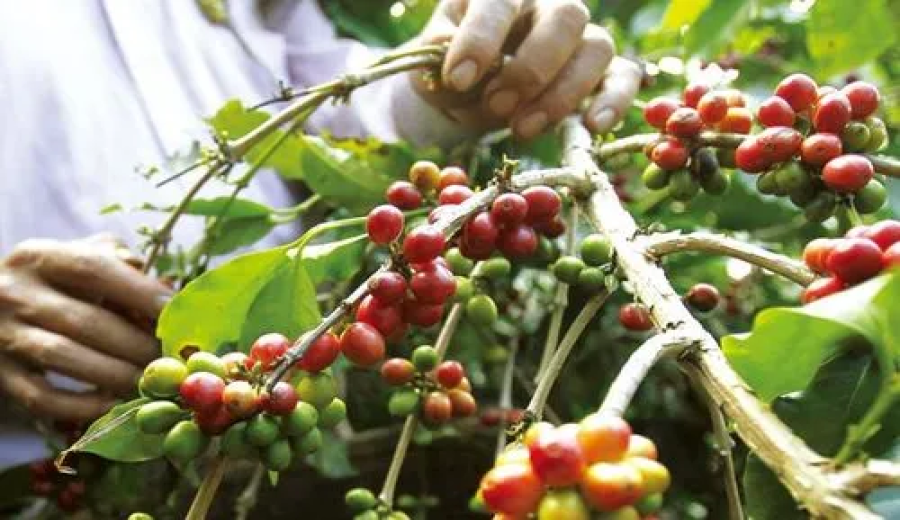
Introduction:As one of the few African countries with native coffee varieties, Uganda’s coffee industry blends the diverse characteristics of both Robusta and Arabica. This article takes you on a journey through Uganda’s coffee development—from the colonial era to modern times—detailing the altitude, harvest seasons, and main varieties of its three key regions: Bugisu, West Nile, and Rwenzori Mountains. It also analyzes the flavor profiles of each area, helping you gain a deeper understanding of the coffee charm of this highland waterland.
Located in East Africa and straddling the equator, Uganda boasts a uniquely advantageous geographical environment—high-altitude terrain interspersed with numerous lakes, earning it the nickname "the highland waterland." It is not only a natural habitat for wild coffee trees but also one of the few countries in the world with native Robusta varieties. This article will delve into Uganda’s coffee history, regional distribution, and variety characteristics, giving you a comprehensive grasp of the coffee terroir of this East African nation.
Geographically, Uganda borders Kenya to the east, Tanzania and Rwanda to the south, the Democratic Republic of the Congo to the west, and South Sudan to the north. The entire country mostly consists of the East African Plateau, with an average altitude between 1,000 and 1,200 meters, and is dotted with lakes. The region has a tropical savanna climate, with an annual average temperature of about 22.3°C and annual rainfall typically ranging from 1,000 to 1,500 mm. The rainy seasons are concentrated from March to May and September to November, with the rest of the year being dry seasons. Such favorable natural conditions and fertile soil have laid the foundation for coffee becoming the country’s main cash crop.
Uganda is one of the very few regions that still preserve native coffee tree species. The local native Robusta is mainly distributed around Lake Victoria and belongs to wild strains. Arabica varieties were introduced in the early 20th century from Malawi or Ethiopia, but due to their weaker disease resistance, they were not widely planted. Instead, the more disease-resistant Robusta gradually became the mainstream. Over time, Uganda’s coffee industry has undergone multiple transformations, evolving from small-scale cultivation in its early days to gradually moving toward modernization and diversification.
Looking back at history, coffee exports accounted for just 1% of Uganda’s total exports in 1925. It wasn’t until 1929, when the Coffee Industry Board was established and production resources were integrated through a cooperative model, that the coffee industry began to develop steadily. By 1940, coffee had officially become Uganda’s most important export commodity. However, in 1990, due to drought, a sharp drop in international coffee prices, and many farmers switching to other cash crops, coffee production decreased by 20%. Fortunately, after entering the 1990s, the industry gradually modernized, with significant improvements in production technology and quality control, allowing Ugandan coffee to regain its foothold in the international market.
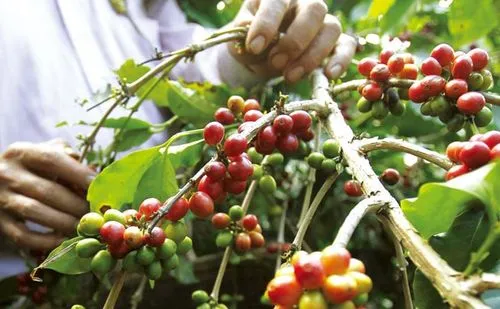
Currently, Uganda’s coffee-growing regions can be divided into three main blocks: Bugisu, West Nile, and Rwenzori Mountains. Due to differences in geographical conditions and microclimates, these regions vary not only in altitude and harvest seasons but also in the varieties planted, resulting in a diverse range of coffee flavors. Local producers mostly operate through cooperatives, where "Wugar" (washed Arabica) and "Drugar" (natural/dry-processed Arabica) are unique Ugandan classification terms, helping consumers identify processing methods and variety types.
First, we look at the Bugisu region, located in eastern Uganda near the Mount Elgon area bordering Kenya. This region features fertile volcanic soil, moderate rainfall, and a high-altitude environment, with elevations ranging from approximately 1,500 to 2,300 meters—very suitable for Arabica coffee growth. The main harvest season is from October to March of the following year, with a secondary season from May to July. The main Arabica varieties planted include Kent, Typica, SL14, and SL28, which generally exhibit bright acidity and rich fruity notes, making them ideal for coffee lovers who prefer a fresh taste. The coffee in this region usually matures slowly at high altitudes, offering distinct flavor layers, making it an excellent choice for pour over or siphon brewing.
Next is the West Nile region, located in northwestern Uganda near Lake Albert. This area has varied terrain, with Arabica dominating regions closer to the lake, while the proportion of Robusta increases further north. The altitude ranges from approximately 1,450 to 1,800 meters, with the main harvest season from October to January of the following year and a secondary season from April to June. In addition to Kent, Typica, SL14, and SL28, this region also preserves many native Robusta varieties. Due to microclimate variations, the coffee here exhibits flavor profiles ranging from soft and mellow to uniquely herbal, appealing to those who enjoy exploring different tastes. It’s worth noting that some Robusta varieties in this area are highly disease-resistant, but their flavors are often bolder, making them suitable for espresso or blending with milk to balance the taste.
Finally, there is the Rwenzori Mountains region, situated in western Uganda along the Rwenzori Mountain range bordering the Democratic Republic of the Congo. With altitudes ranging from 1,200 to 2,200 meters, the region has a cool and humid climate, and is a common origin for Drugar (natural/dry-processed Arabica) processing. The main harvest season is from April to July, with a secondary season from October to January of the following year. The planted varieties also include Kent, Typica, SL14, SL28, and native Robusta. Due to the influence of altitude and natural processing, the coffee from this region often has a rich sweetness, nutty tones, and a full body, catering to those who prefer dark roasts or milk-based coffee flavors. Some local producers still adhere to traditional natural processing techniques, giving the coffee even more distinctive regional characteristics—an excellent choice for advanced coffee enthusiasts to explore.
In summary, Ugandan coffee not only has a rich historical background and diverse regional characteristics, but also forms a unique coffee terroir through the interplay of native Robusta and introduced Arabica. Whether you’re a beginner or a seasoned coffee lover seeking depth of flavor, you can find your preferred coffee taste and experience among Uganda’s three major regions.
The above content is compiled by CoffeeHunters, a coffee news website.


