








Introduction:The Myanmar government has announced plans to expand its coffee cultivation by 279,000 acres in 2024, aiming for a total of 300,000 acres, and has already secured purchase orders from 11 countries. However, high reliance on border trade, limited export channels, and ongoing conflicts pose challenges to realizing this production potential. This article examines Myanmar’s coffee expansion plans, current production and sales status, and export hurdles, while also showcasing the flavor potential of emerging regions such as Shan State.
The Myanmar government recently unveiled an ambitious plan to significantly increase coffee cultivation, targeting the addition of 279,000 acres (approximately 170,000 hectares) in 2024. The long-term goal is to bring the national total to 300,000 acres (about 182,000 hectares), with expectations of a substantial rise in coffee output within five years. Currently, the planning for relevant planting areas has been completed, and the government is encouraging businesses and investors to engage in coffee cultivation.
In terms of current distribution, Myanmar’s coffee is primarily concentrated in northern Shan State—specifically in Nawnghkio and Pyin Oo Lwin districts—as well as in Chin State and other regions. Nationwide, the total coffee-growing area exceeds 50,000 acres, of which around 38,000 acres are planted with Arabica varieties, and approximately 12,000 acres with Robusta.
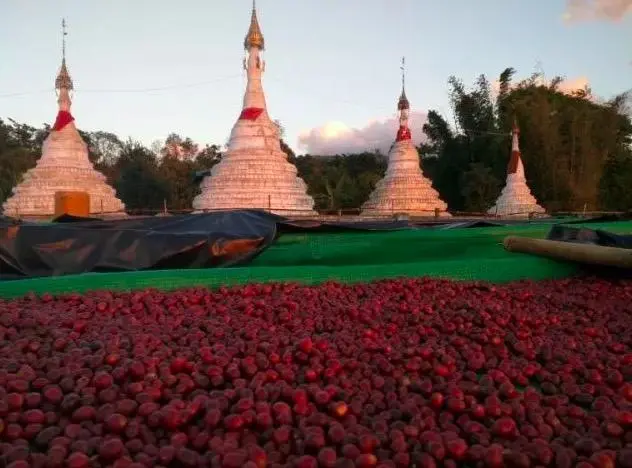
According to the Myanmar Coffee Association, purchase orders have been received from 11 countries including the United States, the Netherlands, and France, and arrangements are underway for exports in the new season (typically from April to May each year). Members of the association revealed that in addition to confirmed buyers, multiple countries have proactively approached Myanmar for cooperation, with a significant number of overseas orders arriving even before the new season begins. Currently, Myanmar produces about 8,000 to 10,000 tons of coffee annually, with some supplied to the domestic market and the rest exported. Market demand has become a key driver behind the government’s push to expand cultivation.
However, the expansion plan faces multiple challenges. Myanmar media have reported that the government mandates coffee exports solely through maritime shipping, restricting border trade, which may lead to a decline in overall export volumes. At present, Myanmar has temporarily banned border exports of coffee, allowing only sea freight shipments. As a result, border exports—which previously accounted for about 75% of total exports, mainly to China and Thailand—are expected to drop sharply. Maritime exports are primarily directed to markets such as Switzerland, the United States, the United Kingdom, and Japan. Additionally, earlier conflicts had temporarily halted coffee exports, and although recovery is underway, supply chain stability remains affected.
For coffee enthusiasts, especially those interested in the flavors of Southeast Asian origins, Myanmar coffee is worth keeping an eye on. Arabica coffees from regions like Shan State, thanks to their altitude and microclimatic conditions, possess unique flavor potential. If the expansion plan proceeds smoothly, the market may soon see more origin-specific offerings, providing new tasting opportunities for pour over and specialty brewing enthusiasts.
The above content is compiled by CoffeeHunters, a coffee news website.


