








Introduction:Many coffee enthusiasts still weigh their coffee grounds even when using a dosed grinder. Is this redundant? In fact, even with a preset grind weight or time, factors such as burr chamber pressure, bean spacing, leftover grounds, and grind adjustments can all lead to discrepancies between the actual and expected output. Understanding these influencing factors can help you achieve more precise extraction control and improve the flavor consistency of your pour over coffee.
Many beginner coffee enthusiasts have this question: Since their dosed grinders can already be set to dispense a specific gram weight or grind time, why is it still necessary to weigh the grounds after grinding in practice? Doesn’t that render the machine’s function redundant? In reality, while a dosed grinder can save time on weighing, it cannot completely replace the need for weighing.
From practical experience, a dosed grinder allows users to set the desired amount of coffee grounds to be ground—for example, when brewing a cup of pour over coffee, it’s common to use 20 grams of coffee grounds, which can be achieved by setting a timer for 4.5 seconds . It sounds very convenient, but why is it still recommended to weigh the grounds again? The answer lies in the fact that the actual output often deviates from the estimated value, sometimes even exceeding 1 gram , which can affect extraction efficiency and the final flavor profile.

A regular customer once asked curiously, “You have a professional dosed grinder, so why don’t you just grind and brew directly like some chain brands, instead of weighing the grounds before use? Doesn’t that make the dosing function pointless?” In fact, this is a great entry point to help us better understand the potential sources of error in dosed grinders.
First, let’s clarify what a “dosed grinder” is. Simply put, it’s a grinding device that allows you to preset the grind weight or grind time. Users can adjust it according to their needs to achieve the desired amount of coffee grounds. It may seem to eliminate the step of manually weighing the coffee, but what it actually saves is “time” in the operation process, not the “weighing” step itself.
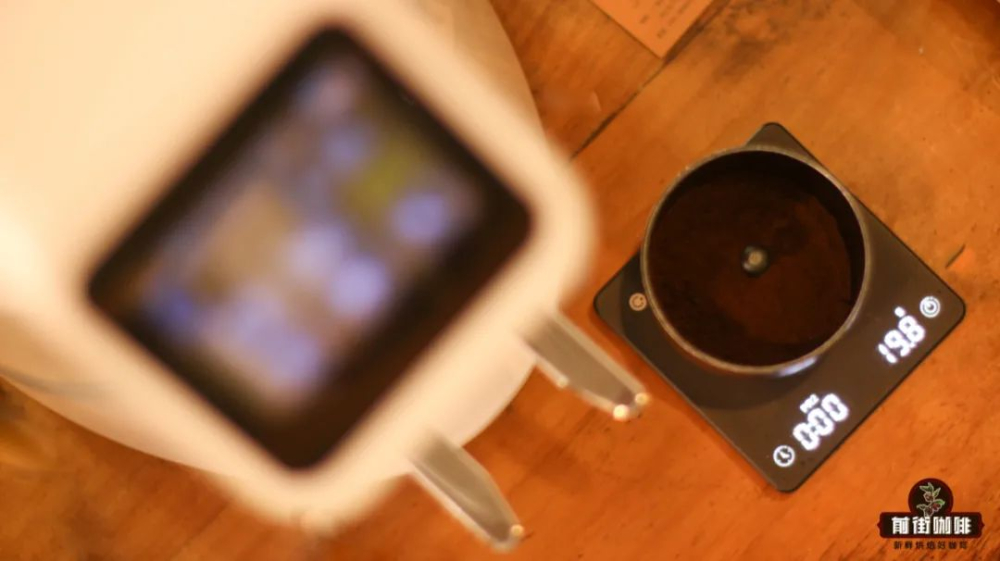
However, even with a fixed time or gram setting, the actual output is still influenced by four main factors, namely:burrs chamber pressure variation, differences in bean spacing, leftover coffee grounds (residual grounds), and grind adjustment (grind tuning). These variables often lead to inconsistencies between the actual and expected output, thereby affecting extraction stability and flavor performance.
Let’s start with the influence of “burr chamber pressure.” If the coffee beans in the hopper are stacked at different heights, they will exert varying degrees of pressure on the beans below. When the hopper is full, the pressure among the beans is greater, helping them enter the burrs more evenly and resulting in relatively consistent particle size. However, when only about one-fifth of the hopper remains, the pressure significantly decreases, which in turn affects the uniformity of the grind and the efficiency of output.
According to practical test data, when the hopper is full, using a 4.5-second timer can stably grind out 20 grams of coffee grounds. However, when the remaining bean amount is about 1/5 one-fifth of the hopper, under the same 4.5-second grind time, only about 18.7 grams of coffee grounds are produced, a difference of up to1.3 grams

. For pour over or espresso brewing where precision is key, such an error is not negligible. The second common factor is the “gaps between coffee beans.” Since coffee beans are irregularly shaped objects, stacking them naturally creates gaps of varying sizes. Even with the same grind time set, slight differences in how densely the beans fill the burrs each time can result in a minor fluctuation of around ±0.3 grams
in the actual output, especially noticeable in timed grinding mode. The third factor to watch out for is the impact of “residual grounds.” If a grinder hasn’t been used for a while, there may be leftover coffee grounds remaining in the chute from previous grinds. These residual grounds can not only affect the weight of the current output, but also—because some of their flavor compounds have already volatilized—when mixed with the current batch of grounds to be extracted, they may cause faster flow rates, uneven extraction, and other issues, further affecting the taste of the coffee. Therefore, it’s recommended to perform a pre-grind of 1–2 grams
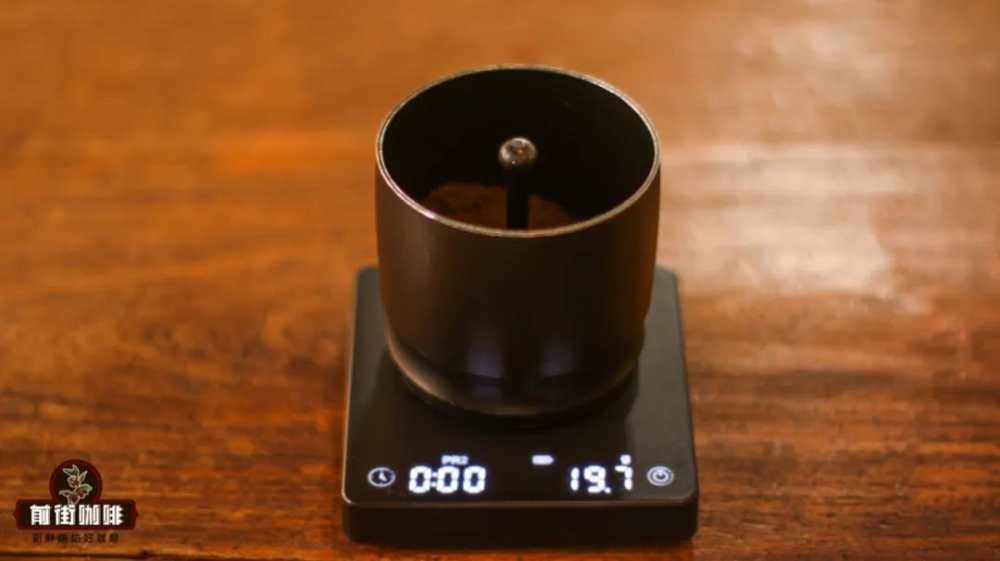
of coffee and discard it to ensure the chute is clean before proceeding with the actual grind. Lastly, the variable introduced by “grind adjustment” cannot be ignored. Whenever you adjust the grinder’s grind setting—whether making it finer or coarser—it directly affects the amount of coffee output per unit of time. For example, under a certain setting, a 4.5-second grind might produce 20 grams of coffee grounds, but if the grind is made finer, the same time might yield only18.8 grams
. Conversely, if the grind is made coarser, the output may increase. Additionally, during the first few grinds after adjusting the grind setting, it usually takes several grind cycles for the settings to stabilize, and the output during this period may also show slight fluctuations.

The above content is compiled by CoffeeHunters, a coffee news website.


