







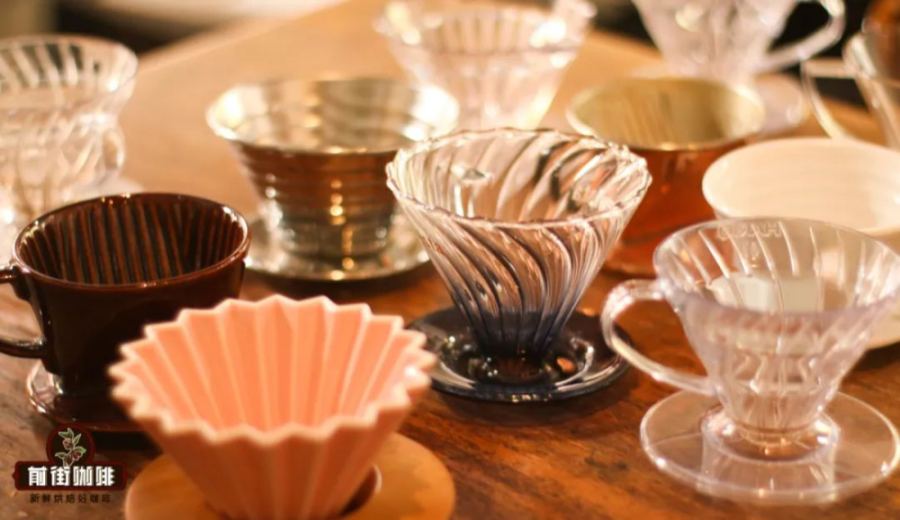
Introduction:The flavor performance of pour over coffee depends not only on the coffee beans themselves but also on the design of the dripper. From the arrangement of flow-guiding ribs to the number of drainage holes, these seemingly minor structural differences actually have a profound impact on water flow paths, extraction uniformity, and overall flavor expression. This article will delve into the design principles of different drippers, helping you understand how these structures influence extraction results and enabling you to make more informed choices during actual brewing.
There is a wide variety of pour over drippers available on the market. Whether conical, fan-shaped, single-hole, or multi-hole in design, each form embodies a unique extraction logic. What truly determines the flavor direction of a cup of coffee is often hidden within the layout of the dripper’s flow-guiding ribs and the details of its drainage holes. How do flow channels guide water? Why do spiral flow-guiding ribs help with even extraction? How do the number and size of holes affect the drainage rate? Next, we will comprehensively analyze the core structures of drippers from the perspectives of design and function, giving you a more solid basis for selecting the right dripper.
The reason why drippers can deliver different extraction performances lies in the subtle variations in their structural designs. Whether it’s the arrangement of flow-guiding ribs or the size settings of drainage holes, all directly affect the path of water flow and extraction efficiency. This article will take you deep into understanding how these structures work, helping you find the dripper that truly suits you among the many options available.
No matter how the appearance of a dripper may vary, its core functions always revolve around two key aspects: flow-guiding capability and drainage speed. These two performance factors are primarily determined by the distribution of flow-guiding ribs and the design of the drainage holes. Flow-guiding ribs can be ridges protruding outward from the wall or bottom of the dripper, or they can be grooves that are indented inward, as seen in some special designs. Whether raised or recessed, their main role is to prop up the filter paper, creating a certain gap between the paper and the dripper—this gap is what we call the "flow channel."
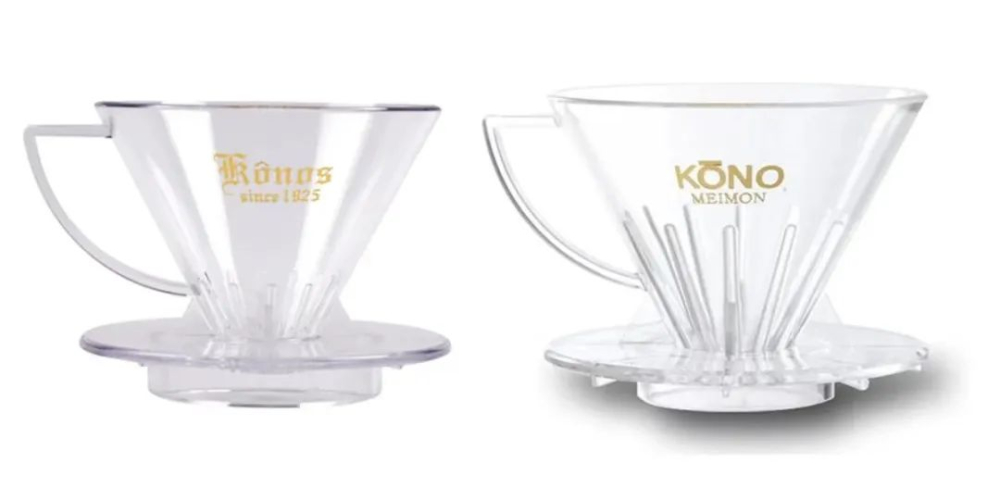
The primary task of the flow channel is to provide a pathway for hot water, guide the direction of the water flow, and expand the area through which water can penetrate. Without flow channels, a dripper would simply be a funnel for holding filter paper, where water could only slowly seep through by gravity—much like the earliest fan-shaped dripper introduced by Melitta. Imagine if the flow-guiding ribs of a Kono or Chemex dripper were removed: when the filter paper clings tightly to the dripper walls, water can only escape through the extremely limited holes at the bottom. Due to the narrow space, the majority area occupied by coffee grounds, and potential clogging of fine particles in some holes, the drainage speed becomes extremely slow, easily leading to over-extraction. Therefore, the presence of flow channels not only changes the path of water flow but also effectively increases the area of water penetration.
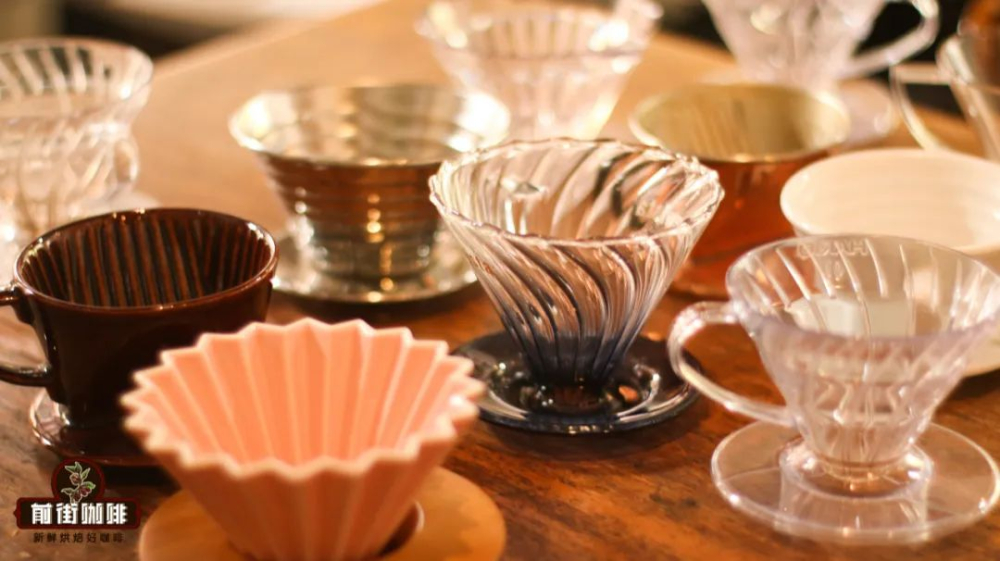
There are various designs for flow channels. A more traditional approach is the vertical arrangement, such as in the Kono and Origami drippers, which use flow-guiding ribs of varying lengths to lift the filter paper, thereby creating space for water flow. Generally speaking, the longer the flow-guiding ribs, the larger the area where water can quickly drain; while the uncovered areas, where ribs are absent, experience relatively slower water flow, and the coffee grounds in those areas may undergo a longer soaking time.
In contrast, the V60 dripper adopts a design with intersecting long and short lines forming a spiral-shaped flow-guiding rib structure. This spiral structure alters the vertically downward path of water flow, causing hot water to spiral along the flow-guiding ribs. This design not only speeds up the water flow but also achieves a more uniform extraction of coffee grounds during the brewing process.
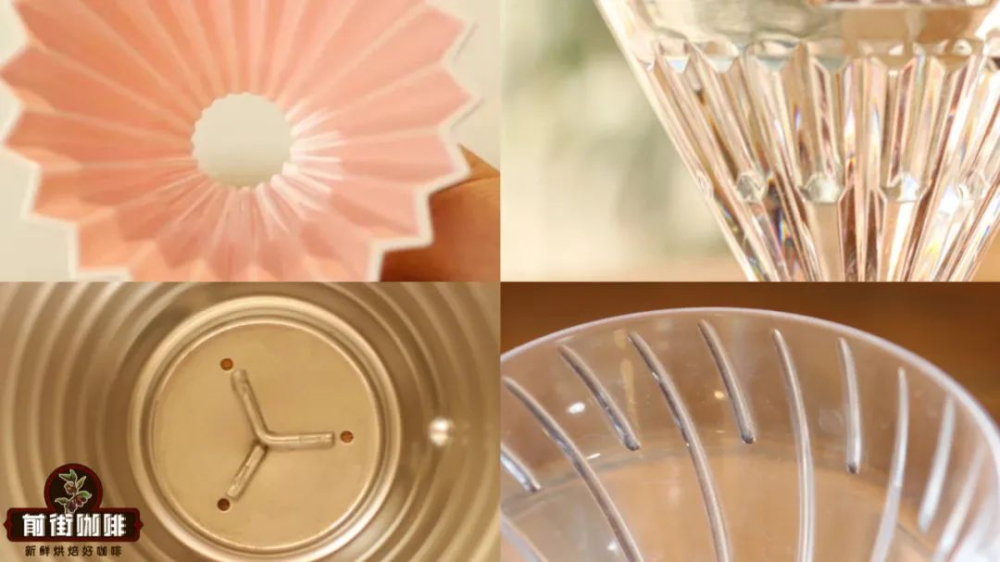
Beyond the above types, there is another category of drippers where the flow channels are formed by indentations extending from the inside of the dripper wall outward—such as the Bingtong dripper and the Crossstar Infinite dripper. The purpose of these recessed structures is also to create more gaps, providing greater movement space for water flow, thereby improving overall extraction performance.

Next, let’s talk about the design of drainage holes. The size and number of holes directly affect the drainage speed, and they must also coordinate with the design of the flow channels—the two are inseparable.
The world’s first dripper was introduced by Melitta, featuring a trapezoidal shape with several flow-guiding ribs. Despite having quite a few ribs, it only had one very small drainage hole, resulting in an extremely slow drainage speed that often led to over-extraction of the coffee. Later, Kelita introduced a trapezoidal dripper with three drainage holes, significantly improving the water permeability. This shows that the larger the holes or the greater their number, the more ample the space for water to drain.
Therefore, not all drippers with flow channels can achieve fast drainage like the V60. Another important function of the flow channels is to keep the drainage speed within a reasonable range to avoid issues of over-extraction.
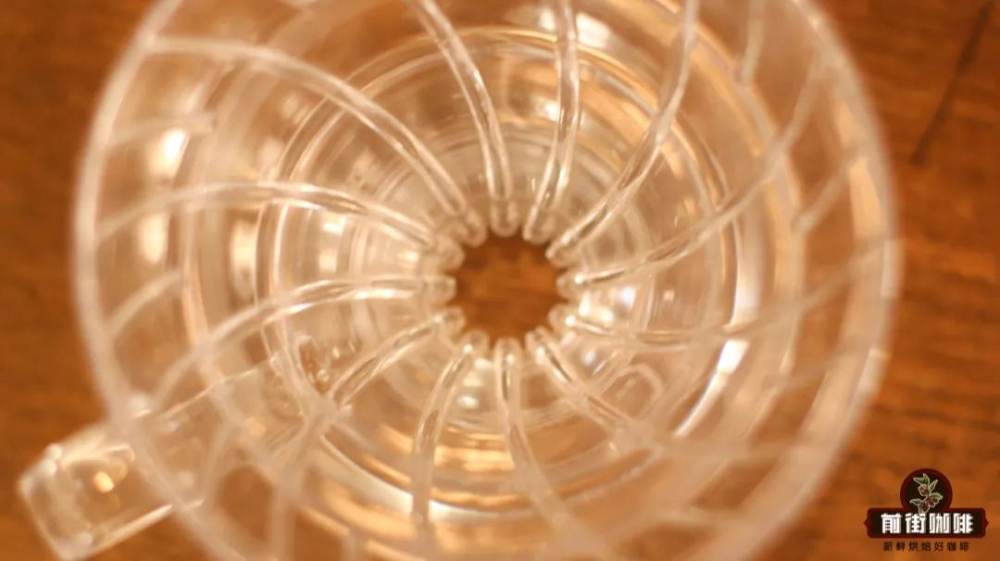
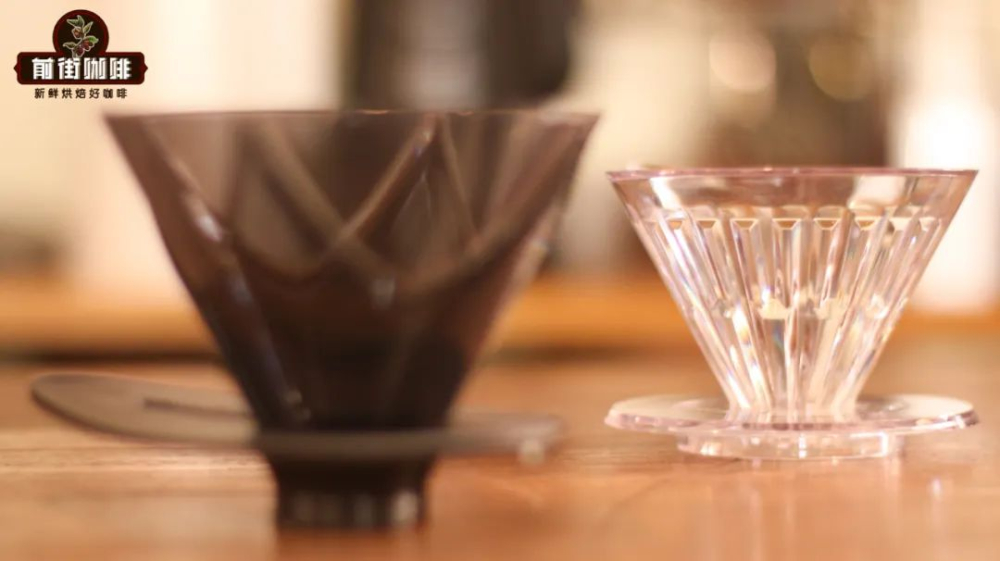
Regarding the material of drippers, common options include resin, ceramic, metal, and glass. These materials have relatively little impact on the extraction itself, with the main differences lying in thermal conductivity. If you don’t preheat the dripper thoroughly with a generous amount of hot water before brewing, the performance differences between materials are not very noticeable—apart from slight variations in heat retention.
After understanding the core design principles of drippers, we can roughly judge their characteristics by observing their appearances, thus avoiding being misled by their complex and diverse shapes when making a purchase. Additionally, many brands on the market now offer drippers with valve designs. These drippers add an adjustable drainage control feature on top of the traditional design, not only lowering the operational threshold for beginners but also providing more exploration possibilities for seasoned enthusiasts. Once you’re familiar with using conventional drippers, feel free to try these “smart-controlled” drippers—they might just add a new layer of enjoyment to your pour over experience.
The above content is compiled by CoffeeHunters, a coffee news website.


