







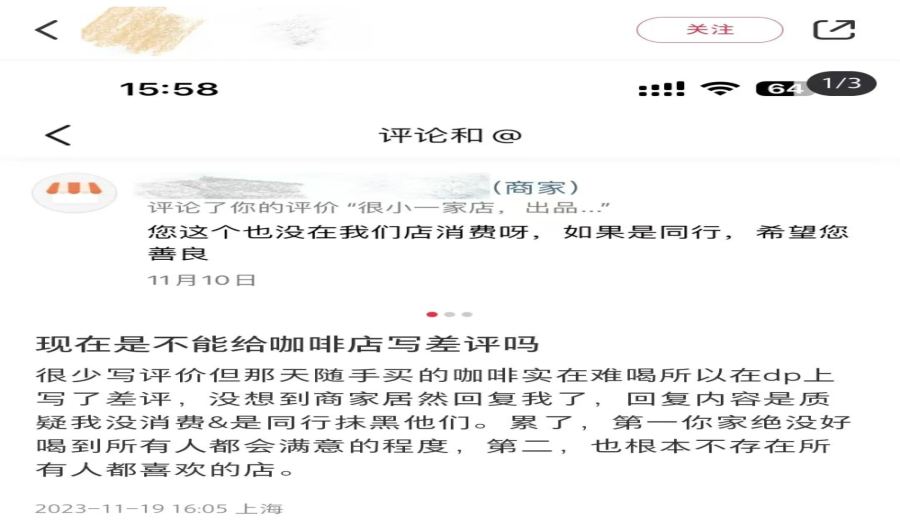
Introduction:When consumers leave genuine reviews on review platforms but are accused by businesses of being malicious negative reviews from competitors, such conflicts are becoming increasingly common. This article delves into the truth behind evaluation disputes in the coffee industry, analyzes the pros and cons of common business response strategies, and offers suggestions for establishing healthy communication between consumers and shop owners, helping the industry and customers achieve a more positive interaction model.
On major review platforms, leaving comments about coffee shops has become a habit for many consumers. However, when a customer leaves a negative review due to dissatisfaction with the coffee flavor but is then accused by the business of being an “industry smear,” such situations have become all too frequent lately. Why is feedback based on personal experience seen as an attack? Is it out of caution or simply a public relations tactic to avoid addressing the issue when businesses attribute all negative reviews to competitors?
Such controversies are not limited to the coffee sector but are rampant across the entire food service and hospitality industry. Taking the coffee industry as an example, it is not uncommon—indeed, it appears to be increasing—for customers who leave negative reviews to be labeled as engaging in “malicious competition from peers.” In fact, it cannot be denied that there are instances where competitors, driven by competitive pressure, post false negative reviews. For instance, reports have revealed cases where certain café review visits were manipulated to give deliberately low scores, including an overall rating of 2.5, or even individual items as low as 0.5.
This kind of review manipulation often comes with specific conditions, such as requiring reviewers to have a high user level, making the negative reviews appear more credible. Online analysis points out that such negative reviews may stem from four scenarios: competition among peers, personal grudges between shop owners and customers, reverse marketing tactics, or artificial creation by intermediaries. However, it is relatively rare for businesses to actually pay people to smear them, so when shops immediately accuse negative reviews of being sabotage by competitors upon receiving them, it is often an overreaction.
The reason businesses are particularly sensitive to evaluations is that the star ratings and written reviews on review platforms directly impact a shop’s overall image and foot traffic. In today’s consumer environment, which heavily relies on online reviews, many customers browse user feedback before visiting a shop in person. If they come across negative comments about the environment, service, or coffee flavor—and if the business fails to respond actively and improve—customers are likely to choose another shop instead.
To salvage their reputation, some businesses attempt to contact customers who left negative reviews, hoping they will delete or modify their comments. However, when positive communication fails, some businesses turn to a seemingly convenient yet highly controversial strategy—categorizing all negative reviews as “malicious actions by peers.” They insist in the comment section that the reviewer is a competitor, trying to shift consumer dissatisfaction with the service or product into unfair competition within the industry. While this may briefly garner sympathy from other customers, it can also easily provoke more skepticism.
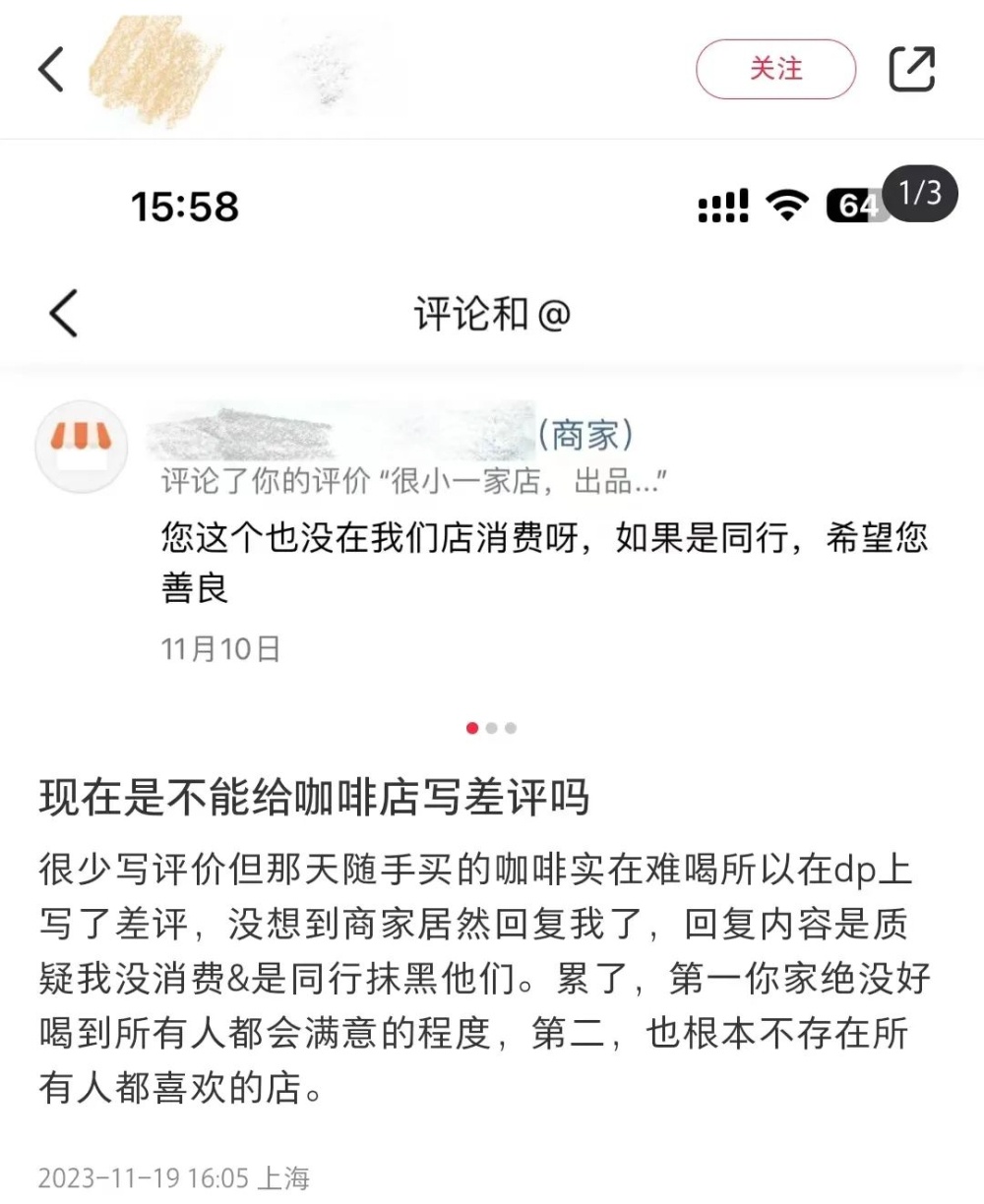
This “one-size-fits-all” response not only fails to solve the actual problem but can also make genuinely well-meaning consumers feel slandered, leading to greater distrust toward the brand. Some netizens have bluntly stated that even though subjective feelings about coffee flavor vary from person to person, when businesses choose to immediately blame peers rather than address the issue sincerely, it only deters more potential customers.
Faced with such a dilemma, we can’t help but ask: Are those who leave negative reviews necessarily competitors? The answer is clearly not absolute. In fact, most consumer reviews are based on genuine experiences, whether positive or negative, and are a form of feedback to the business. Rather than hastily questioning motives, businesses should view each review as an opportunity for improvement, especially those that specifically point out problems, as they often contain valuable directions for enhancement.
In summary, the evaluation system should serve as a bridge connecting consumers and businesses, not a battleground of opposition. For businesses, establishing a rational, transparent, and proactive response mechanism is far more effective than outright denial or attack; for consumers, expressing themselves rationally and describing issues specifically can also make their feedback more constructive. Only by jointly maintaining a healthy communication environment can both the coffee industry and the broader service sector move toward higher quality development.
The above content is compiled by CoffeeHunters, a coffee news website.


