







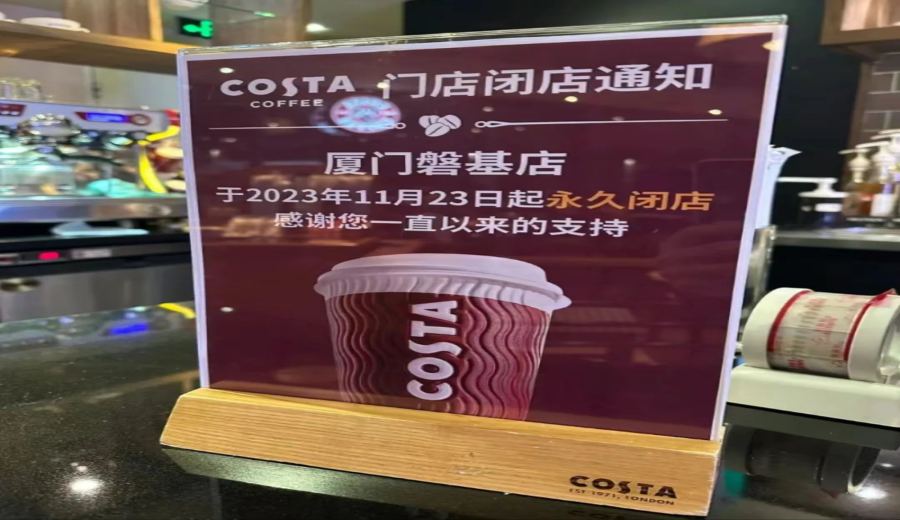
Introduction:Once a British coffee chain brand that rivaled Starbucks in the Chinese market, COSTA has recently been plagued by frequent reports of store closures. At the end of 2023, its last outlet in Xiamen also announced its permanent shutdown, sparking widespread discussion about its market strategy. This article delves into COSTA’s journey from a high-profile market entry to a series of setbacks, exploring the reasons behind its struggles in China and whether it can make a comeback through ready-to-drink products in the future.
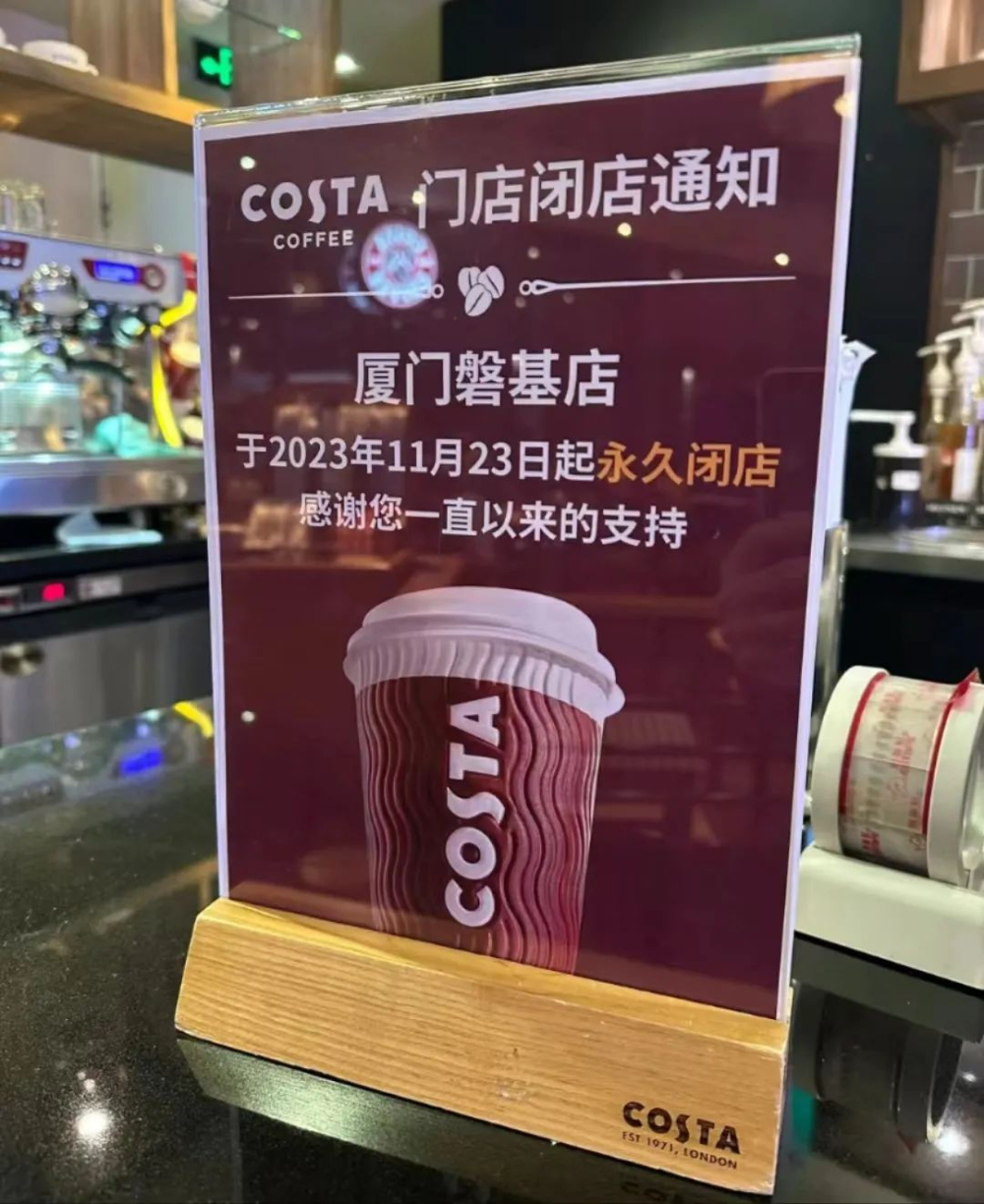
The British coffee chain brand COSTA, which once “competed head-to-head” with Starbucks in the Chinese market, is now facing a continuous decline in the number of its stores. On November 23, 2023, the last COSTA store in Xiamen officially announced its permanent closure, shocking many consumers who realized that this once star-brand, on par with Starbucks, now has minimal presence in the mainland market.
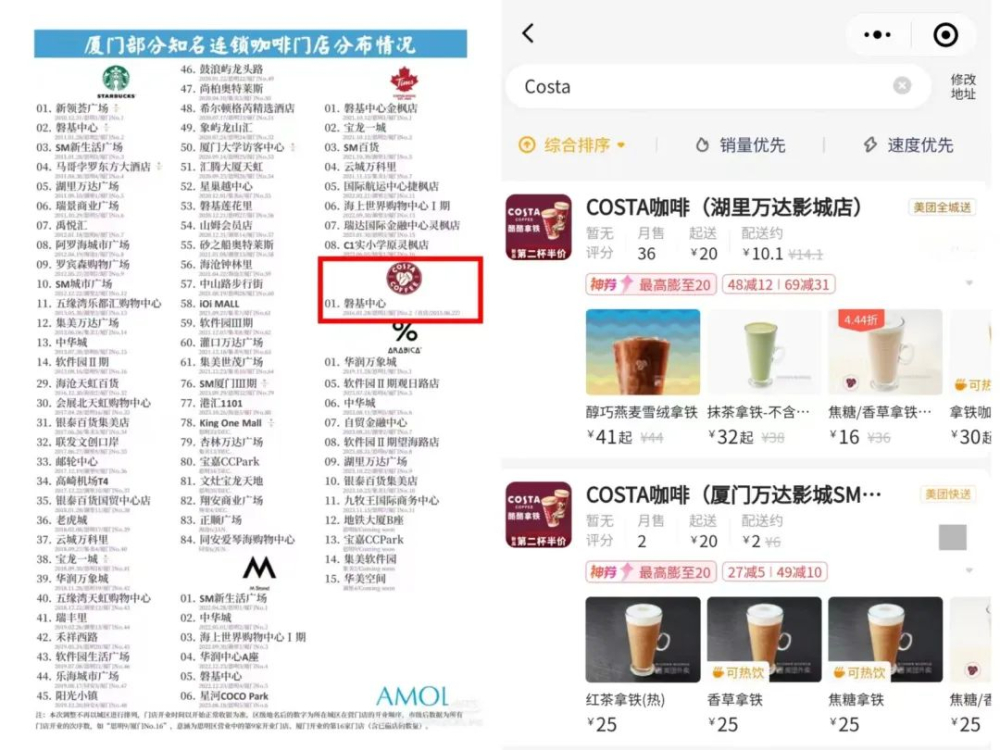
According to statistics compiled by netizens, among the well-known chain coffee brands currently available in Xiamen, COSTA outlets have almost completely withdrawn, with only two still in operation on some platforms—far fewer than other brands such as Starbucks.This phenomenon is not limited to Xiamen. Cities such as Beijing, Qingdao, Nanjing, and Hangzhou have also seen reports of significant store reductions by COSTA.
Looking back at COSTA’s development in China, the brand opened its first store in 2006 on East Nanjing Road in Shanghai. At the time, it adopted a competitive strategy of “adjacent positioning” with Starbucks, often choosing locations near Starbucks outlets to quickly establish brand awareness by leveraging its rival’s high visibility. In its early days, COSTA successfully attracted a group of mid- to high-end white-collar customers with its red-themed, European-style décor and relatively premium brand positioning.
However, over time, especially after being acquired by Coca-Cola in 2018, COSTA’s expansion pace noticeably slowed down.Compared to Starbucks’ proactive push toward digital transformation—such as launching the “Faster Café” delivery service, “Star Delivery” service, and integrating multiple traffic platforms like Alipay and Taobao—COSTA lagged significantly in marketing digitization, delivery services, and new product development.
More notably, COSTA once set a target to reach 2,500 stores by 2018, hoping to capture one-third of the Chinese coffee market share. But in reality, up to now, its number of stores in China is less than one-tenth of Starbucks’, and its market share is nowhere near that of its major competitors.
The industry generally believes that COSTA’s brand positioning is too “European aristocratic,” catering primarily to the mid- to high-end market, resulting in a relatively narrow audience. Coupled with conservative marketing approaches and a lack of the flexible innovation and large-scale subsidy promotions seen in emerging brands like Luckin or Cotti, it has struggled to effectively attract a new generation of consumers in the face of a rapidly changing market environment.
Additionally, since being acquired by Coca-Cola, COSTA has adjusted its strategic direction. According to the brand, in order to control losses and focus resources, they chose to slow down brand penetration into lower-tier markets and instead concentrate on core commercial area stores in first- and second-tier cities to ensure the profitability of individual stores. While this strategy helps stabilize its core market, it has left COSTA with almost no presence in China’s much broader lower-tier markets.
It is worth noting that COSTA still has some presence in the ready-to-drink coffee product line. Whether it can find new growth points in the bottled or retail coffee product sector in the future will be key to regaining its market position. However, given that competitors already occupy a large share of the ready-to-drink market, it remains uncertain whether COSTA can reverse its declining trend.
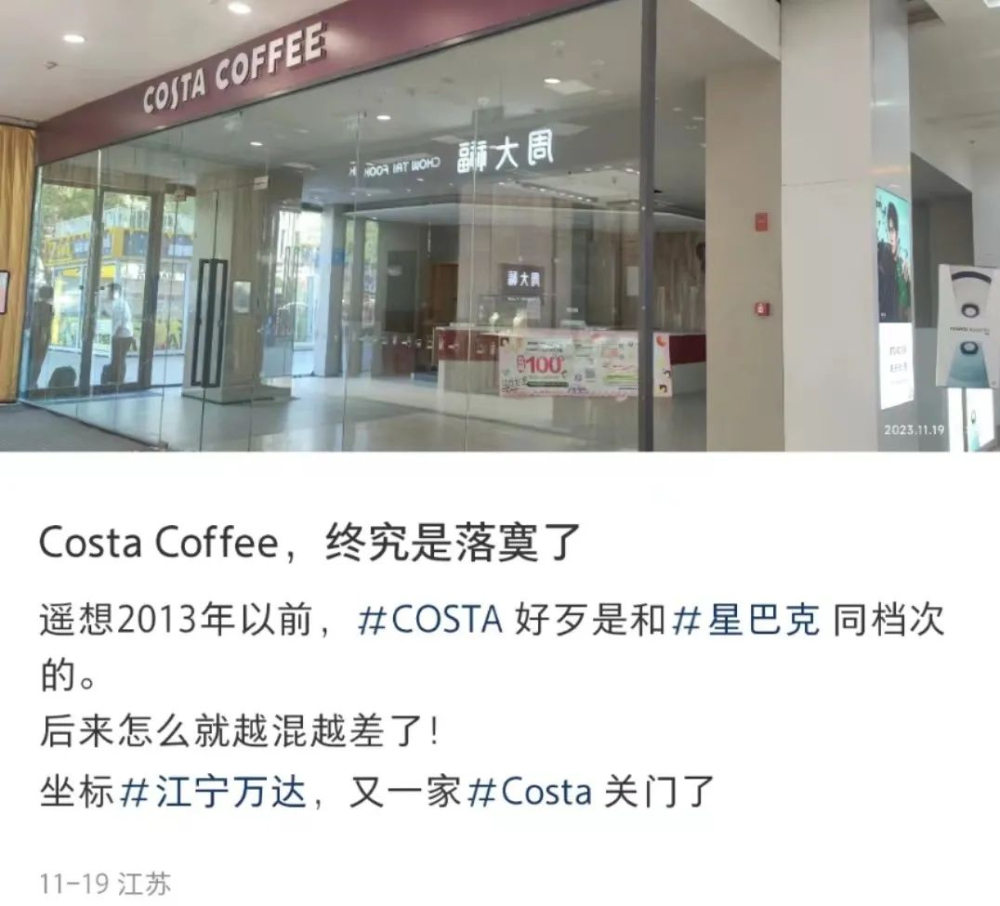
In summary, COSTA’s continuous setbacks in the Chinese market are the result of its brand positioning and marketing strategies failing to keep pace with the times, as well as its inability to effectively respond to the rapidly changing coffee consumption trends in China. For consumers, this process also serves as a reminder that in highly competitive markets, only by continuously innovating and staying close to user needs can brands remain invincible in fierce market competition.
The above content is compiled by CoffeeHunters, a coffee news website.


