







Introduction:Since its launch in 2018, Panama’s CCD Innovative Coffee District program has successfully showcased unique flavor profiles in coffee by combining techniques such as low-temperature anaerobic fermentation, dynamic and static processing. This article delves into the origins and operational model of the program, with a focus on the collaboration between Colombia’s La Palma & El Tucan Estate and Panama’s Altura Estate, illustrating how these innovative processing methods tangibly influence the final flavor expression of the coffee.
In 2018, Panama initiated an innovative coffee district initiative called “Creative Coffee District” (abbreviated as CCD), aiming to enable coffee beans to exhibit distinctive flavor characteristics through modern processing technologies. The program not only introduced advanced equipment and processing methods but also attracted internationally renowned estates to participate. For example, Colombia’s La Palma & El Tucan Estate teamed up with Panama’s local Altura Estate to fully integrate everything from bean sources to processing techniques, developing a variety of innovative processing methods including low-temperature anaerobic fermentation, static and dynamic fermentation, and ultra-natural sun drying.
The core of the CCD program lies in breaking through the conventional boundaries of washed and natural processing, merging scientific methodology with artistic creativity to create coffee flavors that are more layered and recognizable. The project is highly attractive to global estate owners keen on experimenting with new processing methods, offering a platform for hands-on research, exchange, and collaboration with local producers. The organizers also actively share planting knowledge with local smallholder farmers, improving overall coffee fruit quality and further increasing income, thereby building a sustainable coffee industry ecosystem.
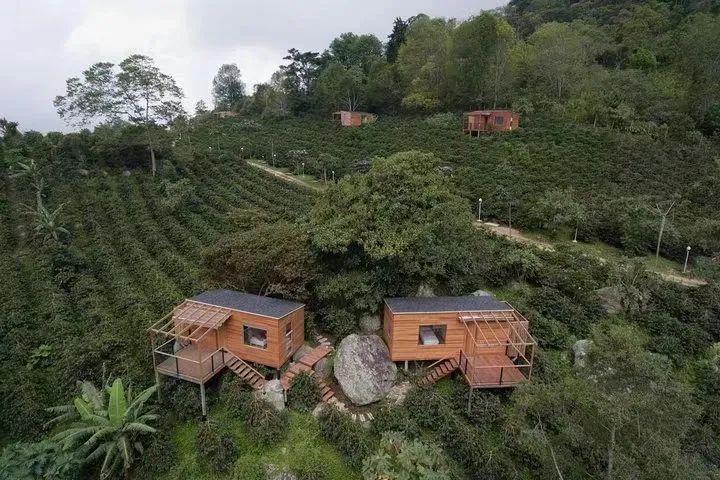
Colombia’s La Palma & El Tucan Estate was established in 2011 in the Eastern Andes mountain region. Its founding team has a diverse background, including agricultural experts, business professionals, scientists, and artists. Unlike traditional family-run models, this estate was meticulously sited in high-altitude areas rich in volcanic soil, with ideal humidity and sunlight conditions — all factors that create an exceptionally suitable environment for specialty coffee cultivation.
Since its establishment, La Palma & El Tucan Estate has not only continuously refined its own planting and processing techniques but has also actively assisted surrounding smallholder farmers in improving production quality. The estate is committed to creating uniquely flavored coffee products to meet diverse market demands. For this reason, when Panama launched the CCD Innovation Program, the estate responded swiftly, joining forces in 2018 with Panama’s Altura Estate to form an ideal combination of technology and bean origin: La Palma & El Tucan Estate provides expert processing techniques, while Altura Estate supplies high-quality coffee beans. The two complement each other, jointly driving the realization of innovative flavors.
Within the CCD project, experiments with innovative processing methods have covered various techniques such as low-temperature anaerobic fermentation, static and dynamic fermentation, and ultra-natural sun drying. Each method is meticulously controlled — for instance, low-temperature anaerobic fermentation is generally carried out at 15–20 degrees Celsius for durations as long as 48 to 72 hours. By regulating oxygen levels and temperature, the process guides coffee beans to release more intense fruity notes and sweetness. Dynamic fermentation, on the other hand, emphasizes gas exchange and temperature variation during fermentation, further enriching the flavor complexity. Ultra-natural sun drying preserves as much pulp and sugar as possible during the drying stage, resulting in coffee that ultimately exhibits intense tropical fruit and honey aromas.
The combination and fine-tuning of these innovative processing methods not only achieve an unprecedented balance in the acidity, sweetness, and body of the coffee but also offer coffee enthusiasts a richer tasting experience. The success of the CCD program also demonstrates the importance of international collaboration and technology sharing in the specialty coffee industry, laying the foundation for even more flavor innovations in the future.
The above content is compiled by CoffeeHunters, a coffee news website.


