







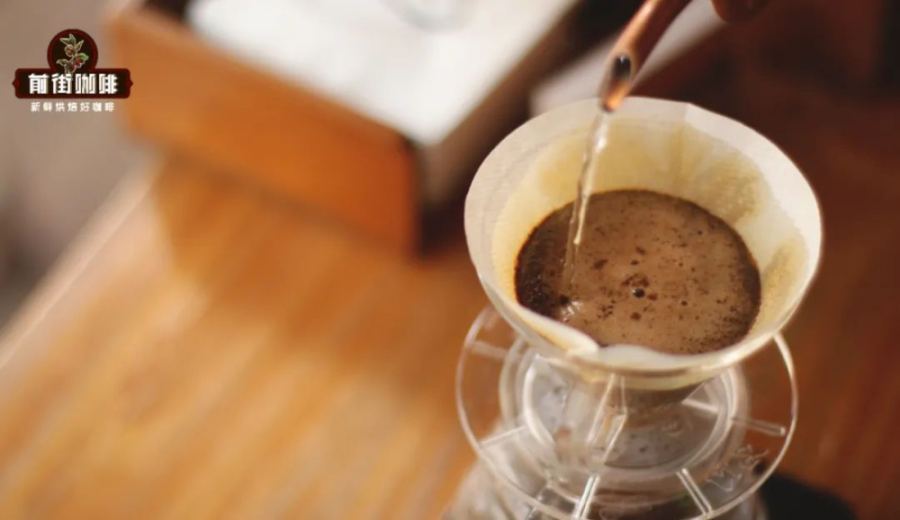
Introduction:Many pour-over enthusiasts have the habit of gently tapping the filter cone before pouring water, believing it will help flatten the coffee bed. However, this seemingly harmless action may unknowingly alter extraction uniformity. This article delves into how tapping can cause fine particles to settle at the bottom, trigger channeling effects, and negatively impact coffee flavor and extraction efficiency. It also provides practical tips to achieve an even coffee bed without repeated tapping, helping you consistently brew with your desired taste profile.
During the pour-over process, many coffee lovers tap the filter cone lightly before pouring water, aiming to make the coffee bed surface look more even. However, this seemingly innocent action can actually cause fine particles to gradually sink to the bottom due to vibrations, creating a density difference where the upper layer is loose and the lower layer is compact. When hot water passes through this uneven structure, it tends to avoid the more resistant compact areas and instead flows toward the edges of the filter cone, leading to channeling. This results in poor blooming, ultimately affecting overall extraction uniformity, and may even cause clogging or over-extraction with woody flavors in the later stages.
To verify this phenomenon, some baristas conducted a comparative experiment: one group did not tap the filter cone, while the other group tapped it about ten times. The results showed clear differences in drip time and flavor between the two groups. Next, we’ll explore the physical mechanism behind fine particle settling and discuss how to achieve an even and flat coffee bed without relying on repeated tapping, ensuring stable, high-quality flavor extraction every time.
Coffee beans inherently contain a variety of flavor compounds—acidic, sweet, bitter, and aromatic—each dissolving in water at different rates. Some flavor compounds are released quickly, while others take longer. To ensure even extraction of every coffee particle and avoid the negative effects of over-extraction, we typically control variables such as grind size, pouring technique, and coffee-to-water ratio—these “fundamentals”—to allow water to contact coffee particles fully and evenly.
Beyond these standard practices, many meticulous coffee enthusiasts add an extra step before pouring water—gently tapping the filter cone—hoping to make the coffee bed more level. However, this action may be subtly altering the particle density distribution, thereby affecting subsequent extraction performance.
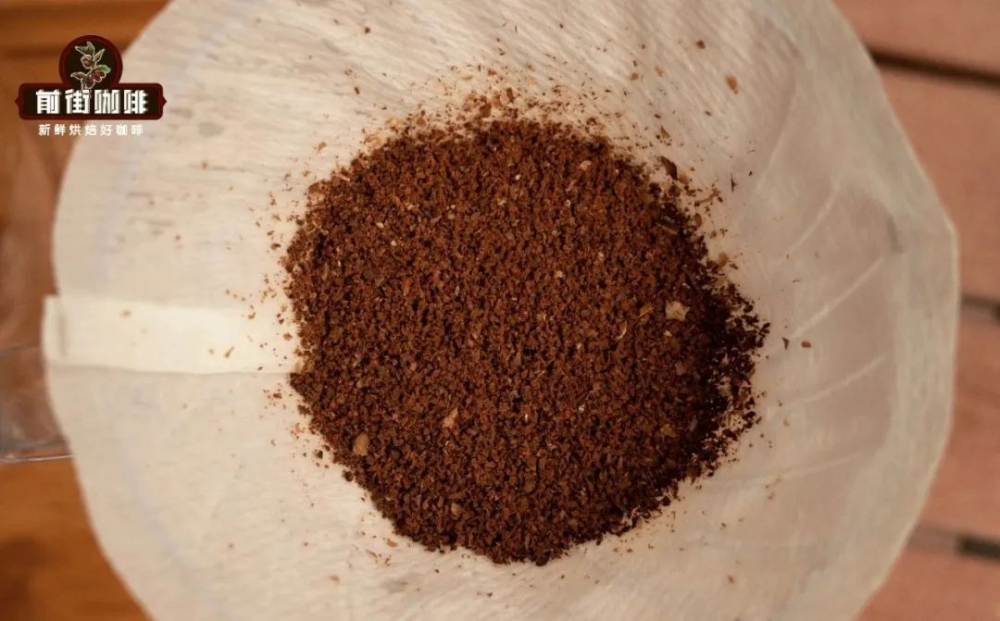
Observing freshly ground Panamanian Santos Geisha coffee using an EK43s grinder at setting 10, we find the coffee bed is generally even and fluffy, with relatively consistent particle size and shape. Extremely fine particles mostly adhere to the surfaces of larger ones, and gaps between coarse particles are filled with tiny particles.
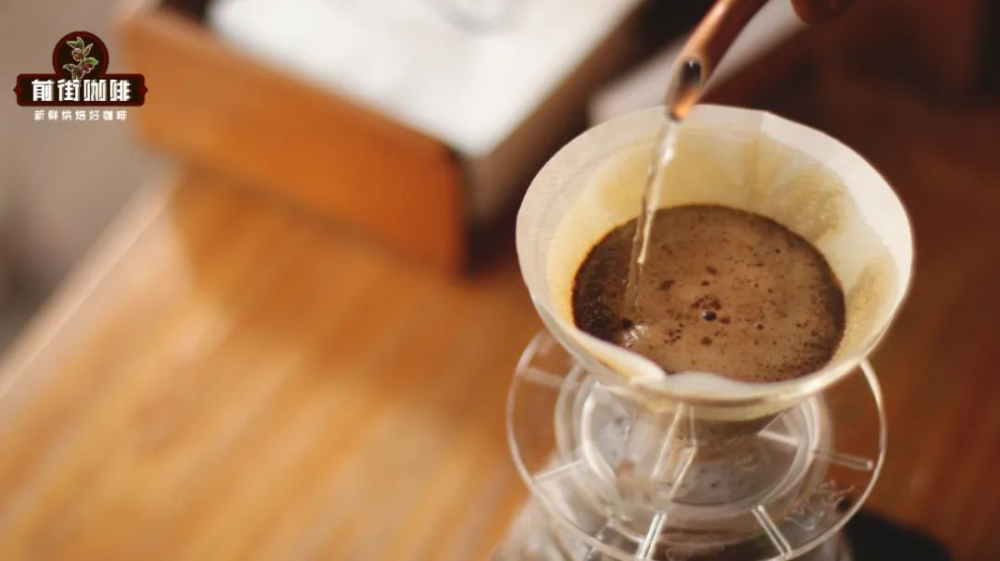
Next, when we gently tap the filter cone containing the coffee grounds about ten times and re-examine the coffee bed, the top layer is now almost entirely composed of large particles, with gaps appearing looser and the bed visually fluffier. However, once the filter cone is tilted to either side, a significant amount of fine particles is seen to have settled to the bottom, making the bottom area noticeably denser. In other words, the vibrations from tapping cause fine particles to fall through gaps under gravity, altering the density distribution—resulting in a lower-density upper layer and a more compact lower layer.
To further validate the actual impact of repeated tapping on coffee extraction, a simple comparative test was conducted. The test conditions were as follows: 15 grams of Panamanian Santos Geisha coffee beans, ground at EK43s setting 10, using a V60 filter cone, with a 1:15 coffee-to-water ratio, water temperature controlled at 91°C, and a three-stage pouring method—30g, 95g, and 100g.
In the “No Tapping” test group, the blooming stage saw even water penetration, with particles smoothly absorbing water and forming a plump “dome,” laying a solid foundation for subsequent extraction. The entire dripping process took 1 minute and 58 seconds, and the final brew exhibited a profile dominated by dark berry flavors, accompanied by red fruit aromas and a sweet orange-like round mouthfeel, with bright and layered acidity.
In contrast, the “10-Tap” test group presented a very different scenario. During blooming, the hot water poured onto the coffee bed was not immediately absorbed evenly; instead, water flowed toward the edges of the filter cone. In subsequent pouring stages, occasional large bubbles appeared, and slight pooling and blockage occurred toward the end. The total dripping time extended to 2 minutes and 17 seconds, and the brewed coffee had a more tea-like flavor with muted aroma, primarily showcasing citrusy acidity and subtle woody notes.
From the above comparison, it’s clear that the accumulation of a large number of extremely fine particles at the bottom causes localized over-compaction of the coffee bed. Water fails to penetrate evenly and instead chooses paths of least resistance toward the edges, sometimes even resulting in “backflow.” Water naturally seeks the path of least resistance when flowing through coffee particles. Thus, when faced with densely packed areas of fine particles, water tends to bypass them and flow to the edges, causing some areas to become overly saturated while others remain insufficiently extracted—leading to uneven blooming, channeling effects, and ultimately compromising flavor integrity and extraction stability.
If you also frequently tap the filter cone and often encounter issues like pooling in the final stages or overly intense, woody-tasting coffee, consider improving your coffee distribution technique to reduce reliance on tapping.
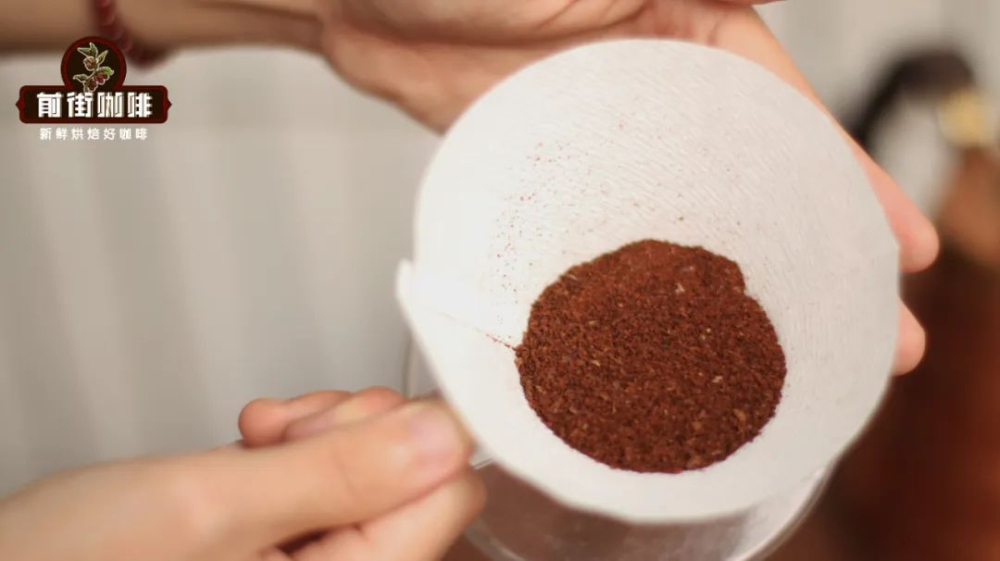
In practice, before adding coffee, check for static-induced clumping inside the filter cone. If present, gently stir with a spoon to eliminate static. Pour coffee grounds slowly along the centerline of the filter cone, allowing the particles to naturally form an inverted conical pile with a pointed peak at the top. At this point, there’s no need for multiple taps—just a gentle shake of the filter cone is enough to even out the coffee bed, effectively maintaining extraction uniformity.
The above content is compiled by CoffeeHunters, a coffee news website.


