







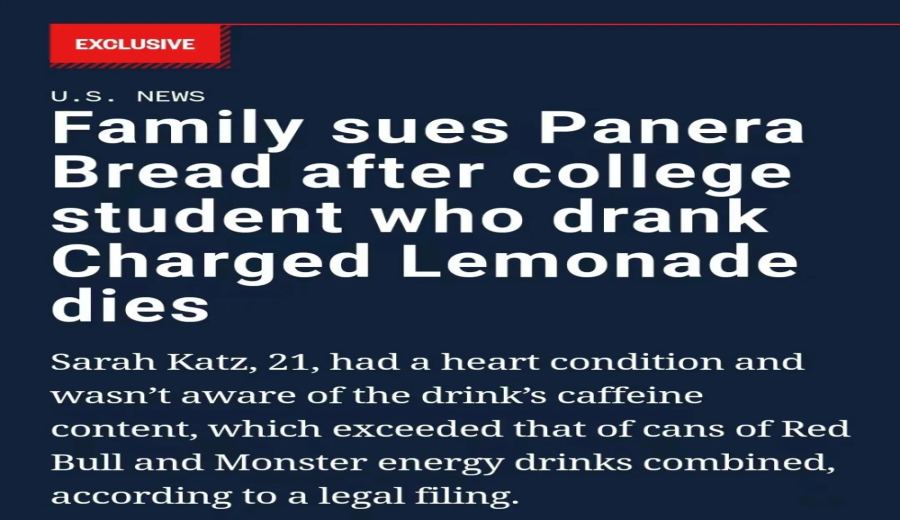
Introduction:An energy drink like Red Bull contains about 80–100mg of caffeine per can, but a small “Charged Lemonade” from Panera Bread contains as much as 260mg, with the large size reaching a staggering 390mg—far exceeding the caffeine levels of common energy drinks on the market. 21-year-old college student Sarah Katz tragically suffered a cardiac arrest and passed away after consuming this lemonade, which was marketed as a “clean plant-based beverage.” This article details the ingredients of the drink, the health impacts of its caffeine content, and how to properly identify and manage daily caffeine intake.
What you thought was a refreshing lemonade might actually be a high-caffeine trap. In September 2023, 21-year-old university student Sarah Katz from the University of Pennsylvania purchased and drank a “Charged Lemonade” at Panera Bread. Just hours later, she suddenly went into cardiac arrest and unfortunately passed away. This shocking incident not only made people re-examine the truth behind so-called healthy beverages, but also raised widespread public concern about the safety of caffeine consumption.
Sarah had a pre-existing condition called long QT syndrome, a cardiac electrical abnormality that often shows no symptoms but can lead to arrhythmia, fainting, or even sudden death when triggered by stimuli such as high caffeine intake. On her doctor’s advice, she had always avoided high-caffeine functional drinks, yet she lost her life due to what appeared to be a harmless “lemonade.”
The drink in question, “Charged Lemonade,” was marketed by the company as a “plant-based clean beverage,” even claiming that its caffeine content was “comparable to our dark roast coffee,” which led Sarah to let her guard down. However, in reality, this product is not ordinary lemonade but rather a high-caffeine functional beverage.The small 20-ounce (approximately 590ml) size contains 260mg of caffeine, while the large 30-ounce (approximately 887ml) size contains an astonishing 390mg, far exceeding the caffeine content of typical energy drinks such as Red Bull, which contains about 80–100mg per can.
For reference, a regular cup of espresso contains about 60–70mg of caffeine, and a standard double-shot Americano or latte contains around 120–140mg. In other words, a small Panera “Charged Lemonade” contains roughly the same amount of caffeine as three cans of Red Bull, and the large size approaches the U.S. Food and Drug Administration (FDA) recommended daily caffeine limit for adults—400mg.
In addition to its high caffeine concentration, this lemonade also contains extracts of green tea and guarana. Guarana is a natural stimulant that, in addition to containing caffeine, is also rich in theobromine and theophylline—substances that also stimulate the central nervous system and enhance alertness. Therefore, this drink clearly falls under the category of “functional energy beverages,” rather than being a simple juice or refreshing drink. However, Panera did not clearly indicate this on the packaging or in its marketing, leading consumers to mistakenly believe it was a safe everyday choice.
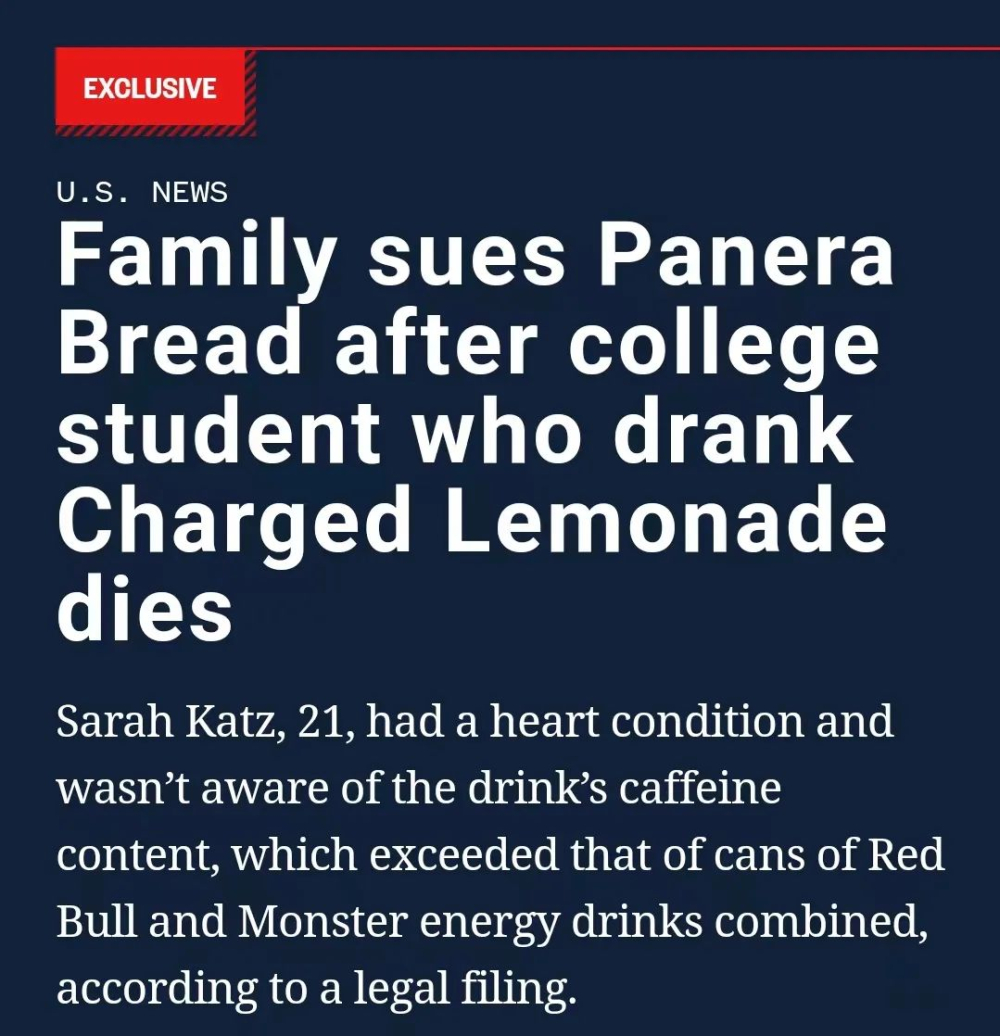
Legal experts have pointed out that not only is the total caffeine content of this drink high, but the combination of multiple plant-based stimulants also poses significant risks to individuals with cardiovascular conditions or caffeine sensitivity. Even more concerning is the fact that the product is not clearly categorized or labeled as an “energy drink,” preventing consumers from immediately recognizing its potential dangers. The parents’ legal representative emphasized that Panera Bread has a responsibility to provide adequate warnings, rather than encouraging customers to “enjoy it without limits.”
In fact, as early as December 2022, a TikTok user shared their experience of drinking multiple “Charged Lemonades” daily, stating that each time they felt unusually hyper afterward. Upon further investigation, they discovered the drink contained up to 260mg of caffeine. This user, who rarely consumed coffee, exclaimed, “Who designs a drink with this much caffeine?” and called on the brand to include proper warning labels to prevent similar health risks.
The coroner’s autopsy report later stated that Sarah’s cause of death was arrhythmia caused by long QT syndrome. While it did not directly attribute the death to the “Charged Lemonade,” it also did not find any other drugs or substances that could have caused the arrhythmia. Panera Bread issued a statement following the incident, expressing deep regret over the tragedy and committing to a full review of the transparency and labeling of its product information.
This incident serves as a wake-up call for all coffee and beverage consumers: even seemingly ordinary drinks may contain unexpectedly high levels of caffeine. Experts recommend that individuals who are sensitive to caffeine, pregnant women, and those with cardiovascular conditions pay special attention to beverage labels and avoid consuming complex or ambiguously labeled “functional drinks” with unclear caffeine content. Understanding daily intake limits (adults should not exceed 400mg), distinguishing between different types of coffee products and additives, is key to ensuring safe consumption.
The above content is compiled by CoffeeHunters, a coffee news website.


