







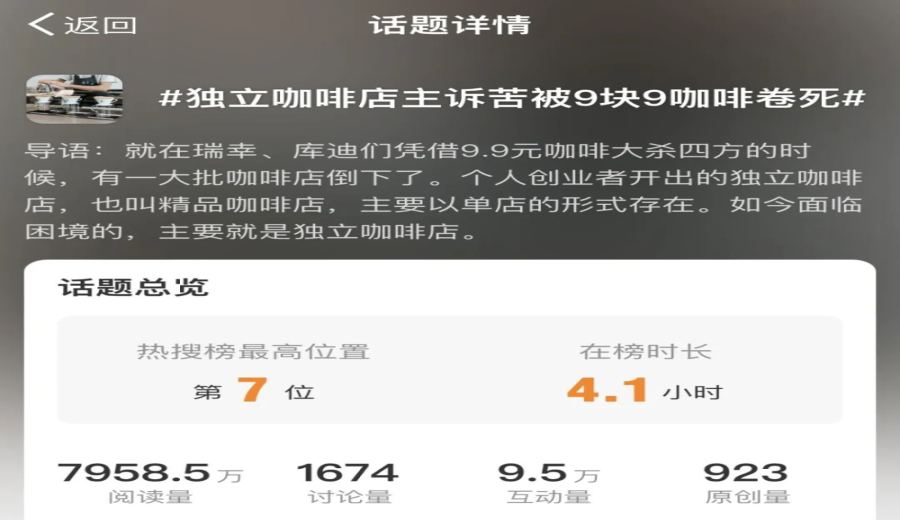
Introduction:Faced with the aggressive expansion of chain brands employing a low-price strategy of 9.9 RMB, independent coffee shops are experiencing unprecedented operational challenges. This article delves into the current reshuffling in the coffee market, explores the truths behind the price war, analyzes common reasons for the closure of independent coffee shops, and provides practical advice on transformation and management to help practitioners find a way out of the predicament and build a differentiated competitive edge.
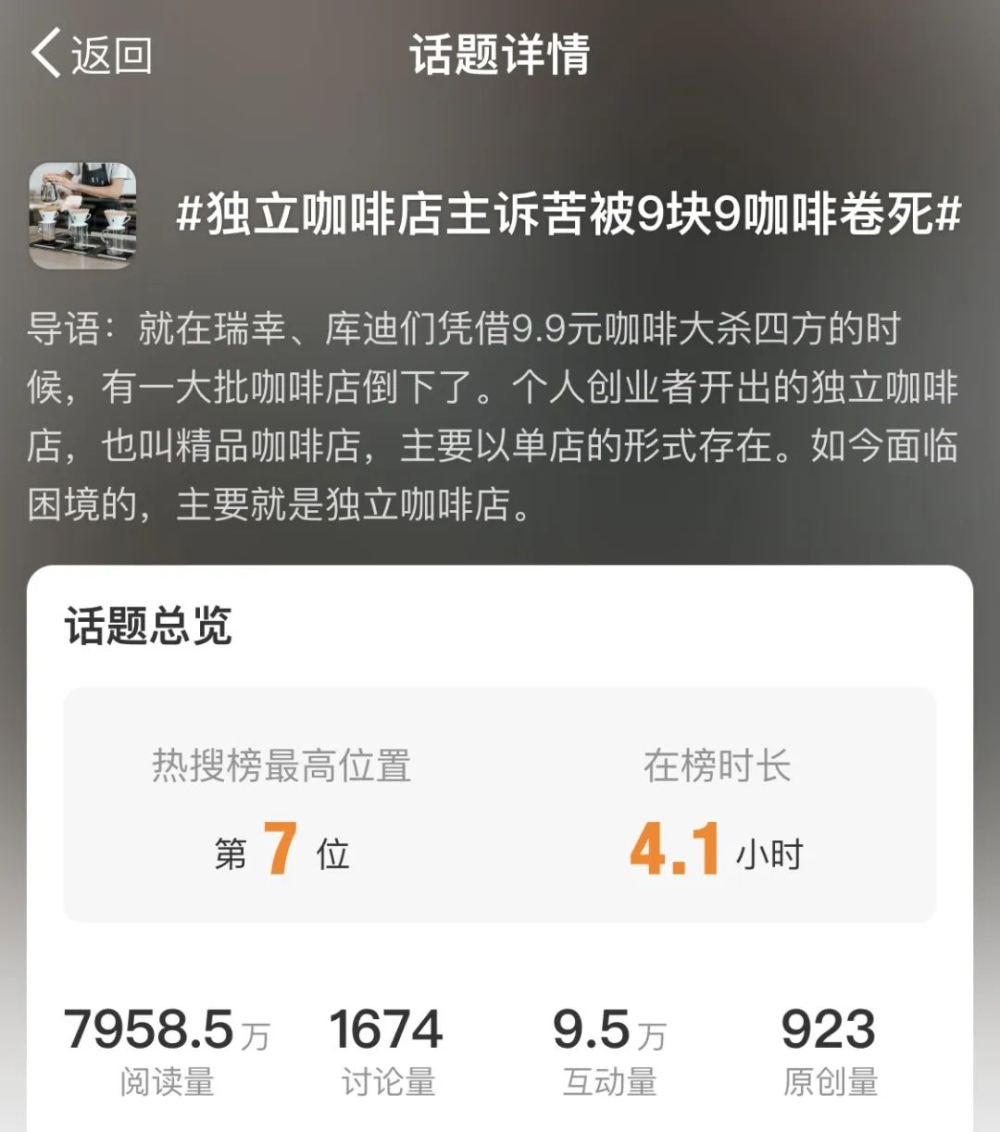
Recently, the topic of “independent coffee shops being crushed by 9.9 RMB coffee” has sparked heated discussion, highlighting that the current coffee market is undergoing a deep period of adjustment. As chain brands such as Luckin and Cotti rapidly expand their presence and offer low-price promotions to capture market share, many independently operated specialty coffee shops are facing declining foot traffic and rising cost pressures.
Statistics show that approximately 35,000 coffee-related stores across the country have closed over the past year due to market turbulence, most of which were independently operated. These figures not only reflect the intensity of price competition but also reveal the rapid changes in the overall industry landscape.
Currently, coffee shops in the market can be broadly divided into two main types: one consists of chain brands represented by Starbucks, COSTA, Luckin, and Manner, which benefit from standardized operations and economies of scale; the other comprises independently operated specialty coffee shops, typically existing as single outlets, emphasizing individuality and flavor characteristics.
In particular, Luckin and Cotti have seen astonishing expansion speeds over the past two years. According to public data, Luckin plans to surpass 15,000 stores by the end of this year, while Cotti, which began expanding in October 2022, has already exceeded 6,000 stores. These chain brands continue to erode market share through high-density store placement and frequent promotional activities.
The price war has become the most prominent feature of this competition. The prices of Luckin’s coffee generally range between 10 and 20 RMB, and with various coupons, consumers often only need to pay 10 to 15 RMB for a cup; Cotti’s pricing strategy is similar. While this is undoubtedly good news for consumers, it poses significant pressure on independent coffee shops.
Industry data shows that as of September 13 this year, although 77,083 new coffee-related stores have been added over the past year, the net increase is only 42,450, meaning approximately 35,000 stores have exited the market. Although it cannot be confirmed whether all these closed stores were independent coffee shops, considering market conditions and feedback from operators, independent businesses have clearly borne a greater impact.
A deeper analysis of the reasons for the closure of independent coffee shops reveals that the price war is only one external factor. More cases show that poor location selection, vague business strategies, lack of professional knowledge, subpar service quality, mismatched music ambiance, unclear brand positioning, and even partner disputes or unstable franchise projects are the real keys leading to operational difficulties. These factors often become the final straw that breaks the camel’s back for operators.
In addition to price advantages, chain brands also possess a complete supply chain system, standardized operating procedures, and stable product flavors—areas where most independent coffee shops struggle to compete. Moreover, these brands often maintain operations through diversified revenue models such as franchise fees and merchandise sales, rather than relying solely on coffee sales.
Faced with such a severe market environment, many independent coffee shop owners have begun seeking transformation. Some have succeeded by building personal IPs and accumulating followers through Douyin videos; others attract consumers with creative products or distinctive merchandise; still others reposition their business direction by offering differentiated experiences, such as pour over classes or coffee bean roasting experiences.
It is worth noting that the core value of specialty coffee lies in flavor, quality, and the consumption experience. If operators can focus on these essentials, deeply understand the true needs of their target customer base, and avoid getting trapped in the price quagmire of vicious competition with chain brands, they still have the opportunity to carve out their own niche in the market.
In summary, in this industry reshuffle, only those independent coffee shops that truly understand the essence of coffee, prioritize customer service and brand value, and possess agile operational capabilities will be able to steady themselves amid the turbulence—or even turn the tide. It is hoped that every practitioner can stay true to their original aspirations, seek opportunities in challenges, and bring customers a higher-quality coffee experience.

The above content is compiled by CoffeeHunters, a coffee news website.


