








Introduction:Faced with customers who occupy seats without making purchases, small coffee shops often struggle to maintain their business. This article delves into the background of implementing "purchase-to-sit" policies, analyzes Taiwan’s regulations regarding minimum consumption restrictions, and compares the actual practices of chain brands such as Starbucks and Tims. It also provides practical space management suggestions for shop owners, along with specific strategies to balance operational efficiency and customer experience, helping both business operators and consumers find a more reasonable way to coexist.
In land-scarce urban areas, many small coffee shops have only a dozen or so seats, yet they often encounter customers who linger without ordering—especially those there just for photos—which is particularly frustrating for shop owners. To maintain order, many stores consider clearly marking "purchase-to-sit" rules, but this has sparked heated discussions about consumer rights and the operational pressures faced by businesses.
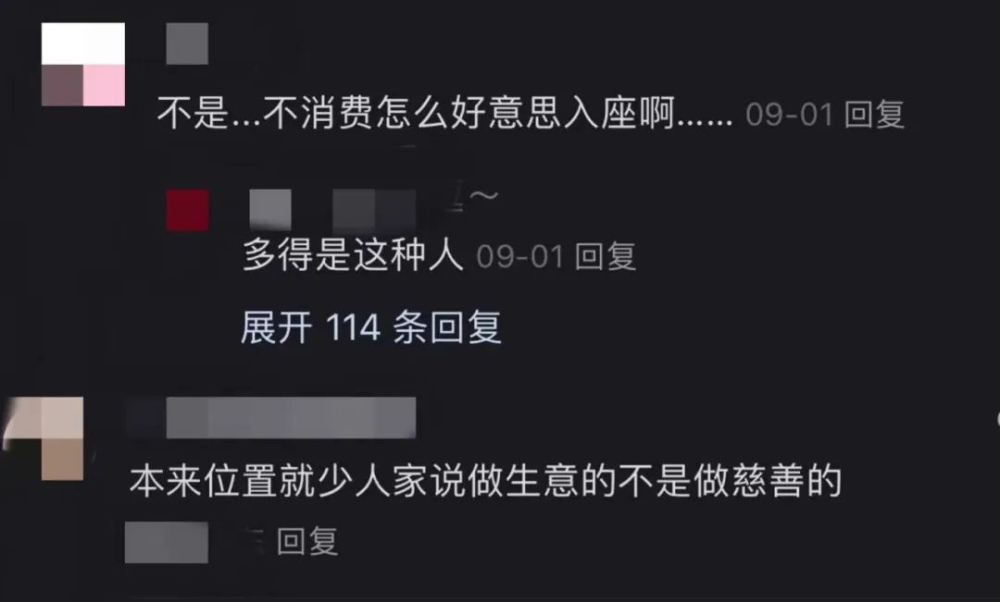
Based on feedback from social media platforms, public opinion is sharply divided. Some supporters argue that "occupying limited seating resources without making a purchase is unfair to other customers who genuinely want to enjoy coffee," especially in small shops where one unused table can directly impact turnover rates and revenue. However, other customers question whether it's inconsiderate to ask people to leave if they haven’t made a purchase upon entering. This clash of values makes the rationale behind "purchase-to-sit" policies a contentious issue.
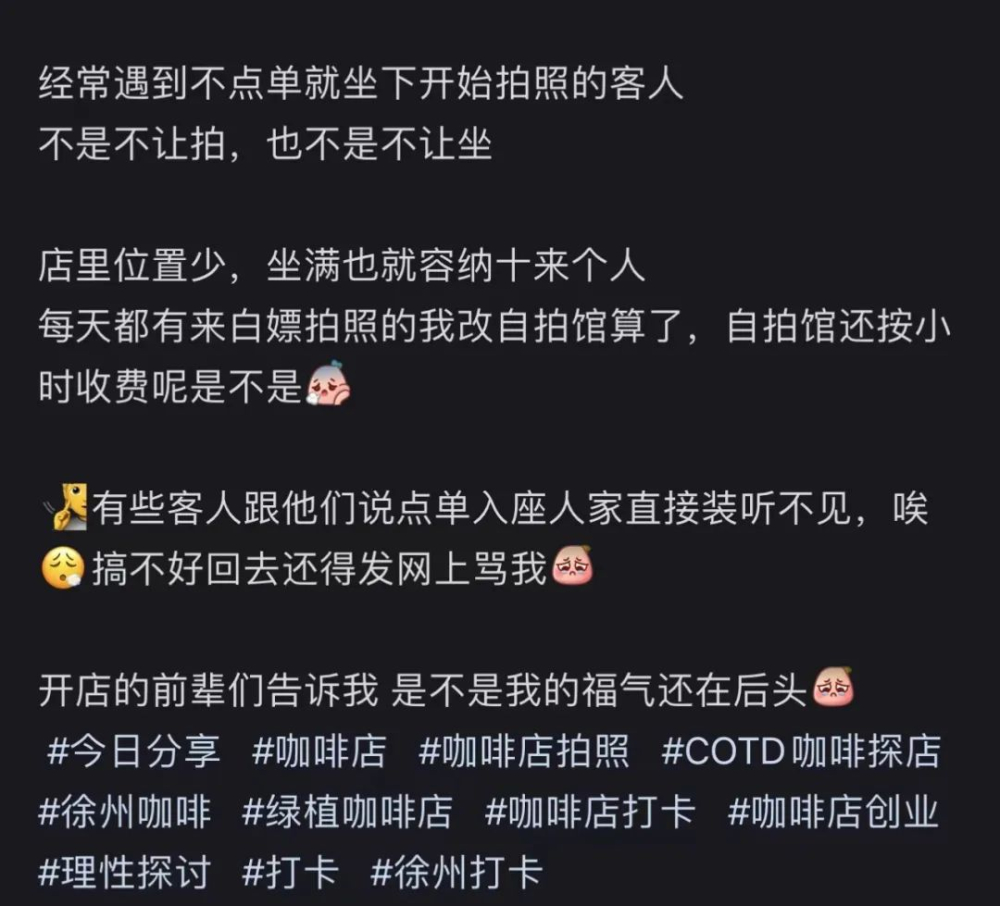
In reality, the operational pressures faced by small coffee shops should not be underestimated. Beyond the usual costs of rent, utilities, and labor, the limited number of seats makes the efficient use of each table crucial. When multiple customers leave due to a lack of available seating, the owner’s losses aren’t just immediate revenue but potentially long-term customer loyalty. As a result, some shop owners choose to guide customer behavior with "purchase-to-sit" signs. While this approach may spark controversy, under the weight of real-world operational pressures, it becomes an unavoidable balancing measure.
Notably, according to the "Regulations on the Management of Catering Industry Operations," businesses are not allowed to set mandatory minimum consumption amounts, and violators may face fines ranging from 1,000 to 5,000 yuan. This prevents many shops from directly restricting non-paying customers under the guise of a "minimum spend," leading them instead to adopt softer "purchase-to-sit" prompts in hopes of gently guiding customer behavior. However, the legal ambiguity of this approach means shop owners must exercise extra caution in enforcement to avoid negative publicity due to mishandling.
Observing the practices of international chains like Starbucks and Tims, some locations also manage seating through spatial design or staff guidance—for example, prioritizing seats for paying customers or subtly reminding non-purchasers to vacate seats during peak hours. While these methods don’t explicitly state "purchase-to-sit," adjustments to service processes similarly help maintain operational order. For small coffee shops, these examples offer valuable management inspiration.
For shop owners, in addition to displaying clear signage, other methods can optimize seating management. For instance, increasing staff patrols during peak times to politely inquire if non-paying customers would like to order, or implementing a reservation system that allows paying customers to secure seats in advance. Moreover, the layout and flow design of the shop’s interior are equally critical—appropriate partitions or sofa zone allocations can reduce instances of non-paying customers occupying seats for extended periods.
For consumers, understanding the operational challenges of small coffee shops is equally important. Upon entering a shop without an immediate need to purchase, customers can proactively ask staff about seating restrictions or consider visiting during off-peak hours to minimize impact on others. Of course, if a paying customer cannot find a seat, they can also politely provide feedback to allow the shop to make timely adjustments.
Overall, the implementation of "purchase-to-sit" policies reflects the delicate balance small coffee shops must strike between operational realities and customer experience. Both shop owners and consumers need greater mutual understanding and flexibility to jointly foster a friendly and sustainable café environment. Through thoughtful rule design and communication, a solution satisfactory to both parties may be found.
The above content is compiled by CoffeeHunters, a coffee news website.


