








Introduction:When a customer accidentally breaks an expensive handmade wood-fired teapot in a café and refuses to compensate or even tries to leave, how should the shop owner respond calmly? This article delves into a real-life case, examining the division of responsibility between businesses and consumers in cases of tableware damage, and provides practical handling suggestions and communication tips to help operators safeguard their rights rationally while preventing similar disputes from recurring.
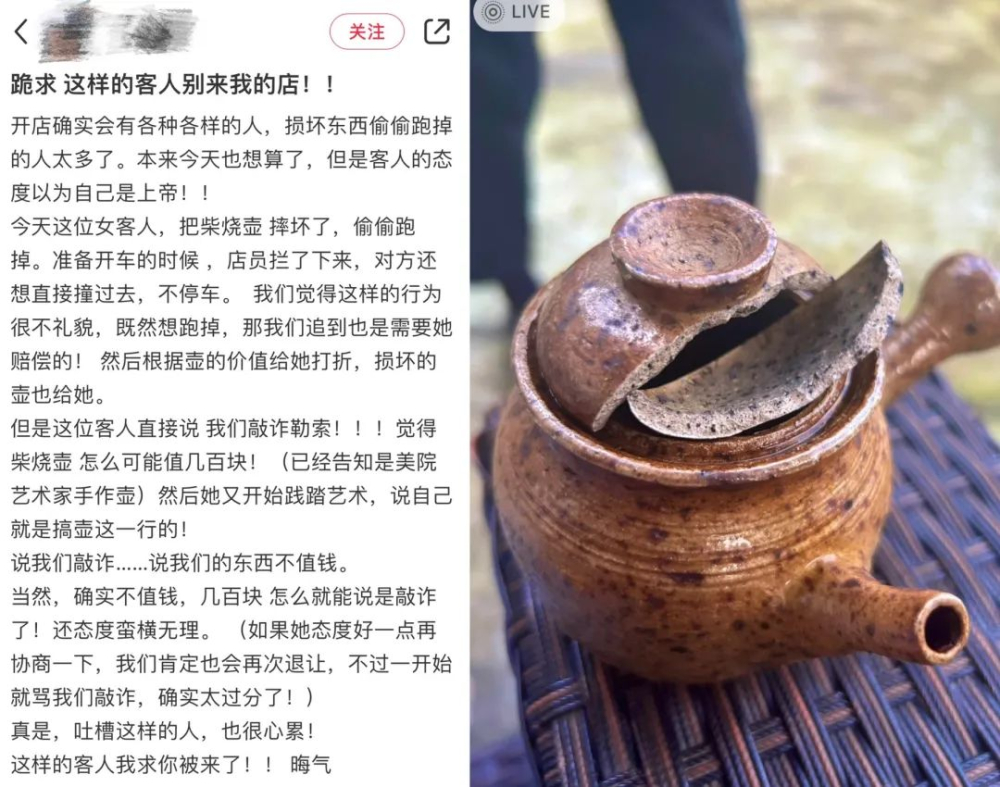
Recently, a coffee shop encountered a headache-inducing incident: a customer accidentally shattered a handmade wood-fired teapot on the premises, not only refusing to pay for the damage but also attempting to drive away. Fortunately, a staff member noticed in time and stopped them, but the two parties reached a serious deadlock when negotiating the compensation amount. The shop owner, considering the wear and tear on the teapot, proposed a discounted reasonable compensation of several hundred yuan and offered to return the damaged teapot to the customer, yet the customer accused them of “extortion,” ultimately leaving without paying anything.
This incident sparked heated discussion on social media platforms, with netizens voicing opinions on questions such as “Should cafés use high-end tableware?” and “How much responsibility should consumers bear for accidental damage?” In fact, many business owners opt for artisanal pieces like wood-fired teapots to enhance the ambiance and elevate the coffee-drinking experience, but these items’ high prices come with greater risks of damage.
Regarding the compensation amount, some netizens questioned: “A cup of coffee only costs a dozen or so yuan, so why serve it in tableware worth hundreds or even thousands?” While expensive coffee utensils can enhance visual enjoyment, they do not directly improve the flavor of the coffee. However, some industry professionals familiar with handmade pottery pointed out that wood-fired teapots, due to their complex firing process, low success rate, and unique ash deposit patterns on each piece, often have market prices starting at two thousand yuan, making a compensation demand of several hundred yuan actually quite reasonable.
For the shop owner, the pain point of this incident lies not only in the damage to the teapot itself but also in the customer’s subsequent attempt to evade responsibility. If the utensil was handcrafted by an art academy artist and the shop owner only charged the cost price based on personal connections, it is even more important to clarify responsibilities through rational communication. If there is significant disagreement over the compensation amount, reporting to the police is a common and effective solution, as law enforcement can help clarify the facts and intervene impartially from a third-party perspective.
When operating a coffee shop, business owners should have a basic understanding of the risks of wear and tear on tableware and utensils. Although tableware is consumable, the use of high-end handmade items still requires caution. It is recommended that merchants appropriately remind customers to be careful before placing such items out, or display signs such as “handle with care” on menus or tabletops to reduce the likelihood of accidents. If an unfortunate damage incident does occur, the top priority is to stay calm, first confirm the actual value and purchase cost of the damaged item, and then negotiate with the customer in a friendly manner to avoid escalating conflicts due to emotional dialogue.
Additionally, it is advisable for shops to establish a tableware management and wear-and-tear registration system in daily operations, taking photos and noting prices for each high-end handmade item. Once a damage incident occurs, evidence can be quickly provided to help clarify responsibilities and speed up the claims process. If a customer insists on not cooperating or flees the scene, remember to collect their contact information if possible and contact the police immediately to protect your own rights.
In summary, incidents of tableware damage in cafés are not uncommon, but through preemptive prevention, calm communication during the incident, and third-party intervention when necessary, the likelihood of conflict can be effectively reduced. For consumers, if they accidentally damage a shop’s items, the right approach is to face the situation honestly and negotiate rationally with the owner; for business operators, in addition to providing quality coffee and service, it is also essential to have risk management awareness in order to protect operational rights while maintaining the café’s unique character.
The above content is compiled by CoffeeHunters, a coffee news website.


