







Introduction:Since its launch in March this year, the “Curbside Pickup” service jointly launched by Starbucks and Amap has aimed to provide commuters with a more convenient coffee purchasing experience. However, during the special National Day holiday campaign, it drew user complaints due to insufficient giveaways and inaccurate system matching. This article provides an in-depth analysis of the campaign’s highlights and practical pain points, along with useful ordering tips and precautions to help readers avoid common issues.
The “Curbside Pickup (Drive-through)” service, jointly launched by Starbucks and Amap, was piloted in 150 stores across Beijing and Shanghai starting March 21. It was initially designed to offer time-saving coffee purchase solutions for drivers and passengers during peak commuting hours. Users only need to set their destination and select a participating store along the way via the Amap app, place their order in advance, and the barista will prepare the beverage based on the estimated arrival time. Drivers can then roll down their window to pick up their order upon arrival.
However, the “Travel Package” promotion launched during the National Day holiday became a focal point of controversy. During the event, customers who ordered two specific drinks at designated stores could receive a free cute pet-themed tote bag. Due to the adorable design of the bags, a large number of customers participated. However, the actual giveaway inventory was limited to 10,000 units, distributed across six participating cities, with each store receiving an average of just over ten, leading many consumers to complain that “they sold out within seconds of going live.”The inventory was completely exhausted on the first morning.This sparked numerous dissatisfied online comments such as “Don’t run the promotion if you can’t afford it” and “The inventory planning was terrible.”
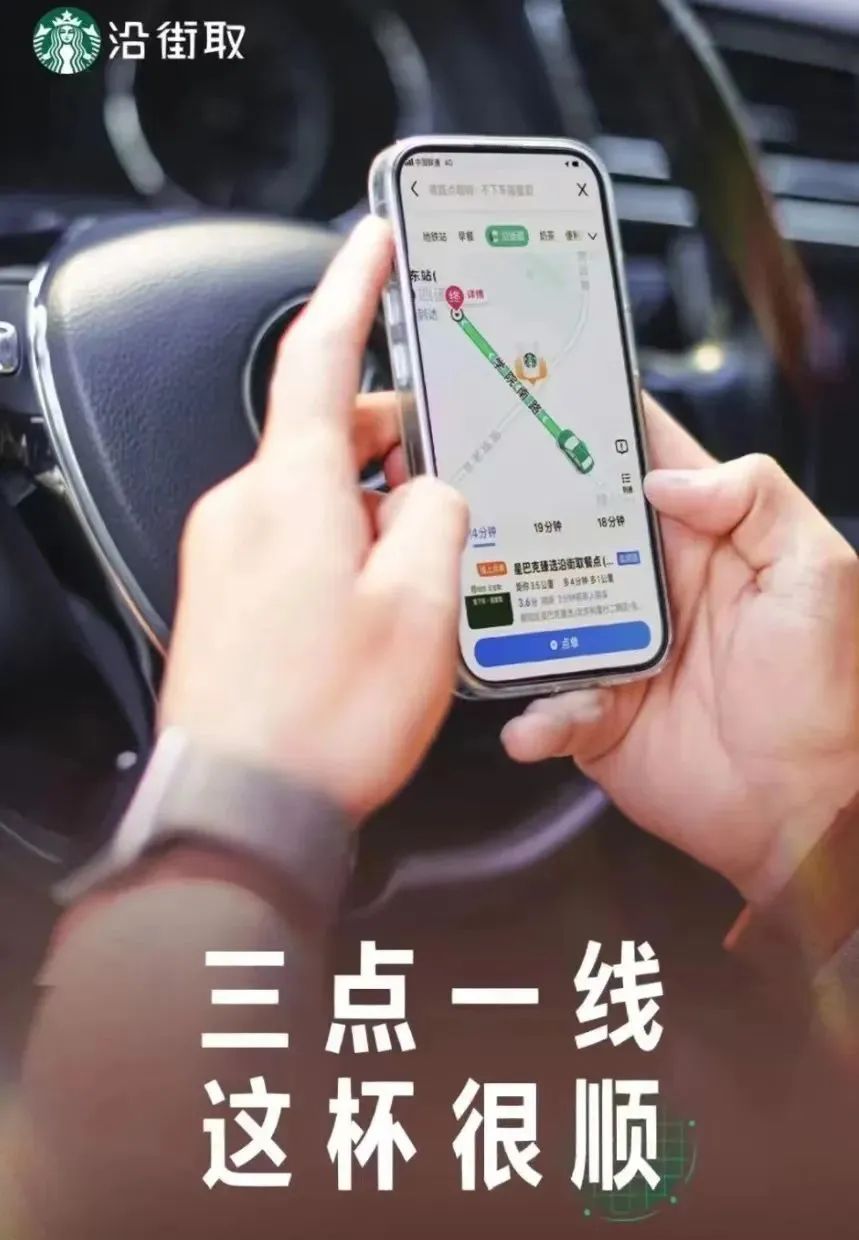
In addition to the shortage of giveaways, the ordering process also revealed several practical issues. Users are required to input their destination into Amap first, then search along the route for Starbucks stores that can accept orders. However, some stores that appeared available for ordering were actuallynot open during the National Day period,causing customers to make futile trips. Other users reported that Amap’s route-matching algorithm occasionally had errors, resulting in some stores being invisible even when they were located along the user’s path, negatively affecting the overall experience.
Moreover, many users encountered understaffed stores during peak morning hours, with baristas unable to prepare drinks promptly, ultimately forcing them to get out of their cars and pick up their orders inside, defeating the original convenience purpose of “Curbside Pickup.” Additionally, the service requires an extra3 RMB service fee,and some consumers felt that since they did not truly enjoy a smooth “curbside pickup” experience, this fee seemed unjustified, questioning its value for money.
Starbucks introduced this service with the aim of expanding consumption scenarios beyond the “third space” and attracting more drivers. However, in actual practice, there are still issues such assystem calculation errors, the ability to place orders at closed stores, and inconvenient pickup processes,leading many netizens to remark that “it felt like being used as a guinea pig for testing.” To improve customer satisfaction in the future, Starbucks and its partner platform will clearly need to further optimize these pain points to allow the “Curbside Pickup” service to truly deliver on its promise of convenience.
The above content is compiled by CoffeeHunters, a coffee news website.


