







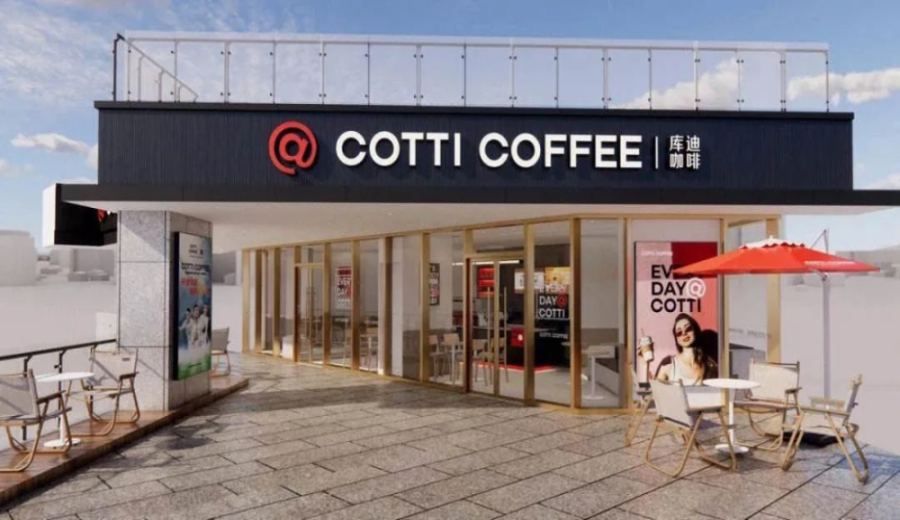
Introduction:Luckin Coffee once rapidly expanded through an aggressive 9.9-yuan low-price strategy, but it has recently canceled multiple promotions and adjusted its pricing, drawing market attention. This article delves into the franchisee operational pressures, declining sales, and supply chain management challenges behind the price hikes, explores the brand’s future direction, and compares its market performance with other competitors.
Leveraging its ultra-value “9.9 yuan per cup” pricing strategy, Luckin Coffee quickly captured market share in a short period. However, this low-price promotional model was not sustainable. Recently, the brand quietly adjusted its pricing policy, gradually phasing out various promotions, which has drawn significant concern from both consumers and franchisees. Especially as the number of stores grew rapidly, Luckin is facing multiple issues such as declining sales, inefficient supply chain operations, and intensified internal competition.
Looking back at 2023, Luckin Coffee entered the market with high visibility. In less than 10 months since its founding, it surpassed 5,000 stores. To seize market share, the brand launched large-scale price promotions in February last year, including over 70 products priced as low as 9.9 yuan per cup, as well as offers for new users to get a free coffee. By May, it introduced the “Summer Ice Drink Season, 9.9 Every Day” campaign and a Douyin platform promotion called “8.8 Yuan Buy Any,” which successfully attracted a large number of consumers in a short time—with sales exceeding 1.53 million cups within just two weeks of launch.
Faced with Luckin’s aggressive push, Luckin Coffee (note: likely refers to rival Ruixing, maintaining original name here) responded swiftly by launching a 9.9-yuan coupon in May of the same year, and in June announced the normalization of weekly 9.9-yuan promotions. Although also drawn into the price war, Ruixing managed to stand out with its “Moutai-flavored Latte,” a collaboration with Moutai that gained widespread popularity and created a clear gap between the two brands.
However, Luckin Coffee’s sales performance failed to meet expectations. Due to a significant decline in sales, Luckin began adjusting its pricing strategy starting in July. In early July, the 9.9-yuan coupons on Douyin group buys were limited in availability, with alternative options priced at 13.5 yuan and 14.9 yuan introduced. By early August, the “9.9 Every Day” campaign was completely canceled, and the 8.8-yuan store-exclusive coupons were also removed—though the Iced Coconut Latte maintained its 8.8-yuan promotional price.
For franchisees, Luckin Coffee’s no-franchise-fee model may seem to lower the entry barrier, with initial investment ranging between 300,000 and 600,000 yuan. But in actual operations, due to limited foot traffic in the early stages of a new store and continuous low-price promotions, franchisees must also pay the headquarters a service fee of 10% to 25% each month, making it difficult for most stores to turn a profit. Statistics show that in the first half of 2023, as many as 318 Luckin Coffee stores closed, averaging one store shutting down per day.
Beyond sales difficulties, Luckin’s shortcomings in supply chain management have also gradually emerged. Issues such as untimely supply chain preparation, unstable product quality control, delayed material deliveries, and incomplete equipment supplies have frequently occurred, further increasing the operational burden on stores. Many franchisees report that 8.8-yuan drinks offer almost no profit margin, while sales of regularly priced products remain consistently low, leading to sustained pressure on operations.
Adding to franchisees’ woes is the phenomenon of store oversaturation in certain areas. One franchisee noted that shortly after opening a new store, two additional Luckin outlets opened within a 1-kilometer radius, intensifying internal competition. Under these multiple pressures, many franchisees have chosen to exit the market and have shared their experiences on social platforms, warning potential investors to carefully assess the risks.
To address supply chain issues, Luckin Coffee announced on July 17 that its East China Supply Chain Base had officially been established in Dangtu, Ma’anshan, Anhui. The project has a total investment of approximately 200 million USD and is positioned as a comprehensive base integrating R&D, production, and quality control, with plans to begin operations in the second half of 2023. However, whether the supply chain improvements can keep pace with the brand’s development rhythm—and whether franchisees can hold on until this turning point—remains uncertain.
In summary, Luckin Coffee’s pricing adjustment strategy reflects its strategic realignment in market competition, but it also exposes multiple underlying issues in franchisee management, supply chain efficiency, and pricing strategy. Against the backdrop of increasingly fierce competition in the coffee market, whether Luckin can successfully transform and stabilize its market position still depends on its subsequent operational strategies and execution capabilities.
The above content is compiled by CoffeeHunters, a coffee news website.


